
Buying guide
Best Aquarium Light for a Planted Tank: 7 Picks Compared
Fluval Plant 3.0 is the easiest all-round choice for most planted tanks. Chihiros WRGB II Pro is the more serious option when you run CO2 and demanding carpet plants.
Quick comparison
| Product | Best for | Main advantage | Main drawback |
|---|---|---|---|
| Fluval Plant 3.0 Bluetooth LED | Most tanks | App scheduling and multiple lengths | Premium price |
| Chihiros WRGB II Pro | High-tech plants | High output and RGB control | Easy to over-light |
| Chihiros A II Max | Value aquascapes | Adjustable planted-tank output | Less RGB color control |
| Finnex Planted+ 24/7 CRV | Automation | Built-in day cycle | Less granular control |
| Twinstar S Series | Premium planted displays | Strong spread and color | Expensive |
| NICREW ClassicLED Plus | Budget tanks | Low entry cost | Less headroom |
| Hygger 24/7 Advanced LED | Budget automation | Built-in timer | Variant specs differ |
Best overall: Fluval Plant 3.0
Fluval publishes four Plant 3.0 lengths from 15 to 60 inches, plus wattage, PAR, IP67 protection, and app controls. The app can schedule sunrise, daytime, dusk, and night settings. That makes this the easiest recommendation for a mixed community tank where you want control without learning aquascaping hardware first. The important catch is output. Start below maximum intensity and adjust the photoperiod if algae appears.
Pros: clear size range; programmable cycle; manual controls remain available.
Cons: costs more than simple bars; full control relies on the app.
Best for demanding plants: Chihiros WRGB II Pro
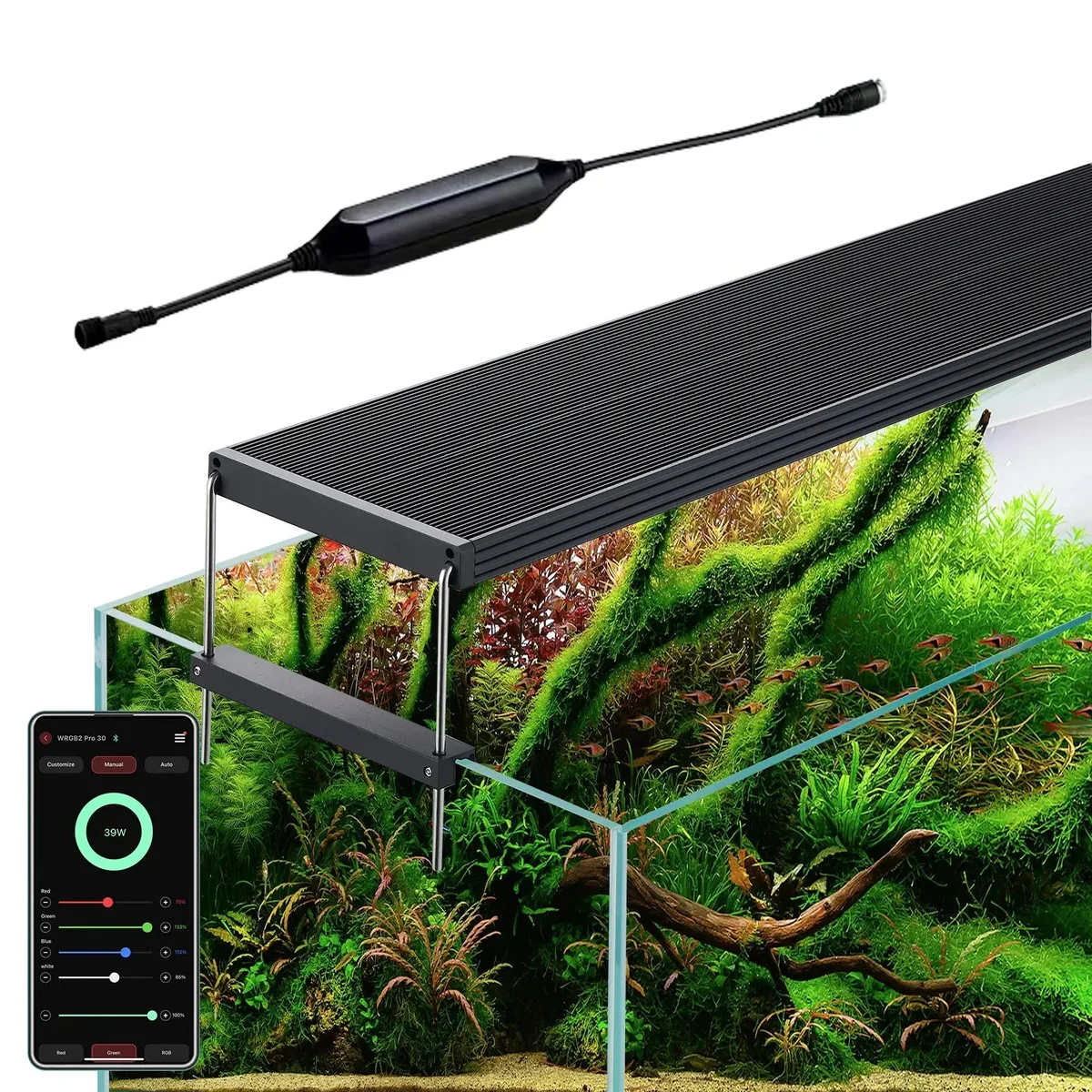
The WRGB II Pro targets high-tech layouts with strong light demand, colored stems, and carpet plants. Independent comparisons place it above Fluval in output and color control. That is useful with injected CO2 and a measured fertilization routine. It is too much light for many low-tech tanks unless dimmed, and the extra controls take time to set correctly.
Pros: high PAR headroom; granular RGB adjustment; aquascape-focused.
Cons: higher learning curve; excess light can worsen algae.
Best value for controlled aquascapes: Chihiros A II Max
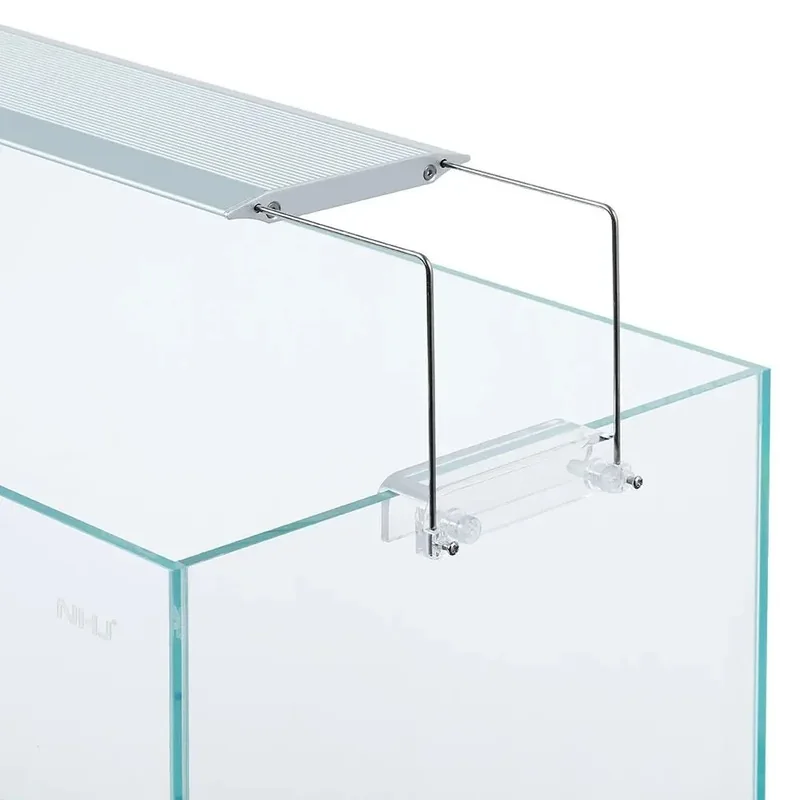
The A II Max is the simpler Chihiros route. Its white-focused presentation is less about dramatic RGB color and more about usable planted-tank output. Choose it when you want app adjustment and headroom but do not need the WRGB line’s per-channel color work. Confirm the exact length because A-series names cover multiple fixtures.
Pros: adjustable output; strong value within the Chihiros range.
Cons: less color tuning; variant matching matters.
Best automated cycle: Finnex Planted+ 24/7 CRV
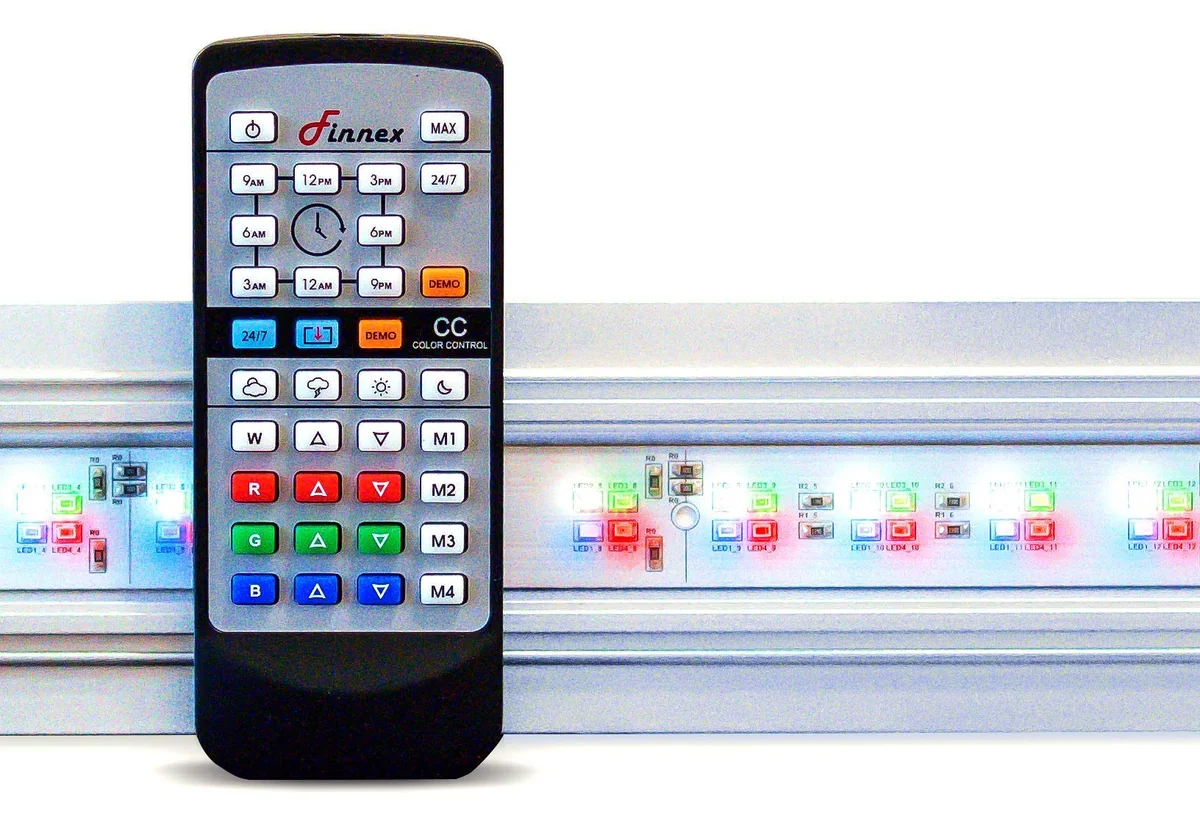
Finnex’s 24/7 line is aimed at owners who want an automated cycle without building one in an app. It suits low- and medium-tech tanks with easy plants. Its appeal is consistency, not maximum intensity. A timer cannot fix a poor light-to-CO2 balance, so use a shorter or dimmer cycle when the plant list is modest.
Pros: convenient built-in automation; familiar planted-tank format.
Cons: less detailed control; fixture coverage varies by model.
Premium spread: Twinstar S Series
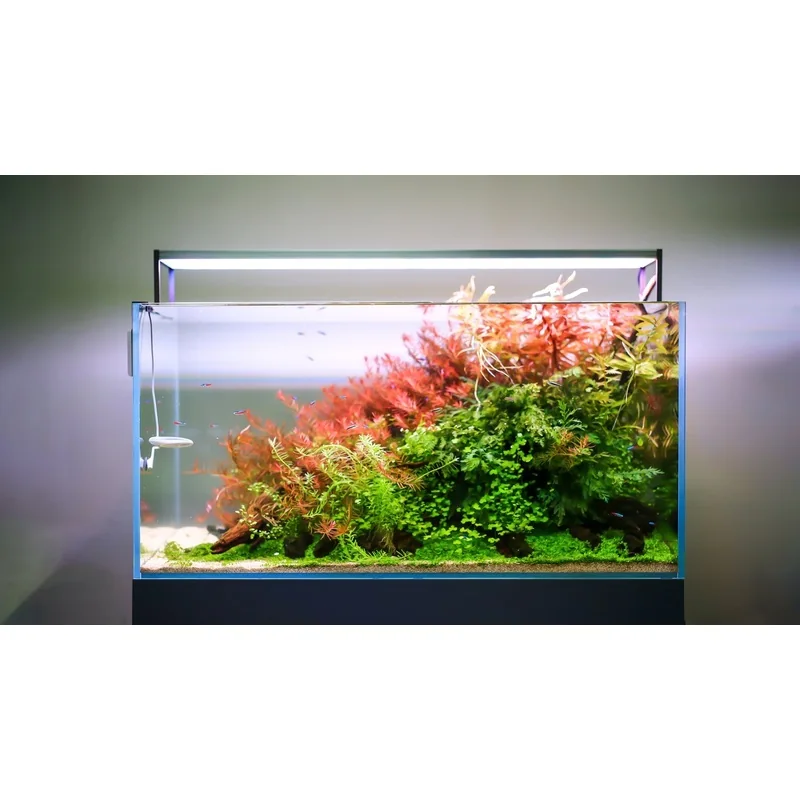
Twinstar S fixtures are a premium option for aquascapers who care about even coverage and color presentation. They make sense when the display, not the lowest purchase price, drives the decision. Check whether the selected version includes the controller and mounting hardware you need. Premium hardware still needs a restrained schedule over a non-CO2 tank.
Pros: refined display lighting; good fit for planted showcases.
Cons: cost; accessory availability varies.
Best budget bar: NICREW ClassicLED Plus
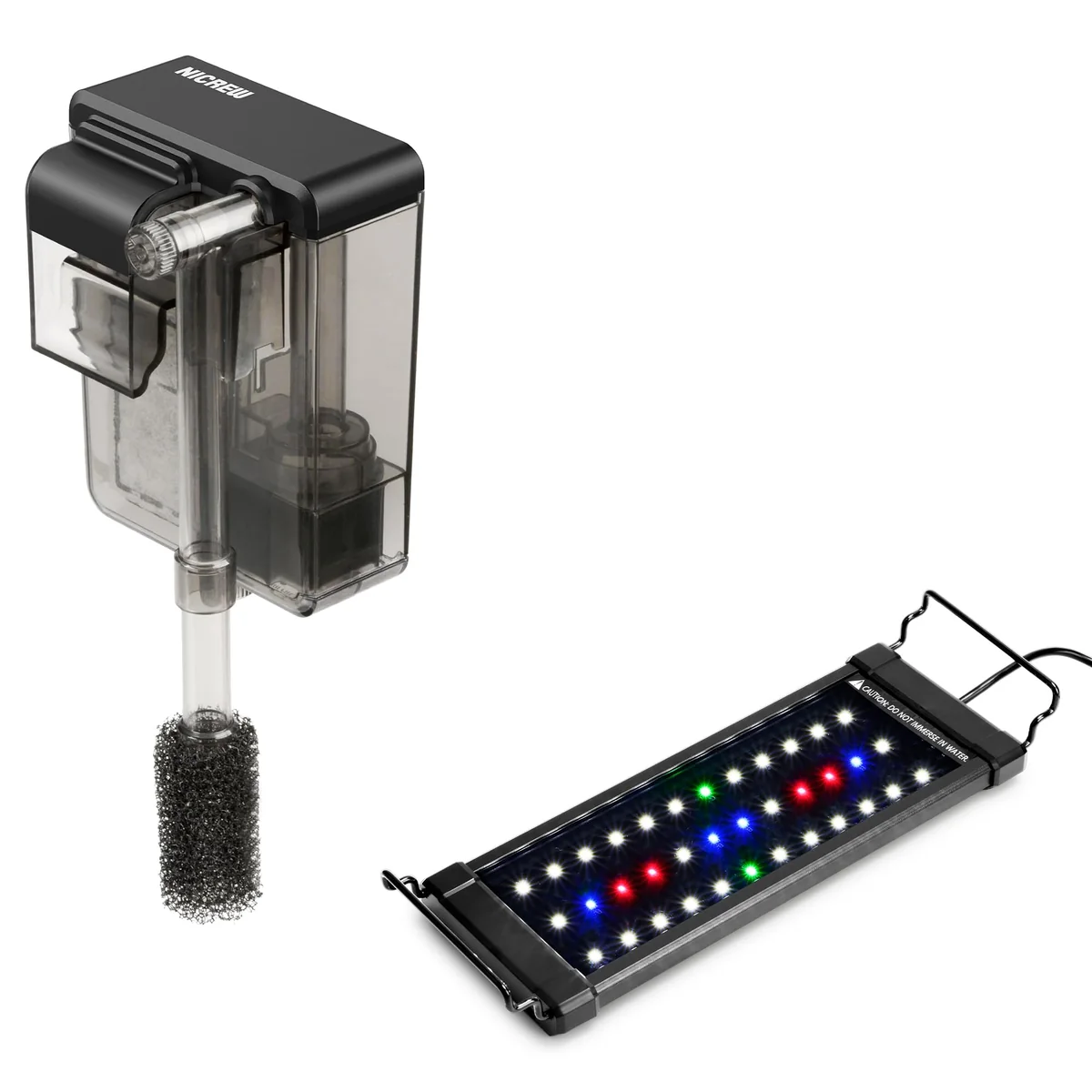
NICREW is a reasonable starting point for easy plants such as Anubias, Java fern, and many Cryptocoryne. It is less suited to a deep tank full of demanding carpets. Treat it as a budget bar, not a substitute for published PAR data. Use a plug-in timer if the selected model lacks scheduling.
Pros: accessible price class; simple installation.
Cons: lower output ceiling; fewer premium controls.
Budget automation: Hygger 24/7 Advanced LED
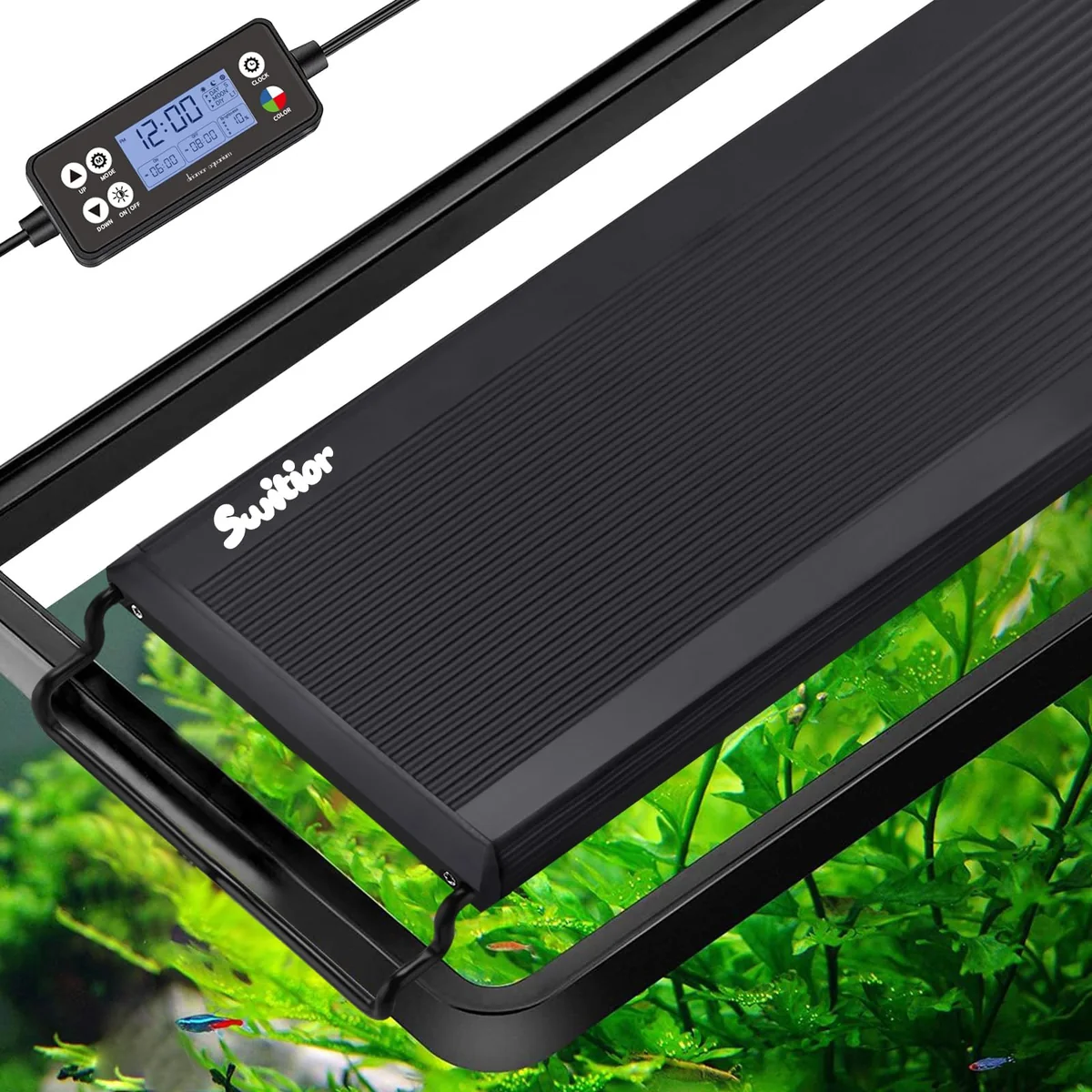
Hygger’s 24/7 fixtures offer built-in schedules and adjustable color modes. They are attractive for beginners who want a set routine at a lower cost. The brand sells several similar models, so confirm length, wattage, and controls on the current listing. The main risk is choosing from a product family without checking the exact variant.
Pros: integrated timer; useful budget feature set.
Cons: documentation and specs vary between variants.
What to look for
Start with tank length and water depth. A bar that fits the rim but lacks penetration will disappoint in a tall tank. Then decide whether you need low, medium, or high light. Easy plants do not need flagship output. High light only works when CO2 and nutrients keep pace. Programmability is valuable because it lets you reduce intensity and keep a stable photoperiod. Published PAR at a stated depth is more useful than lumens alone, but compare numbers only when the test conditions match.
Frequently asked questions
How many hours should a planted light run?
Start conservatively, often around six to eight hours, then adjust to plant growth and algae. The right duration depends on intensity, CO2, nutrients, and tank depth.
Is brighter always better?
No. Extra light raises the demand for carbon and nutrients. A controllable moderate light is easier to balance in a beginner tank.
Do low-tech tanks need RGB lights?
No. RGB control helps appearance and can provide headroom, but easy plants can grow under a sensible full-spectrum fixture.
Should the light sit directly over the water?
Follow the manufacturer’s mounting and water-protection guidance. Fluval publishes IP67 protection for Plant 3.0, but no fixture should be splashed beyond its instructions.
Recommendation
Choose Fluval Plant 3.0 for the broadest mix of tank sizes and simple scheduling. Choose Chihiros WRGB II Pro for a deliberate CO2 aquascape. Choose NICREW or Hygger when the tank contains easy plants and budget matters more than maximum output.
Sources and methodology
Primary specifications come from Fluval’s Plant 3.0 page and current manufacturer product pages for Chihiros, Finnex, Twinstar, NICREW, and Hygger. Comparative context comes from AquaVerdict, Aqulator, and NanoFishNest. We did not perform hands-on testing. Confirm the exact length and current availability before checkout.
Read next: best aquarium substrate for a planted tank and best aquarium CO2 system for beginners.