
Buying guide
Best aquarium kit for a planted tank
For plants, the kit's light and usable floor space matter more than the word complete on the carton.
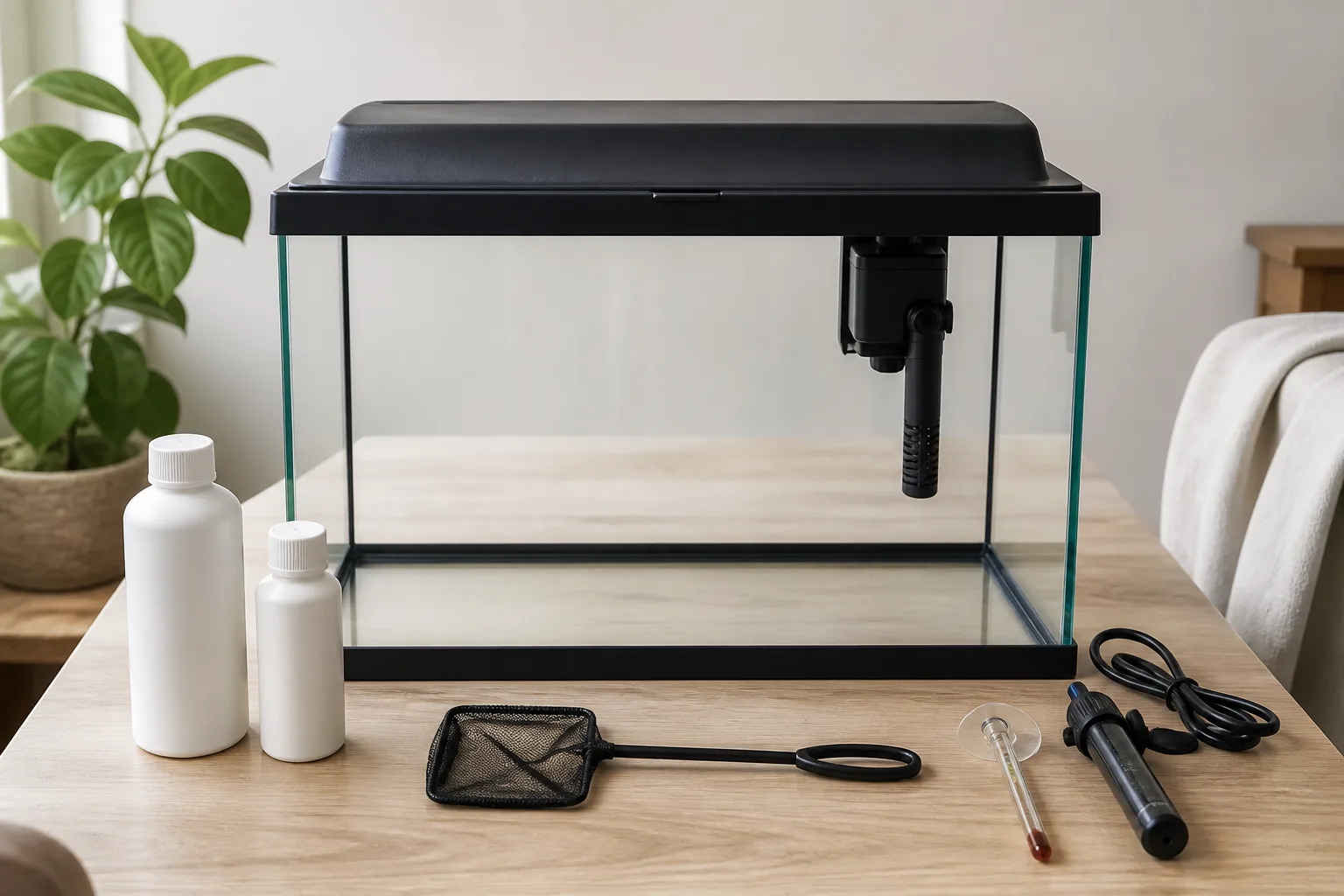
Quick comparison
| Product | Best planted use | Kit-specific compromise |
|---|---|---|
| Aqueon LED 10 Aquarium Kit | Easy plants in a standard footprint | Light capability needs checking |
| Aqueon LED 20 Aquarium Kit | Longer planting area | Hood can limit lamp upgrades |
| Marineland Portrait Glass Aquarium Kit | Tall, narrow planting | Less front-to-back work room |
| Fluval Flex 9 Aquarium Kit | Low-tech nano planting | Rear chamber consumes display length |
| Fluval Flex 15 Aquarium Kit | All-in-one planted display | Hood constrains major light changes |
| Tetra 10 Gallon Complete Aquarium Kit | Budget low-light start | Verify lamp and filter revision |
| Tetra 20 Gallon Complete Aquarium Kit | Community aquascape | Stand and lid clearance matter |
This guide covers kits that pair a tank with powered equipment. A bare glass tank can be a fine planted aquarium, but it is not a kit and belongs in a different buying decision. We did not test these products. Check the live parts list, dimensions, voltage, and plant-light claims before ordering. None of these bundles replaces substrate, water treatment, tests, or a cycle.
Our picks
Aqueon LED 10 for a small low-tech layout
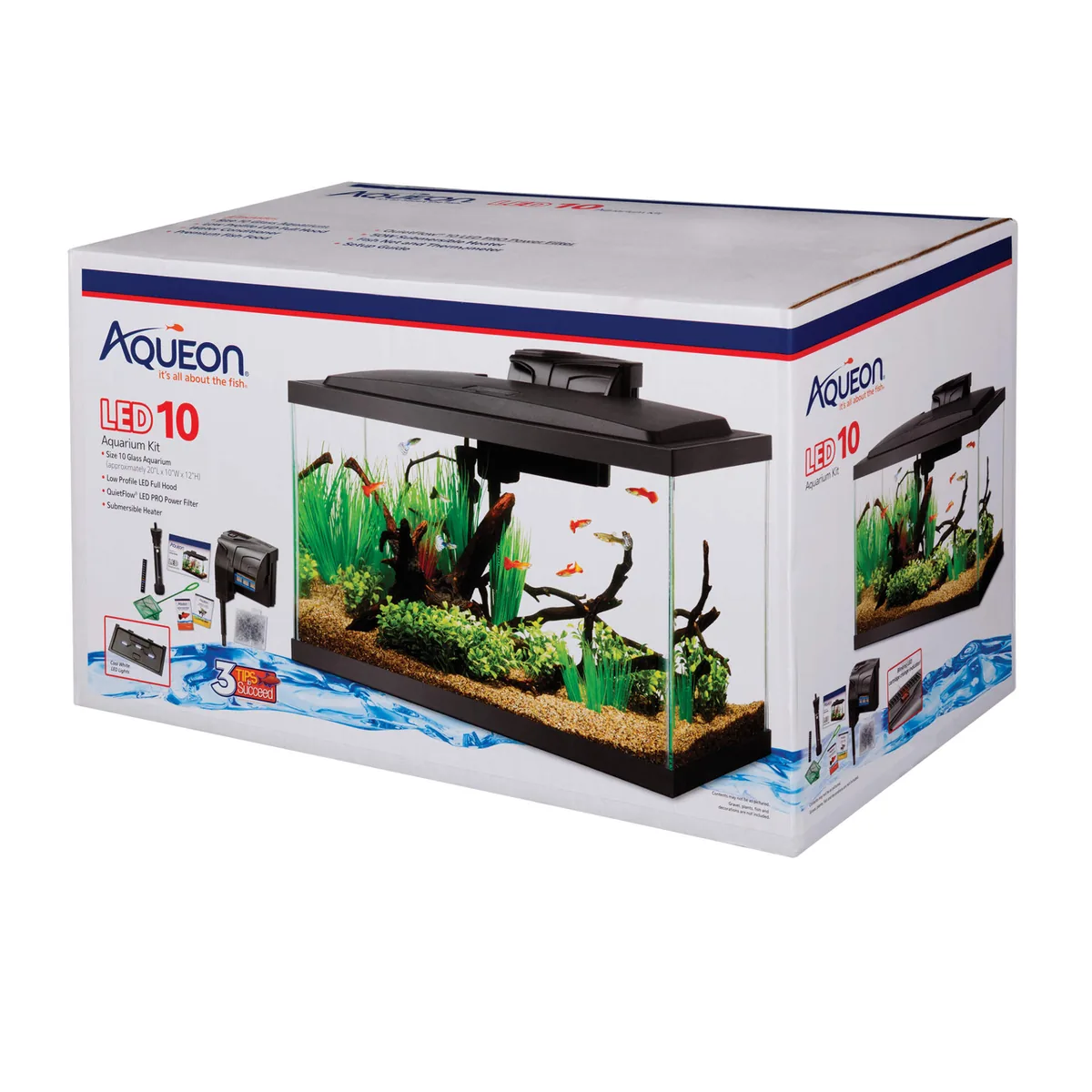
The Aqueon LED 10 gives a beginner a standard rectangular floor plan for anubias, java fern, crypts, or other undemanding choices, provided the supplied fixture suits the selected plants. Its shape leaves room to plant in layers instead of stacking everything vertically. Before buying, confirm the light’s controls and hood opening, then check whether the filter intake can be hidden behind a plant without restricting flow. The usual upgrade ceiling is the included top: a brighter lamp may require changing how the hood is used.
Pros: accessible rectangular layout; easy to replant; common replacement categories. Cons: small footprint; kit light may be low-light only; lid can complicate a larger fixture.
Aqueon LED 20 for a longer aquascape
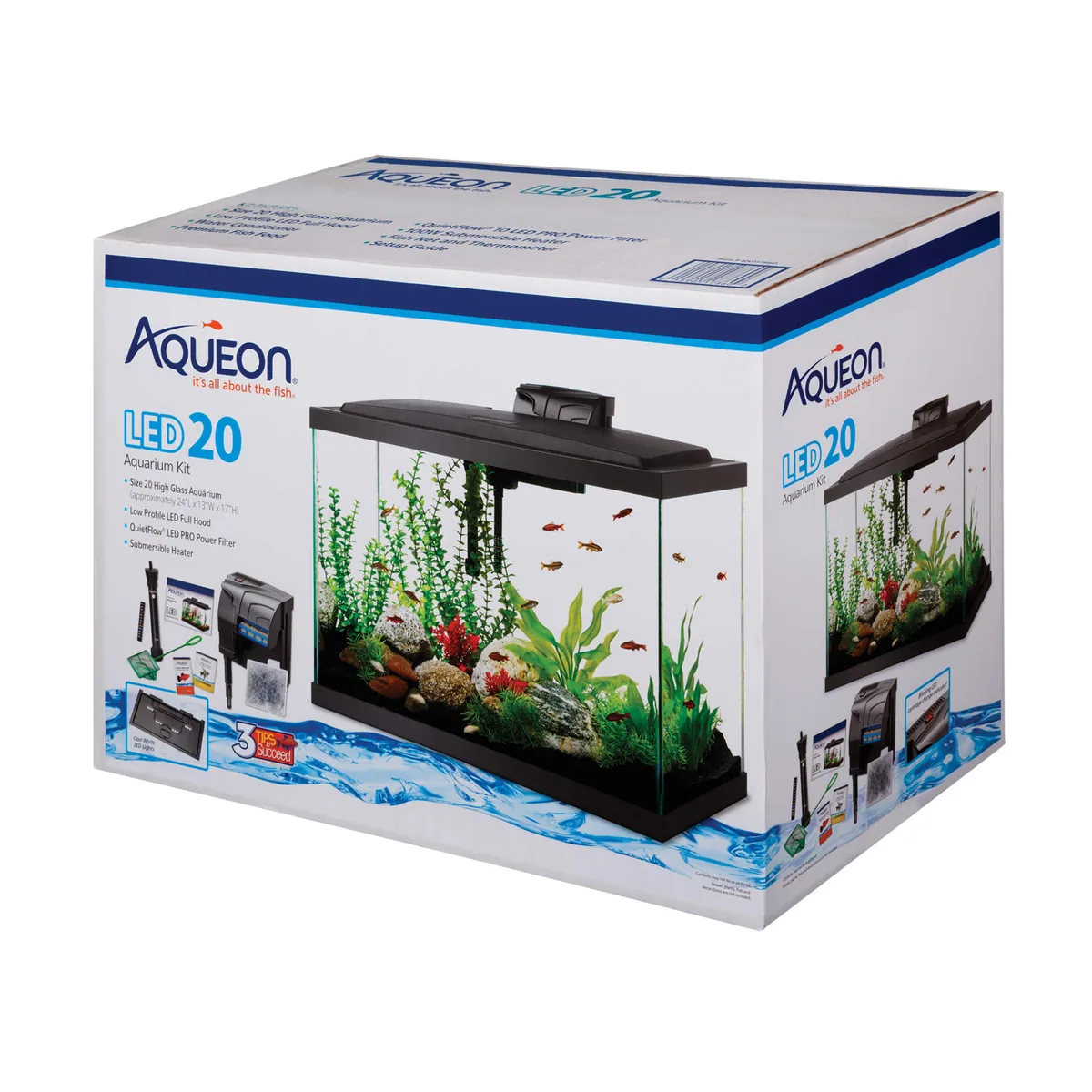
The LED 20 is the better Aqueon starting point for a planted scene with a foreground, midground, and taller background. The extra length gives stems somewhere to spread and makes pruning less cramped. It does not tell you that the stock lamp can grow every species. Match plant demand to the fixture, and leave a clean route for filter maintenance. A nutrient-rich plant base or deeper gravel also reduces the remaining floor space, so sketch the layout before buying bags of substrate.
Pros: more planting length; standard top; straightforward filter access. Cons: larger stand requirement; supplied lamp may cap plant choice; deep substrate reduces water volume.
Marineland Portrait for vertical planting
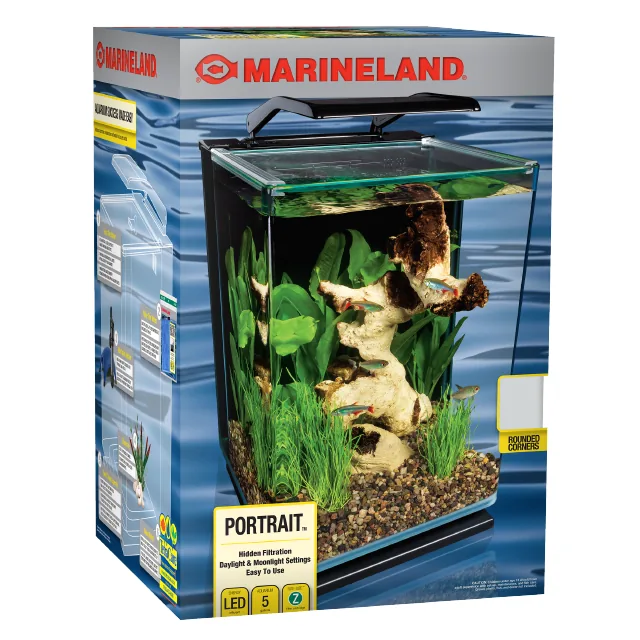
Portrait’s narrow footprint works for a column of taller plants and a compact piece of wood or stone. The tall water column makes the lamp’s reach important, so treat the included LED as a low-light starting point unless the maker documents more. The rear chamber hides equipment but takes space that could otherwise hold stems. A deep substrate bed is harder to level in this tall shape, and pruning the back corners takes patience.
Pros: vertical composition; hidden filter; small width. Cons: less horizontal planting room; light reach must be checked; rear filtration limits substitutions.
Fluval Flex 9 for a compact all-in-one planted tank
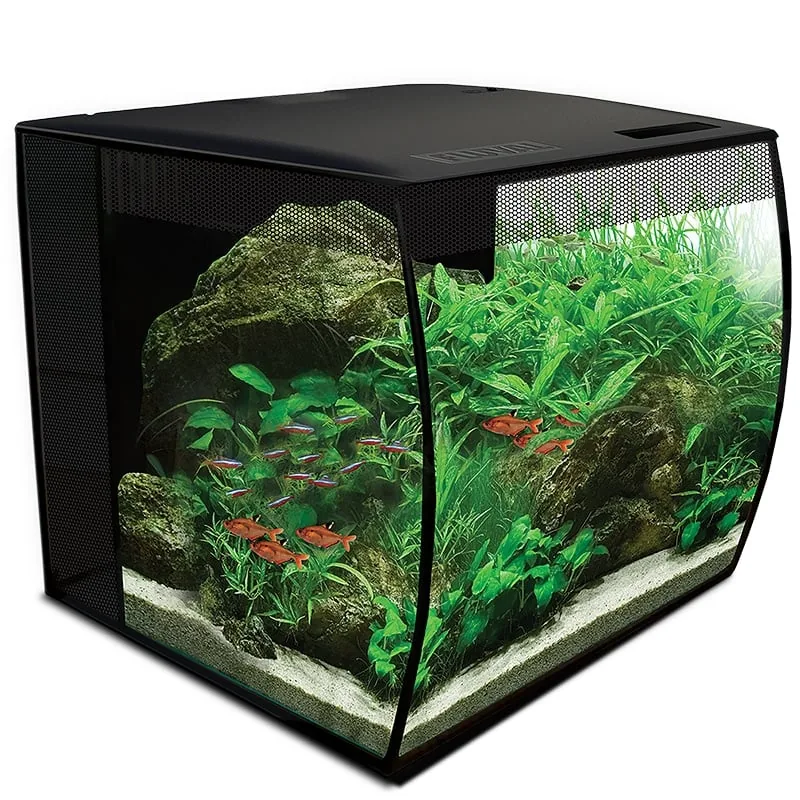
The Flex 9 is tidy because the filter sits behind the display. That is helpful for a small planted scene where tubing would dominate the view. It also means the usable planting rectangle is smaller than the outside dimensions suggest. Keep soil or gravel away from the chamber intake and make sure the lid still closes after planting. The included light is best treated as a low-tech starting point unless its current documentation matches your plants. Adding CO2 later is possible only if the chamber, lid, and diffuser placement leave safe access.
Pros: concealed filtration; neat small display; coordinated top. Cons: rear section costs space; light upgrade fit is restricted; CO2 hardware is not a simple drop-in.
Fluval Flex 15 for more plant mass without external plumbing
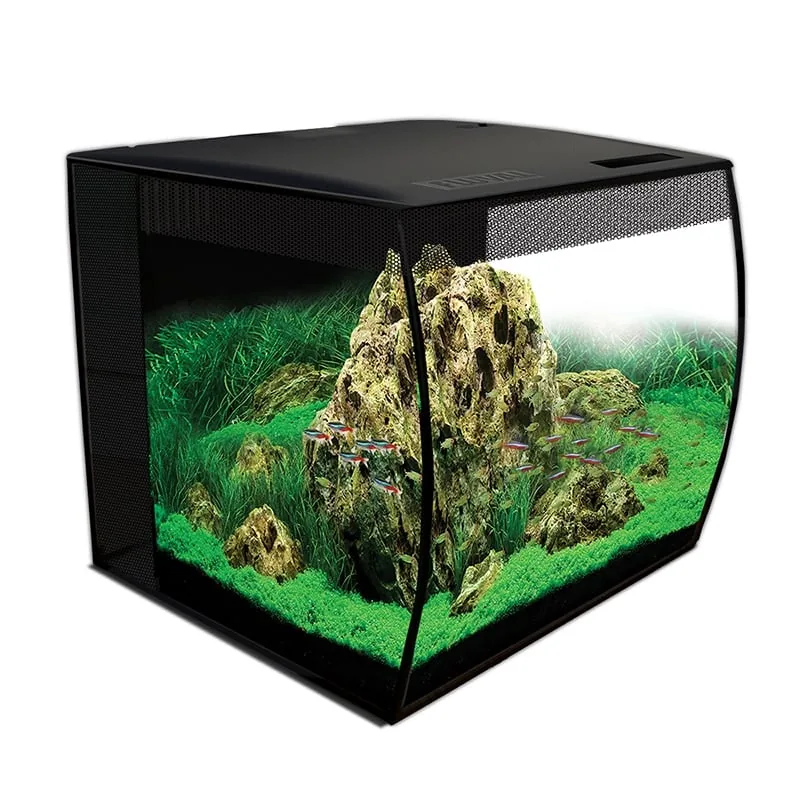
The Flex 15 gives a planted-tank beginner more room for a root-feeding group and a visible open swimming area. The rear chamber keeps the filter visually quiet, though it still consumes part of the footprint. Before adding a thick soil layer, reserve clearance for the intake and return. A low-tech plan is the safest match for the supplied lamp. If you want pressurized CO2 and demanding stems later, check whether a replacement light can sit securely with the original hood before committing to the kit.
Pros: larger all-in-one layout; hidden hardware; useful depth for a simple aquascape. Cons: chamber reduces floor area; hood limits lighting changes; media access is model-specific.
Tetra 10 Gallon Complete for a budget low-light start
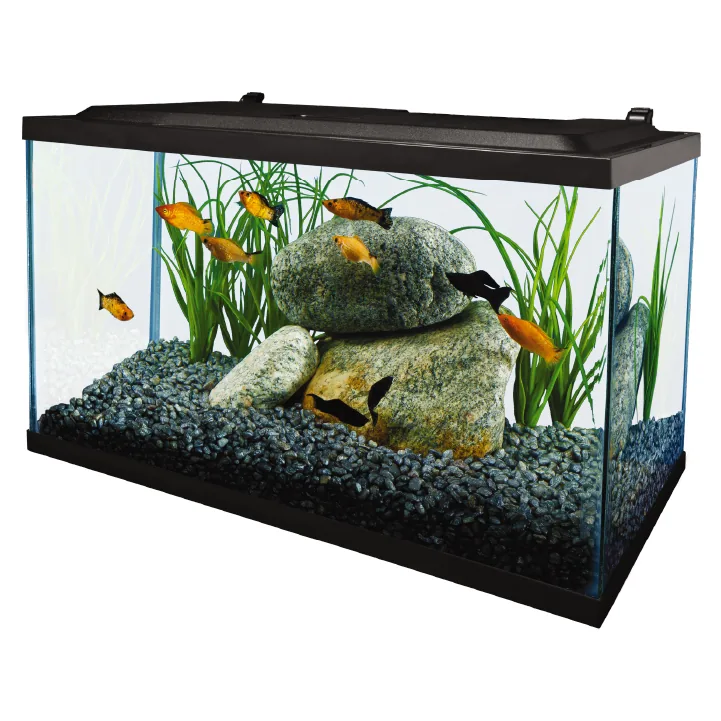
The Tetra 10-gallon format is a practical low-light starting point if the current lamp and hood match your plan. Use the ordinary rectangular shape to leave a clear front pane and place epiphytes on hardscape rather than burying their rhizomes. Confirm filter clearance under the top and identify cartridge replacements. “Complete” does not specify your substrate or plant needs. If you expect to add CO2, check where tubing can enter without lifting the lid or creating a loose opening for fish.
Pros: standard footprint; accessible front-to-back planting; familiar filter format. Cons: contents vary; stock lamp may limit plants; cartridge system can reduce media flexibility.
Tetra 20 Gallon Complete for a planted community tank
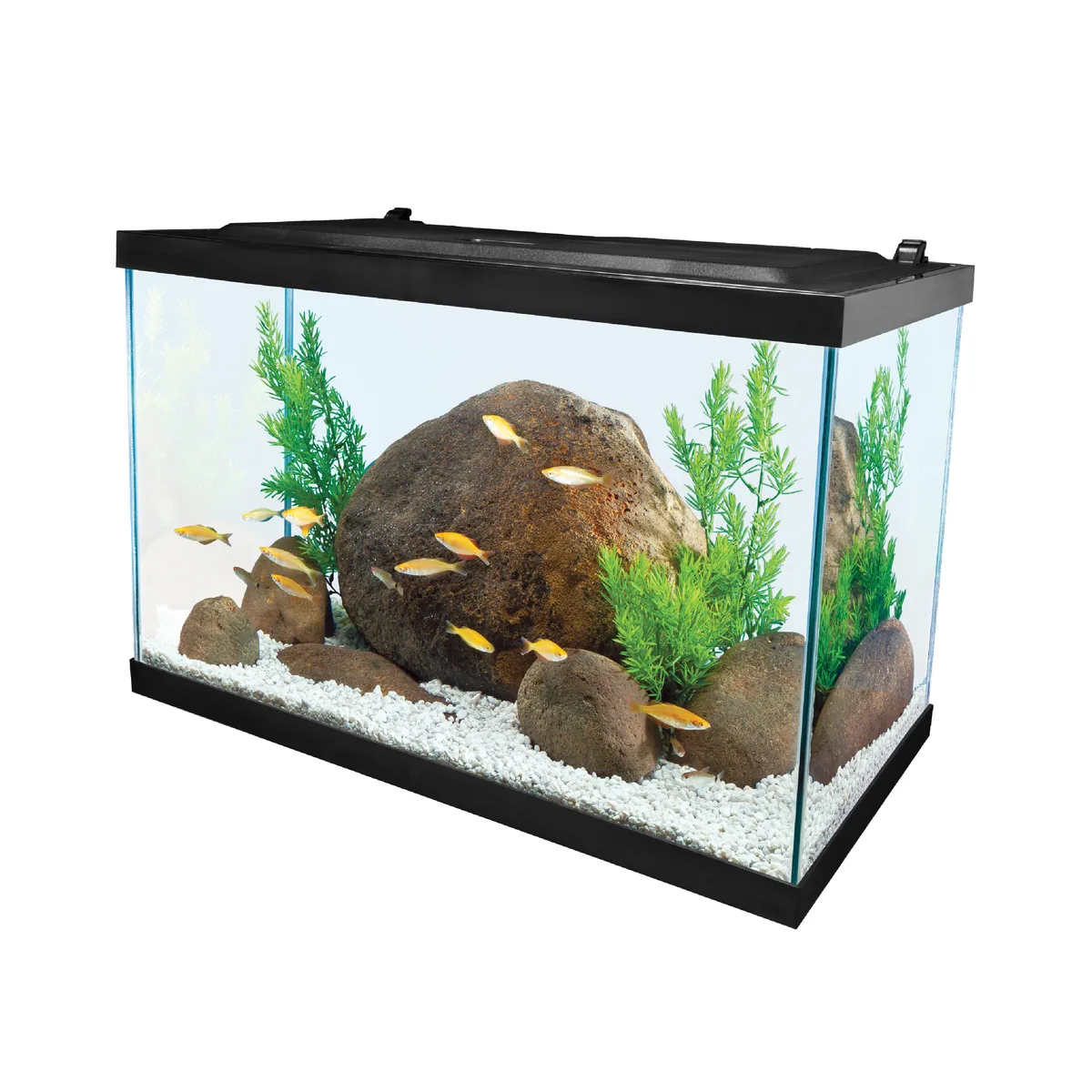
The 20-gallon Tetra gives a planted community more horizontal space than the smaller kit. There is room to slope substrate toward a rear planting line while retaining a foreground path. Measure the lid opening before planning tall stems or a CO2 diffuser. Verify the filter’s intake position and leave a service lane behind the plants. The supplied lamp may fit easy plants, but a high-demand carpet or red stem display needs a documented upgrade path, not wishful thinking.
Pros: generous layout length; standard equipment access; suitable base for a community plan. Cons: filled tank is heavy; stock light may be modest; hood can restrict future hardware.
How to choose a planted kit
Start with the plant list. Low-light plants can make a kit lamp useful, while a dense carpet, demanding stems, or strong coloration may need a more capable fixture. Look for actual controls and mounting information. Do not infer light strength from a marketing photograph.
Next measure the inside, not only the outside. Substrate depth, rocks, wood, rear filter chambers, and a clear swimming lane all compete for space. A long standard tank usually gives more usable planting area than a tall all-in-one with the same advertised capacity. Check that the lid leaves room for pruning tools and a thermometer.
Finally, decide whether CO2 is a real plan. A kit can host a low-tech planted aquarium without any gas system. If you expect pressurized CO2, reserve room for a diffuser, tubing, drop checker, and a light upgrade. A sealed or tightly molded hood may turn that upgrade into a frustrating workaround. Filtration should provide circulation without uprooting plants or blasting a small foreground.
Use an inert gravel or an aquarium plant soil that matches your plan, rinse it as directed, and cycle the tank before livestock. Keep cords above outlets with drip loops. Change one variable at a time when adjusting light, fertilizer, or CO2 so algae and plant response remain interpretable.
Frequently asked questions
Are aquarium kits good for planted tanks?
They can be good low-tech starting points when the included light suits easy plants and the filter leaves usable planting space. Check the fixture rather than trusting the kit label.
Do planted aquarium kits include substrate?
Do not assume it. Verify the live parts list. Most buyers should budget separately for substrate, plant tools, water treatment, and tests.
Can I add CO2 to a kit aquarium?
Often, but the lid and rear equipment area determine how cleanly it fits. Plan tubing and diffuser access first. A pressurized system also calls for matching light and a controlled schedule.
Is a bare glass aquarium a kit?
No. A bare tank is a separate component. It may be the better choice for a custom planted build, but it does not answer a search for an aquarium kit with included equipment.
Which kit is easiest to upgrade?
A standard rectangular kit usually offers more filter and light choices than an all-in-one rear-chamber design. Measure hood clearance before replacing anything and preserve established biological media during a filter change.
Recommendation
For easy plants and simple part access, start with the Aqueon LED 10 or Tetra 10-gallon kit after verifying its current lamp. Choose the Aqueon or Tetra 20-gallon format when layout length matters. Choose Fluval Flex when concealed filtration is worth the upgrade restrictions. Marineland Portrait is a footprint choice, not a shortcut around light reach. Decide the plant list first, then buy the kit whose light, lid, and floor plan leave a credible path forward.
Sources and methodology
We checked manufacturer information from Aqueon, Fluval, Marineland, and Tetra. We compared usable tank layout, light and lid arrangement, filter access, substrate room, and the practical ceiling for a future CO2 setup. Verify the current manual and retailer parts list because bundles change. No hands-on testing was performed.