
Buying guide
Best aquarium test kit for saltwater
A marine tank needs a nitrogen-cycle check first, then salinity and reef-specific tests chosen around the animals you keep.
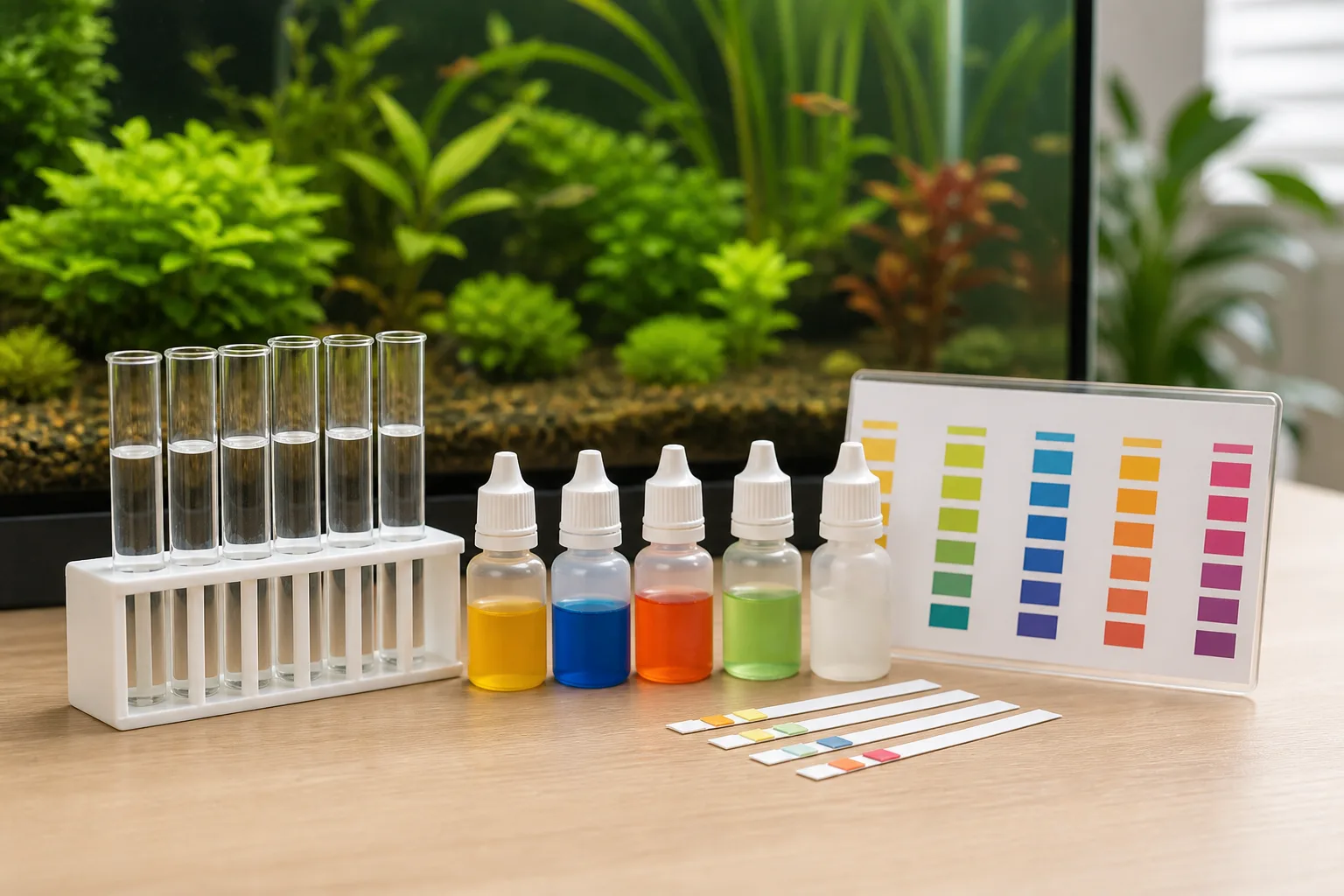
Saltwater testing has two jobs. A new marine aquarium needs ammonia and nitrite watched closely, while an established reef may need nitrate, alkalinity, calcium, and magnesium tracked alongside salinity. The Red Sea Marine Care Test Kit is a practical broad starting point for a marine setup, but a fish-only tank may not need a reef bundle. This is researched guidance, not a hands-on comparison. Check the current contents, reagent supply, and exact salinity tool before ordering.
Quick comparison
| Product | Best for | Workflow | Main drawback |
|---|---|---|---|
| API Saltwater Master Test Kit | New marine tanks | Liquid color-card tests | Salinity needs a separate tool |
| Red Sea Marine Care Test Kit | Fish-only marine care | Several liquid tests | Not a full reef dosing panel |
| Salifert Marine Basic Test Kit | Separate titration tests | Drop-count liquid tests | More hands-on work than strips |
| Seachem MultiTest Ammonia | Free-ammonia questions | Multi-cavity liquid plate | Single parameter only |
| Hanna Instruments Marine Alkalinity Checker | Reef alkalinity tracking | Reagent plus digital meter | Requires calibration habits and refills |
| Tropic Marin Calcium Test Professional | Calcium dosing checks | Liquid titration | Focused on one reef parameter |
| NYOS Nitrate Test | Reef nitrate monitoring | Liquid color comparison | Color endpoints need good light |
Our saltwater picks
API Saltwater Master Test Kit
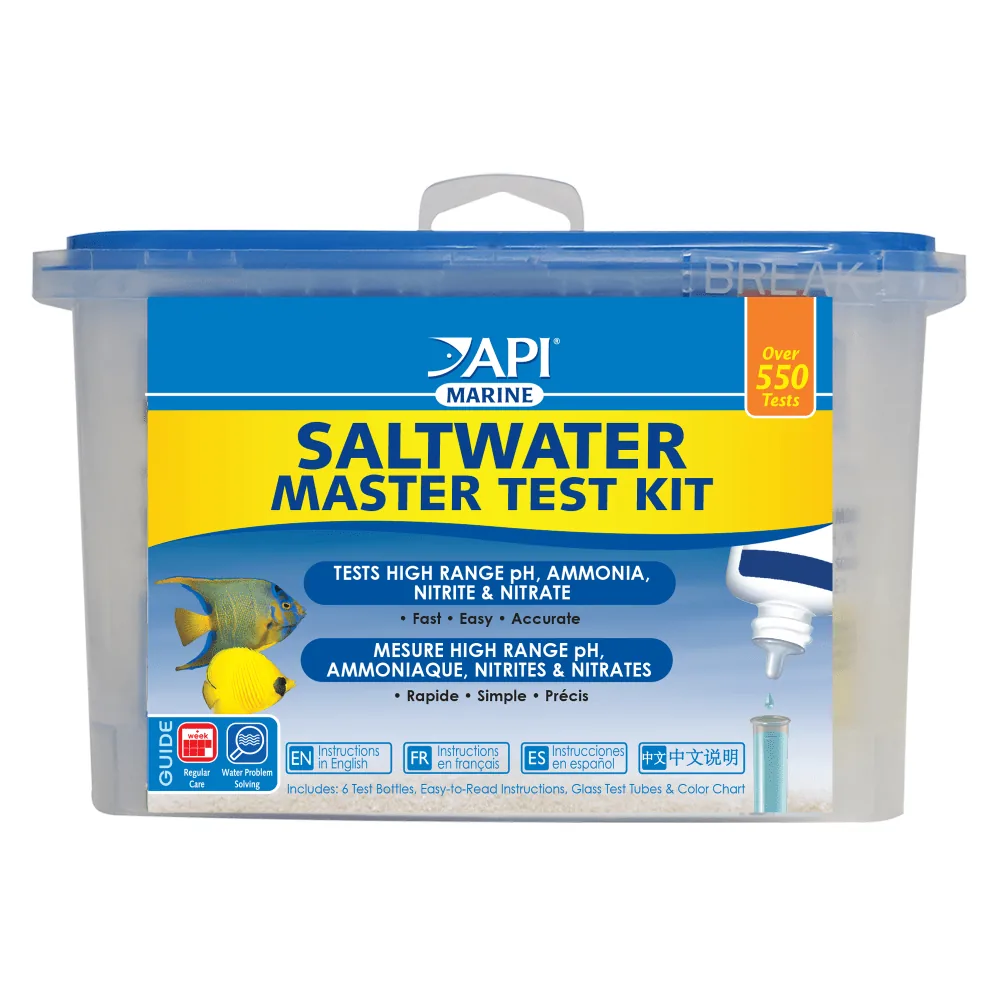
API Saltwater Master Test Kit is a straightforward first look for a new marine aquarium. Its liquid format asks you to take a measured sample, add the named reagents, wait, and compare the result with the supplied card. That process is slower than a strip, but it is easier to repeat in a log during cycling. It does not replace a salinity measurement, so budget for a refractometer or marine-specific meter separately. Follow the current API instructions because reagent order and reading time are part of the test. Pros: familiar liquid workflow; useful for early ammonia, nitrite, and nitrate questions; simple choice for a fish-only marine tank. Cons: it is not a reef chemistry panel, and a second salinity purchase is unavoidable.
Red Sea Marine Care Test Kit
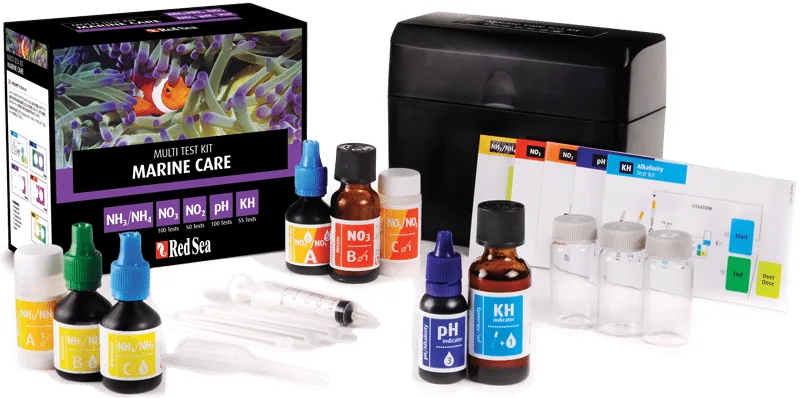
Red Sea’s Marine Care range targets routine marine water checks rather than the full set of tests used for dosing a demanding reef. It suits a fish-only system or an owner who wants to establish nitrogen-cycle and nutrient records before adding corals. The liquid tests require clean vials, measured drops, and color comparison, so reserve bench space and keep the bottles organised. Red Sea also publishes a wider Reef Care program, which is a reminder that this kit should not be mistaken for every reef test. Pros: marine-specific starting point; a coherent liquid routine; useful when fish health and nutrient checks are the immediate concern. Cons: coral keepers may quickly need separate alkalinity, calcium, or magnesium tests, and the box can be more than a minimalist fish-only setup needs.
Salifert Marine Basic Test Kit
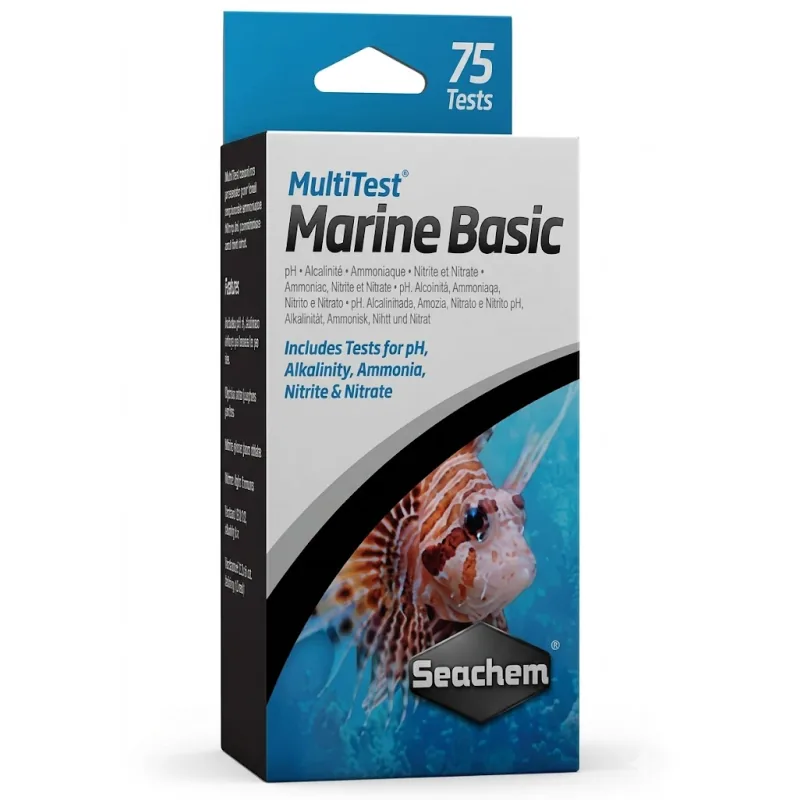
Salifert is a good fit when you prefer individual marine tests and do not want every parameter bundled together. The brand’s marine range uses liquid procedures, including titration-style steps on some tests. That gives the careful aquarist a defined endpoint to record, but it is not a dip-and-read product. Rinse the equipment with tank or prepared saltwater as directed and keep the endpoint method consistent between readings. The main buying task is checking which exact tests a retailer calls a basic kit. Pros: flexible parameter selection; useful for an owner comfortable with drop counting; individual refills make a focused routine possible. Cons: setup takes attention, and the basic set may leave salinity or reef dosing values uncovered.
Seachem MultiTest Ammonia
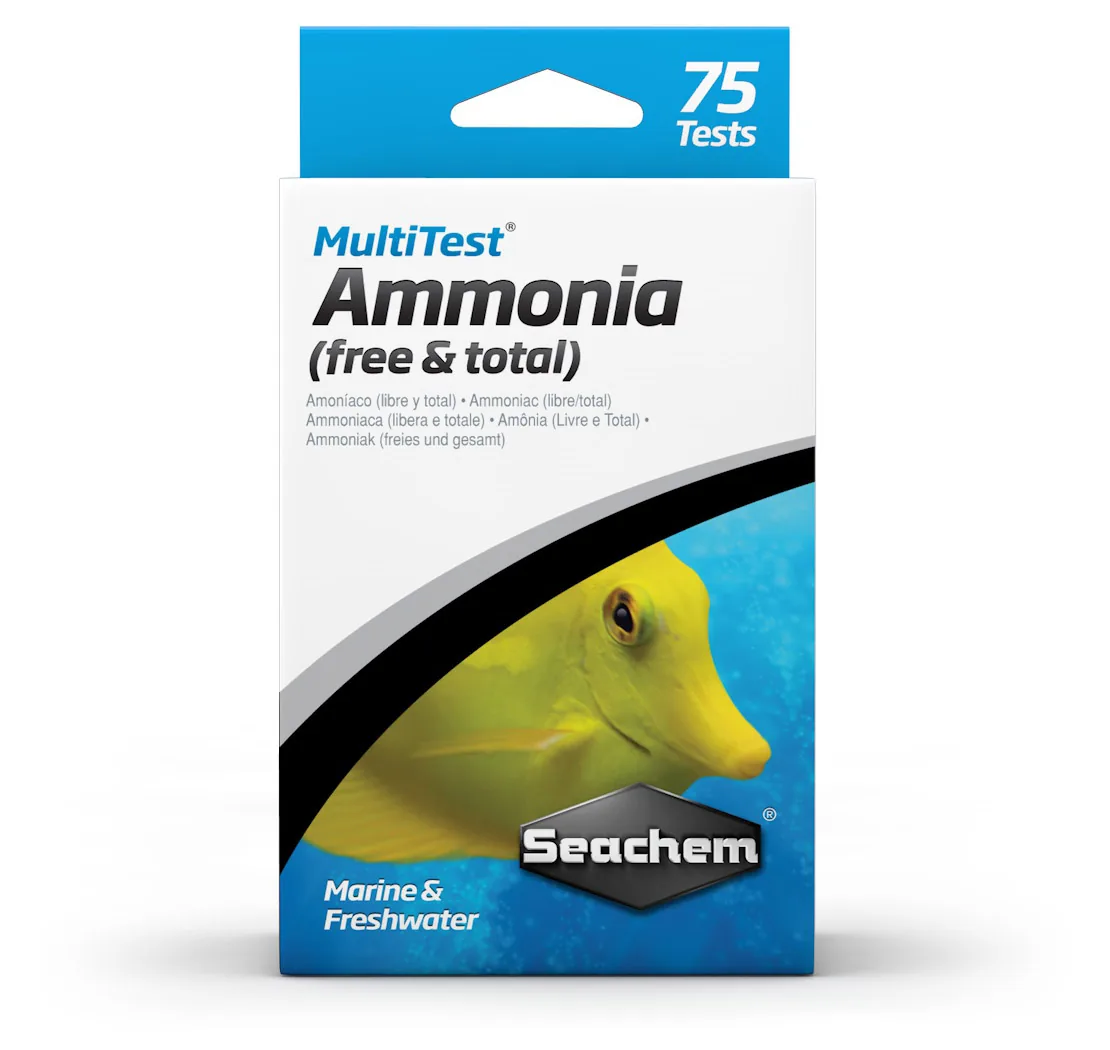
Seachem MultiTest Ammonia earns a place as a specialist marine add-on. Seachem says it measures both total and free ammonia in marine or freshwater, uses a plate that can run multiple tests together, and includes a reference sample. That distinction matters when an aquarist wants to understand the toxic free fraction or is using an ammonia-removal product. It remains an ammonia test, not a complete saltwater kit. Pair it with separate salinity and nutrient checks, and follow Seachem’s current method rather than comparing its colour to another brand’s card. Pros: marine-compatible; focused information when ammonia is the urgent issue; simultaneous wells help repeated checks. Cons: narrow coverage means buying a second kit is still necessary for almost every established aquarium.
Hanna Instruments Marine Alkalinity Checker
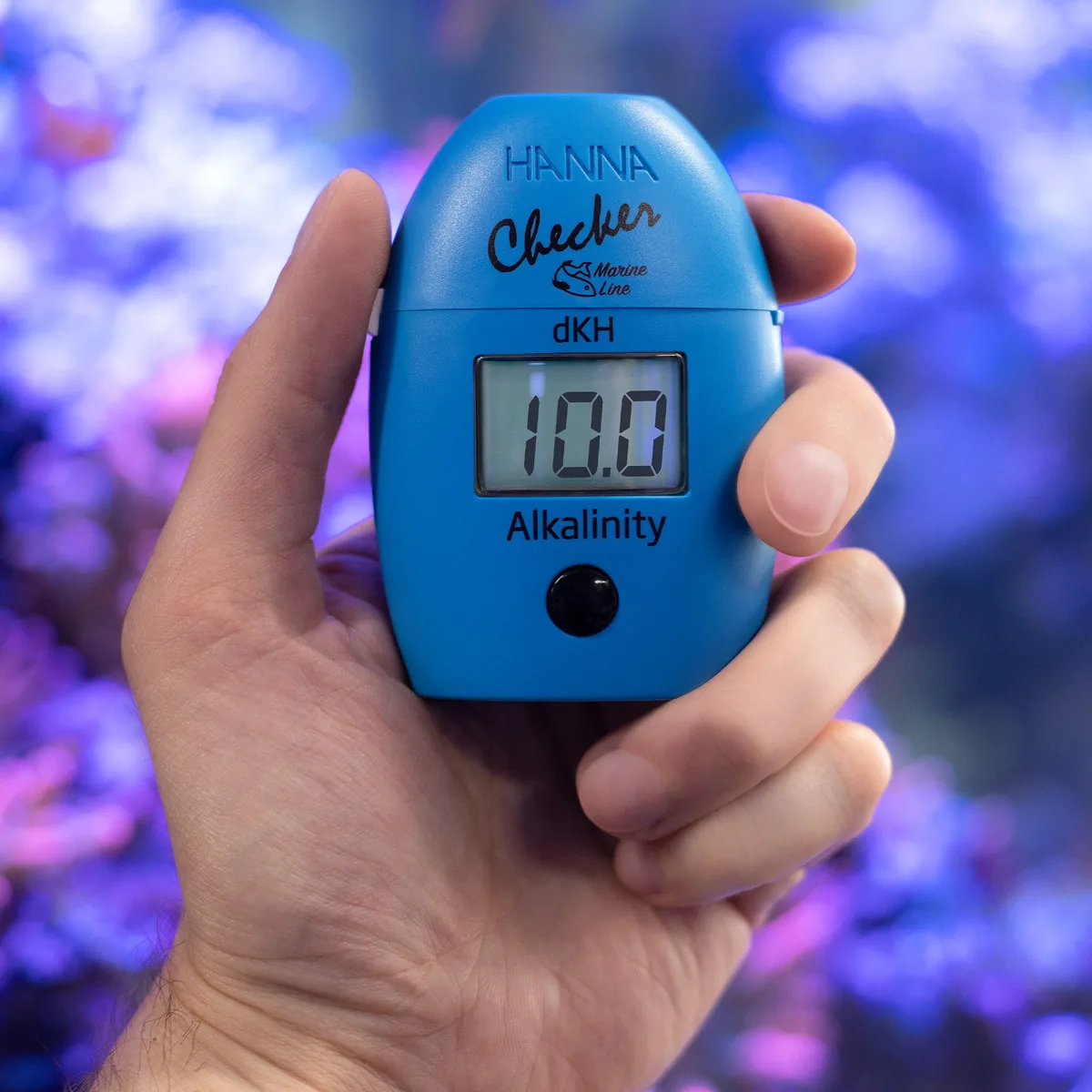
The Hanna Marine Alkalinity Checker is aimed at reef keepers who want a digital result for a parameter that changes with dosing and coral demand. You still prepare the vial and add the correct reagent. The meter handles the final optical reading, which avoids choosing between two close colour blocks. It is a focused instrument, so it makes little sense as the only test in a new fish-only tank. Confirm the current model number, marine application, and matching reagent supply before checkout. Pros: digital endpoint; useful for a logged reef-dosing routine; less dependent on printed colour-card judgement. Cons: instrument care and reagent replenishment add chores, and it says nothing about salinity, nitrate, or calcium.
Tropic Marin Calcium Test Professional
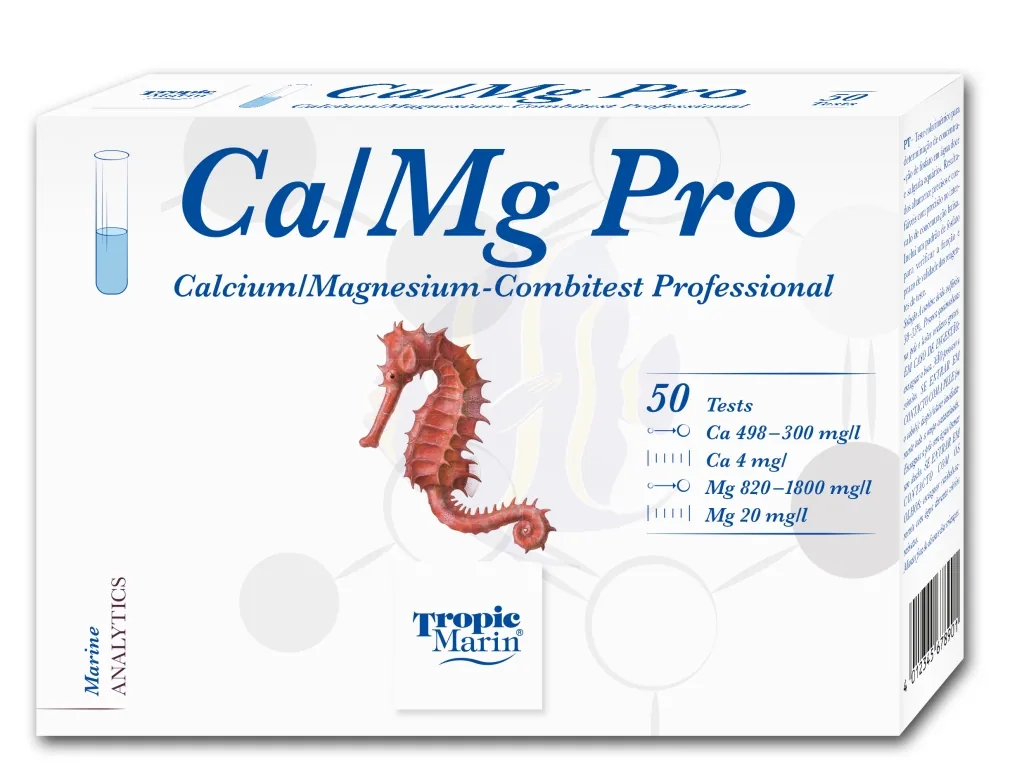
Tropic Marin Calcium Test Professional is for the reef keeper who already knows calcium is part of the maintenance question. It is not a general cycling product. A liquid titration workflow suits dosing decisions because you can repeat the same sample preparation and endpoint procedure while keeping alkalinity and other records beside it. Use it with the water-change schedule and livestock needs rather than chasing a number in isolation. Pros: purpose-built calcium check; fits a deliberate reef log; a sensible companion to alkalinity testing. Cons: calcium alone cannot explain reef chemistry, and titration takes longer than an informal strip screen.
NYOS Nitrate Test
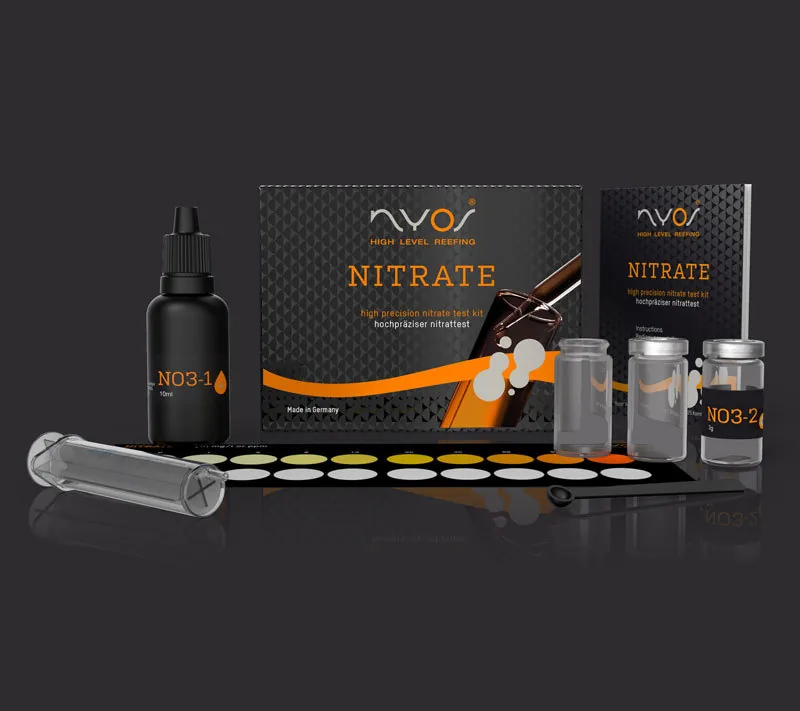
NYOS Nitrate Test is a focused option for a marine aquarist watching nutrient changes after feeding, filtration adjustments, or water changes. Its value is the narrow question, not a claim that one test can describe a reef. Liquid colour comparison rewards a clean vial, the correct waiting period, and steady lighting when you compare one reading with the next. Keep a nitrate log and interpret the trend with the animals and feeding routine in view. Pros: dedicated nutrient check; simple place in a reef maintenance record; useful when nitrate is the missing data point. Cons: a colour endpoint is still subjective, and the kit does not cover ammonia, salinity, or coral-related alkalinity and calcium.
How to choose a saltwater test kit
Separate cycling from reef maintenance. A new marine tank needs ammonia and nitrite watched while biological filtration develops. Nitrate then helps you see where nutrients are heading. An established fish-only tank may mainly need salinity, pH, and nutrient checks. A coral system adds alkalinity, calcium, and possibly magnesium because dosing and consumption change the questions.
Salinity is not optional. A general water test box may cover several chemistry values yet omit the tool that tells you whether new saltwater actually matches the tank. Choose a refractometer, hydrometer, or digital salinity instrument from a marine-specific product line, and use it consistently. Temperature and calibration instructions matter to the reading, so follow the instrument maker’s method.
Liquid tests are slower, but they let you repeat a defined sample and endpoint. Strips are attractive for quick screening, though saltwater colour and timing can make a borderline block hard to interpret. Digital checkers remove some visual judgement, while adding batteries, cleaning, reagent packets, and a separate calibration habit. Pick the workflow you will actually use after a long day of tank maintenance.
Do not buy a reef panel because the box looks complete. List the animals, dosing products, and water source first. Then buy the missing measurements. Keep reagents dry, note expiry information, rinse vials properly, and repeat an unexpected result before making a large chemistry correction.
Frequently asked questions
What should I test first in a new saltwater tank?
Prioritise ammonia and nitrite while the tank cycles, then monitor nitrate. Measure salinity with a suitable marine instrument because a general test kit does not replace it.
Does a reef aquarium need more tests than a fish-only tank?
Usually, yes. Corals and dosing routines can make alkalinity, calcium, and magnesium useful additions, while a fish-only tank may need a smaller set.
Are digital marine checkers easier than liquid tests?
They can make the final reading less subjective, but sample preparation and reagents still matter. They also add instrument care and ongoing consumables.
Can I use a freshwater ammonia test in saltwater?
Only when the manufacturer explicitly says the product works in marine water. Seachem MultiTest Ammonia is one example whose documentation names both applications.
How should I read a saltwater colour test?
Use the stated sample volume and wait time, compare under steady light, and repeat a surprising result. Keep the vial clean so residue does not alter the next reading.
Recommendation
Start a new fish-only marine tank with API Saltwater Master Test Kit or Red Sea Marine Care, then add a reliable salinity instrument. Reef keepers should buy around their dosing routine. Hanna alkalinity, Tropic Marin calcium, or NYOS nitrate is more useful than a second broad box when that single parameter is the gap in your log.
Sources and methodology
Product information was checked against manufacturer resources from API Fishcare, Red Sea, Seachem, Hanna Instruments, Tropic Marin, NYOS, and Salifert. We compared marine relevance, parameters covered, liquid or digital workflow, readability, refill needs, and audience fit. No hands-on testing was performed. Confirm the exact model and package contents in the live retailer listing.