
Buying guide
Best aquarium test kit for freshwater
For most freshwater tanks, a dependable liquid kit is the sensible starting point, with strips or a single-parameter test added when they suit your routine.
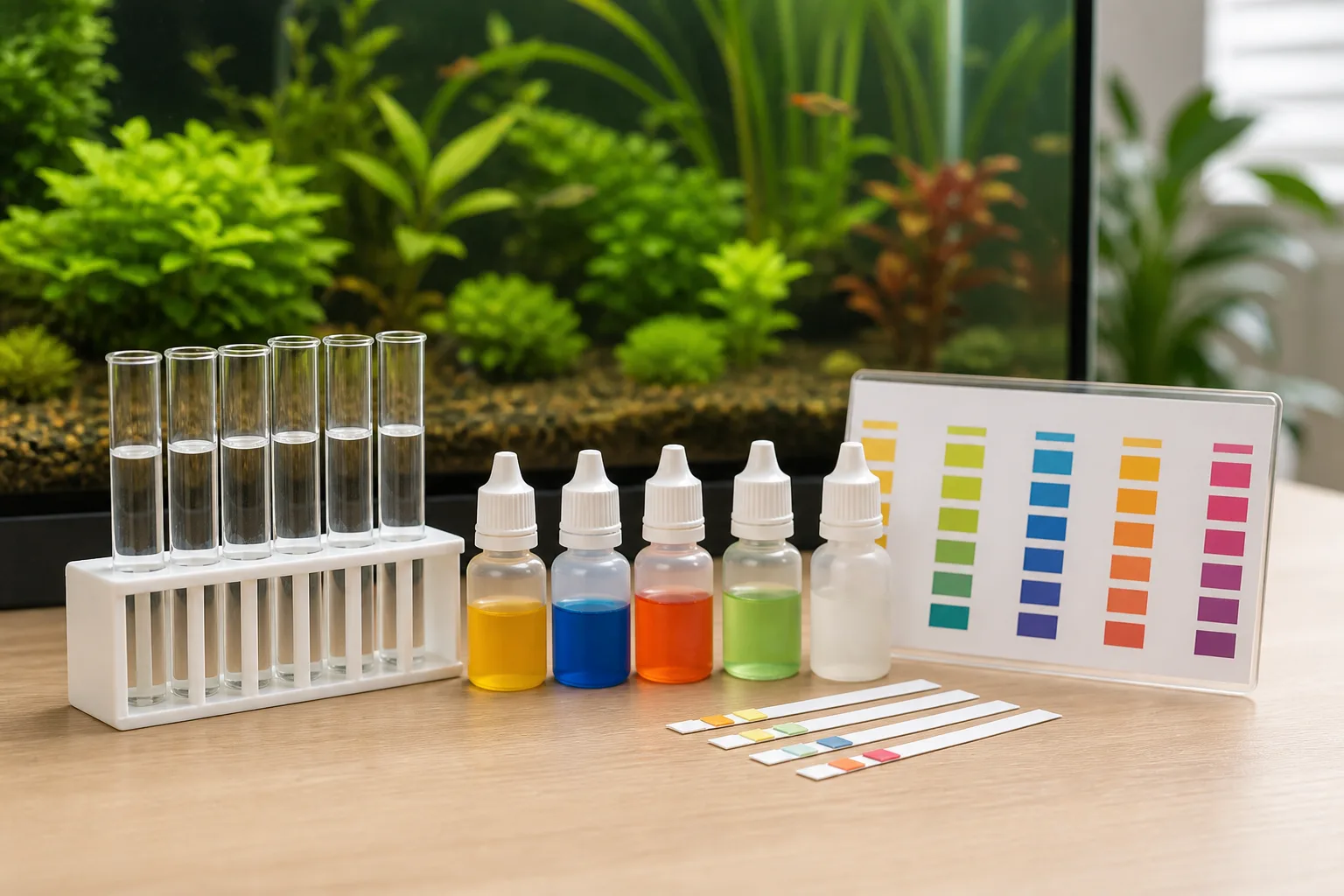
Freshwater testing is easiest to keep up with when the kit answers the question you actually have. A new tank needs ammonia and nitrite checks. A planted community tank may also need nitrate, pH, GH, and KH. The API Freshwater Master Test Kit is the broad starting point here, while Tetra EasyStrips make quick screening less fussy. This is a research-based guide, not a hands-on test. Check the current package, instructions, and stock before buying.
Quick comparison
| Product | Best for | Workflow | Main drawback |
|---|---|---|---|
| API Freshwater Master Test Kit | Cycling and regular checks | Liquid reagents and color cards | More steps and bottles to store |
| Sera Aqua-Test Box | A broad test box | Liquid tests, with model-specific contents | Confirm the exact regional box |
| JBL ProAquaTest CombiSet Plus Fe | Planted tanks | Liquid comparison tests | A poor fit if you do not need iron |
| Tetra EasyStrips 6-in-1 Aquarium Test Strips | Fast weekly screening | Dip, wait, compare | Timing and color reading matter |
| Seachem MultiTest Ammonia | Ammonia questions | Multi-cavity liquid test | It does not replace a full kit |
| Hanna Instruments Freshwater Nitrate Checker | Digital nitrate readings | Reagents plus a colorimeter | Only covers one parameter |
| Dennerle GH-KH Plus Test | Shrimp and soft-water setups | Drop-count liquid tests | You still need ammonia and nitrate tests |
Our freshwater picks
API Freshwater Master Test Kit
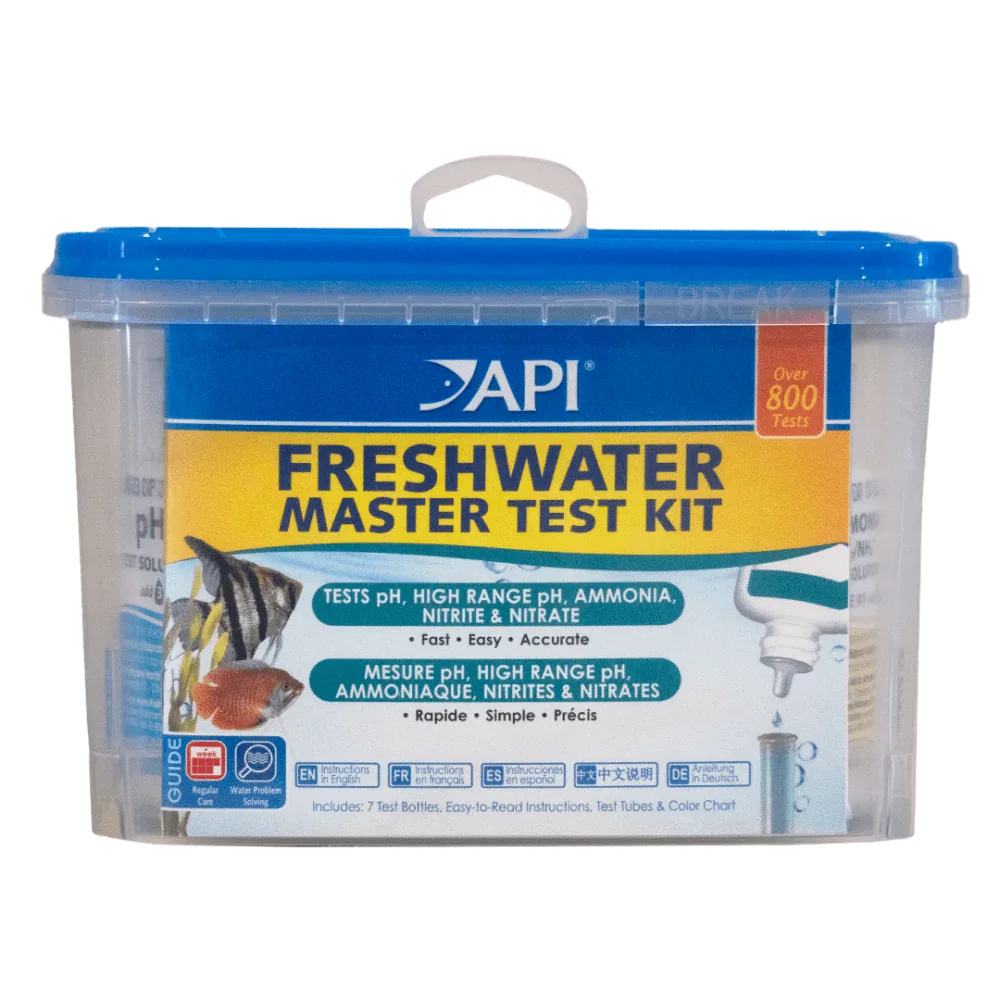
API’s freshwater kit is the sensible first purchase when you are cycling a tank or want several core checks in one box. The manufacturer presents it as a way to monitor aquarium water quality, and its liquid workflow gives you a sample, measured drops, a wait, and a color-card comparison. That takes longer than a strip, but it creates a repeatable routine you can write down. Use the current instructions for each bottle rather than assuming every test has the same count or waiting time. Reagents are consumables, so check replacement availability before the first bottle runs out. Pros: broad everyday coverage; familiar liquid format; useful for a new aquarium. Cons: bottle handling and color matching take patience, and the box does not answer every planted-tank or shrimp-specific question.
Sera Aqua-Test Box
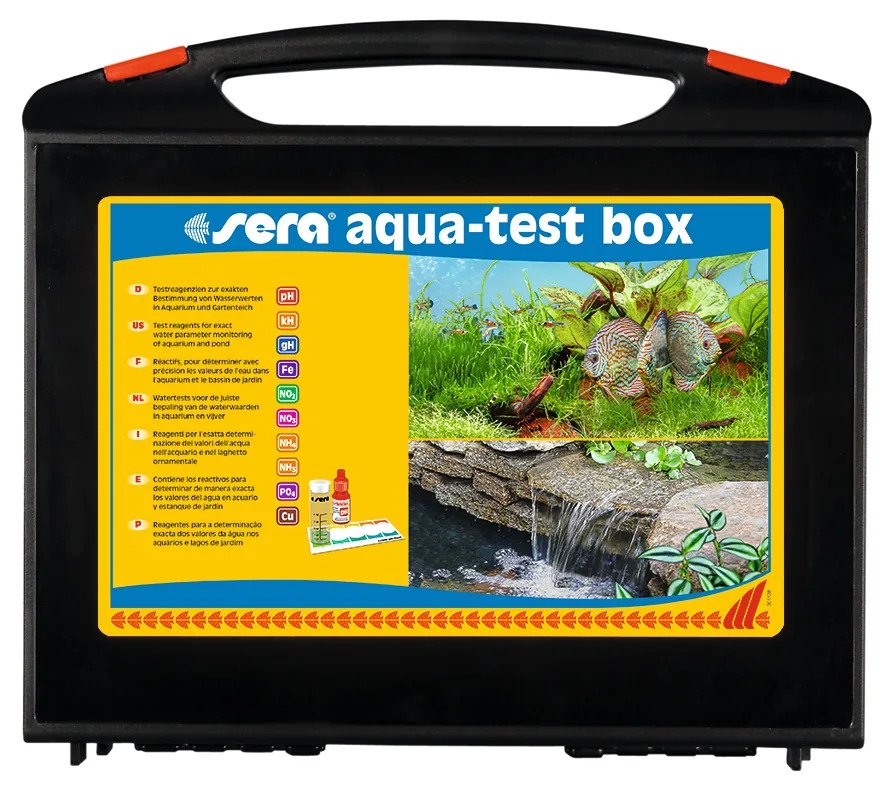
Sera’s Aqua-Test Box is worth considering when you prefer a branded set of separate liquid tests rather than one narrow strip. Sera maintains a freshwater test range and publishes product instructions, but the contents of similarly named boxes can vary by market. Read the current listing before ordering and note which tests are actually inside. A box format suits an aquarist who keeps a log and tests after a water change, new fish, or a cycling milestone. Drop tests require clean vials and careful rinsing between samples. Pros: a structured freshwater range; liquid readings are easy to repeat when the method stays consistent; replacement tests are available as individual products in the Sera range. Cons: regional packaging can confuse buyers, and the setup is slower than dipping a strip.
JBL ProAquaTest CombiSet Plus Fe
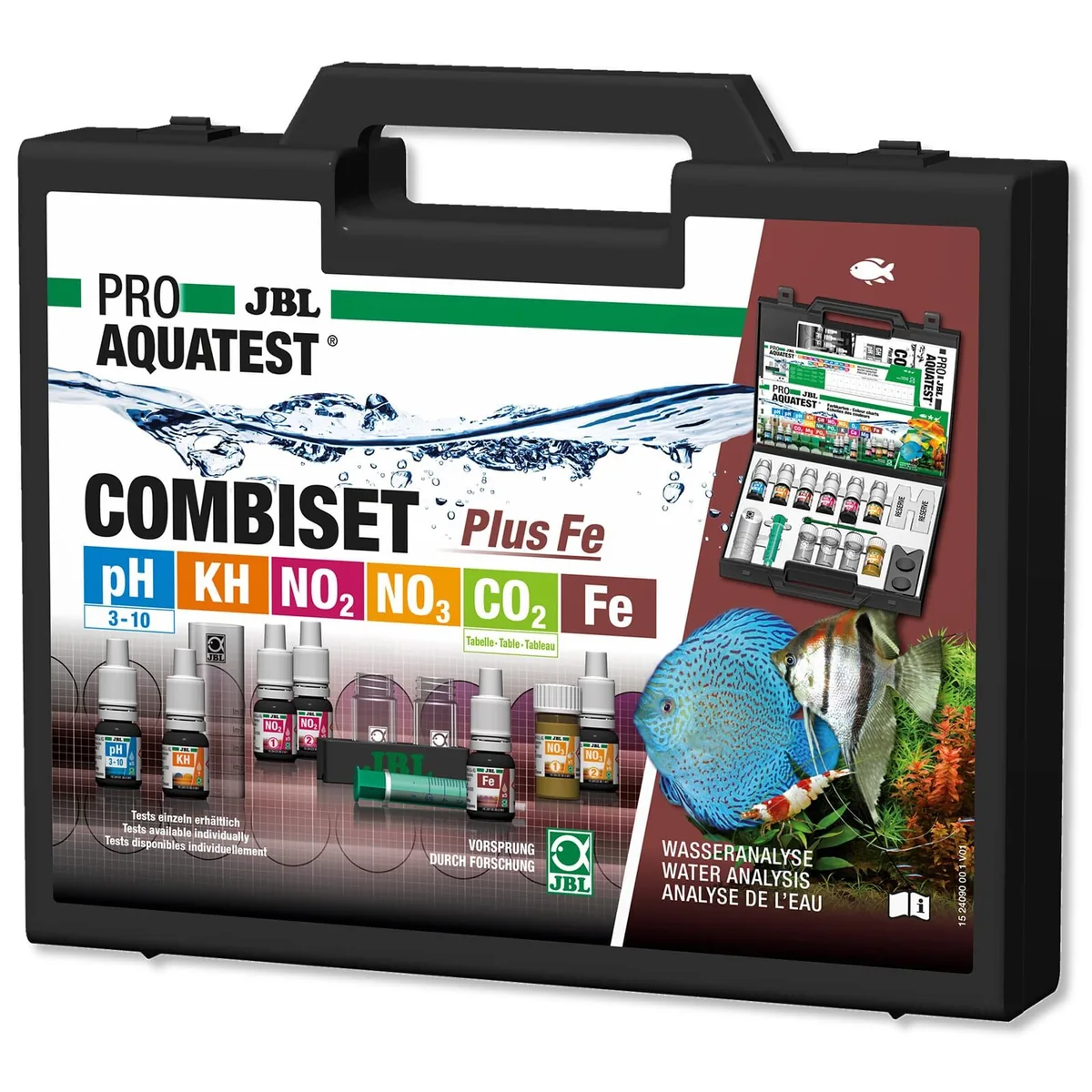
JBL’s CombiSet Plus Fe makes more sense for a planted freshwater aquarium than for a bare quarantine tank. The Plus Fe name points to iron coverage alongside the other water checks in the set, which is useful when you are adjusting plant fertiliser and want a measurement rather than a guess. JBL provides product documentation and a water-analysis service, so follow the exact color-card method for your version. The kit is a liquid workflow with more preparation than strips, but the extra parameter can explain why plants stall even when the nitrogen cycle looks fine. Pros: a plant-aware choice; documented comparison method; helpful when iron is part of your maintenance question. Cons: the iron test adds complexity and is wasted space for fish-only keepers; verify contents for your market.
Tetra EasyStrips 6-in-1 Aquarium Test Strips
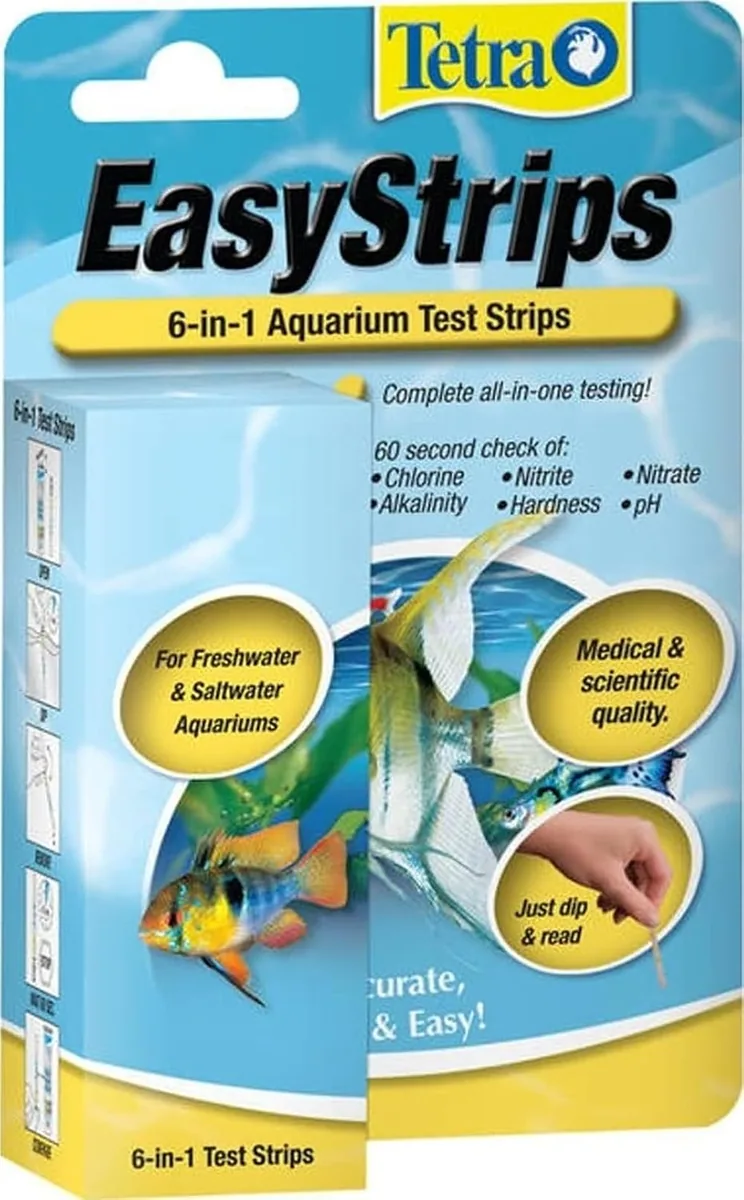
Tetra EasyStrips 6-in-1 is the pick for an owner who skips testing because liquid kits feel like a chore. Tetra describes EasyStrips as a quick way to check several water issues, with pads read against the supplied guide after the stated wait. Keep the lid shut and the strips dry. A strip is good for a quick look before a water change or when several tanks need screening. It is less pleasant when a color sits between two blocks and a fish-health decision depends on the result. Use a liquid test to confirm a result that looks abnormal. Pros: compact storage; no reagent bottles; fast routine screening. Cons: colors can be subjective, timing is easy to miss, and strip packs need regular replenishment.
Seachem MultiTest Ammonia
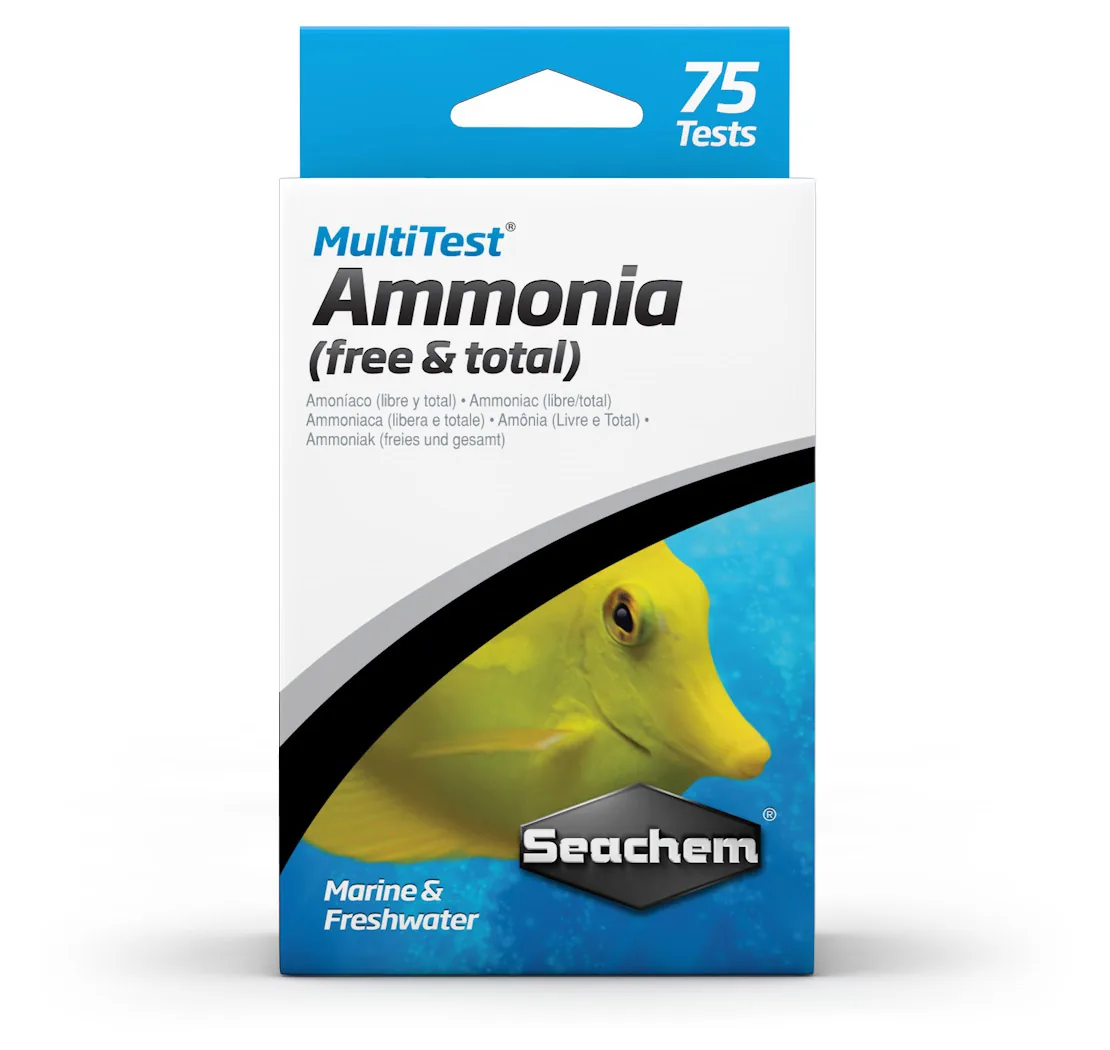
Seachem MultiTest Ammonia is a specialist add-on for a tank where ammonia is the immediate concern. Seachem says it measures total and free ammonia in fresh or marine water, uses a multi-cavity plate for simultaneous tests, and includes a reference sample for validation. That makes it different from a general box. It is especially relevant when you want to distinguish free ammonia while using an ammonia-binding product, provided you follow Seachem’s instructions and understand the result. Buy it alongside a broader kit, not instead of one. Pros: focused ammonia information; multiple cavities make side-by-side checks practical; usable in freshwater. Cons: it leaves pH, nitrite, nitrate, and hardness to other tests, so its narrow purpose can increase your total kit cost.
Hanna Instruments Freshwater Nitrate Checker
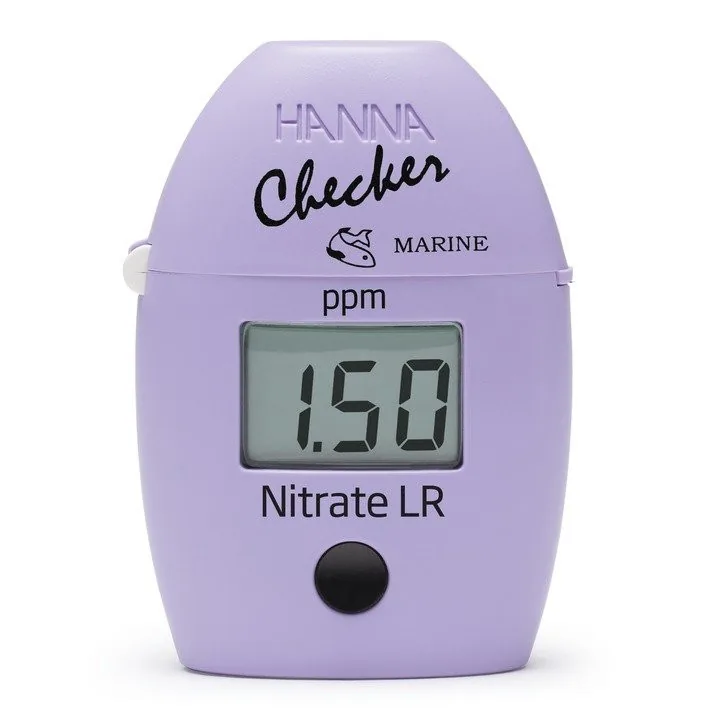
Hanna Instruments is the right direction for an aquarist who dislikes judging a nitrate color by eye and is willing to run a digital single-parameter test. The checker still needs a prepared sample and the correct reagent steps, then the instrument reads the prepared color. That is not instant testing, but it moves the final comparison away from a printed card. Confirm that the current Hanna model is intended for freshwater and that its reagent packets are easy to source where you live. Pros: digital readout; focused on a common maintenance parameter; repeatable procedure when sample preparation is consistent. Cons: it does not cover the rest of the nitrogen cycle, and the meter plus ongoing reagents is a larger commitment than strips.
Dennerle GH-KH Plus Test
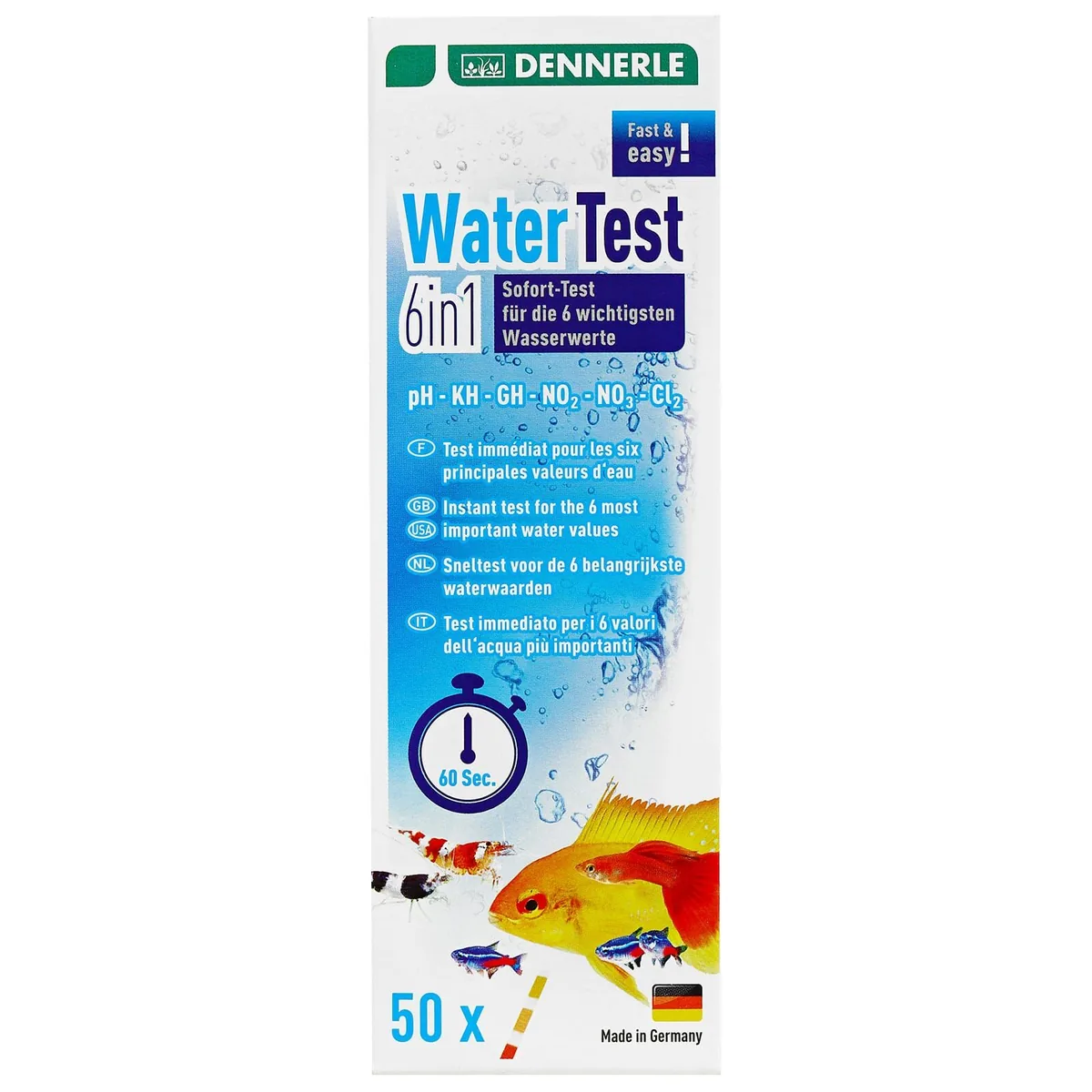
Dennerle’s GH and KH testing is a better match for shrimp keepers and soft-water aquarists than for someone just starting a fishless cycle. Drop-count tests let you track hardness changes in a way that is useful when remineralising water or mixing a consistent change-water recipe. The kit is about mineral balance, not toxic nitrogen compounds, so pair it with ammonia, nitrite, and nitrate coverage. Keep the vial clean and record the endpoint using the current instructions. Pros: answers the hardness question directly; useful for repeatable prepared water; targeted rather than padded with unrelated tests. Cons: it is not a complete freshwater kit, and endpoint changes can be hard to judge in a strongly coloured aquarium sample.
What matters for a freshwater test kit
Start with the tank’s stage. During cycling, ammonia and nitrite deserve priority, with nitrate helping show how the process is moving. After stocking, the same checks help investigate an unexplained problem or a missed water change. A stable mature tank may need less frequent testing, but a record is still useful when fish, plants, or tap water changes.
Liquid tests suit decisions where you want a measured routine. Rinse the vial, use the stated sample volume, add the drops in order, wait the full time, and compare under similar light. Strips suit frequent screening because they are quick and clean, but moisture damages unused pads and a late reading can mislead. Digital instruments reduce the subjectivity of a color card, yet they still depend on good sample preparation and fresh reagents.
Hardness deserves its own decision. GH describes general mineral content, while KH relates to carbonate buffering. Neither replaces ammonia testing. Shrimp keepers, livebearer keepers, and aquarists mixing purified water may care about GH and KH every bit as much as pH. Choose a kit that fits the livestock and the water source, not the biggest box on the shelf.
Read the refill situation before checkout. A kit with a clear method is only useful if its reagent bottles or strips can be replaced. Store liquids as the maker directs, keep strips sealed, and write the opening date on consumables. If one reading surprises you, repeat it with clean equipment before changing several water parameters at once.
Frequently asked questions
Which freshwater tests should a new tank have?
Ammonia and nitrite are the first priorities during cycling. Add nitrate and pH for a fuller picture, then choose GH or KH if your fish, shrimp, plants, or water source make hardness relevant.
Are strips enough for a freshwater aquarium?
They can be useful for screening and trends. Confirm a surprising result with a liquid or digital test before making a large correction, and follow the strip timing exactly.
Should I buy a kit with GH and KH?
Buy one when hardness affects your livestock or when you mix and remineralise water. It is less useful as a substitute for ammonia and nitrite coverage in a new tank.
Does a freshwater test kit expire?
Reagents and strips do. Check the package date and storage directions, and replace a consumable that has changed appearance or gives an implausible result.
Can one kit test every freshwater parameter?
No. General kits cover common maintenance values, while planted tanks, shrimp tanks, and specialist setups often need separate hardness, iron, or digital nitrate tests.
Recommendation
Choose API Freshwater Master Test Kit for a broad first kit, Tetra EasyStrips for quick screening, or Seachem MultiTest Ammonia when ammonia is the specific concern. Planted and shrimp tanks should spend the next dollar on the missing parameter, whether that is iron or hardness, rather than buying a second generic box.
Sources and methodology
Product details were checked against manufacturer pages for API Fishcare, Tetra EasyStrips, Seachem MultiTest Ammonia, JBL, Sera, Hanna Instruments, and Dennerle. We compared test purpose, workflow, parameter coverage, readability, consumable needs, and audience fit. No hands-on testing was performed. Product names and package contents can vary by market, so verify the live listing.