
Buying guide
Best aquarium substrate for cichlids
Cichlids move the floor to claim territory and raise broods. Pick a grain they can shift safely, then match chemistry to the species.
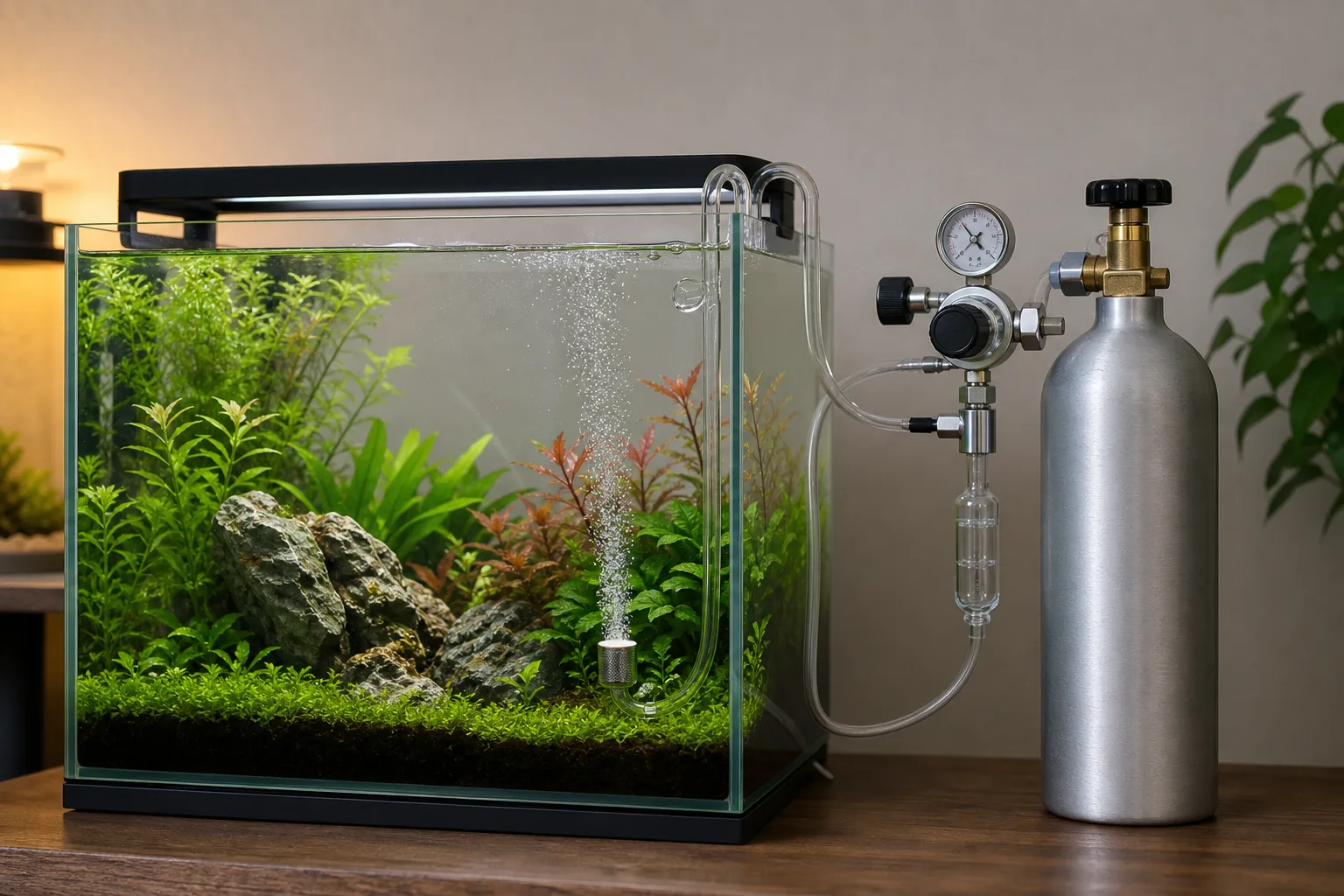
Cichlids are not passive tank ornaments. Many sift sand, excavate pits or carry mouthfuls while spawning. The best aquarium substrate for cichlids gives them a rounded, movable floor without trapping waste or pushing water chemistry in the wrong direction. African Rift Lake species often need harder, alkaline water, while South and Central American fish may suit inert material and a different target. This is a research-based guide, not a hands-on test. Check the exact bag and your source water before ordering.
Quick comparison
| Product | Best for | Main drawback |
|---|---|---|
| CaribSea African Cichlid Mix | African Rift Lake aquariums | Verify chemistry effect |
| CaribSea Super Naturals Crystal River Sand | Inert digging floor | Needs careful rinsing |
| Seachem Onyx Sand | Harder-water setups | Can influence hardness |
| Seachem Flourite Black Sand | Planted cichlid displays | Fracted texture is not ideal for sifters |
| AquaNatural Diamond Black Sand | High-contrast inert look | Hidden waste on dark grains |
| Imagitarium Black Aquarium Sand | Simple community cichlid tank | Check variant texture |
| Spectrastone Shallow Creek Gravel | Larger cichlids that do not sift | Gaps catch debris |
Our picks
CaribSea African Cichlid Mix
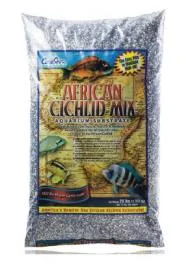 This is the specialist choice for an African Rift Lake layout where a pale mineral look belongs with alkaline, harder water. It makes sense for Malawi, Victoria or Tanganyika projects only when the keeper has selected the lake and measured the source water. Do not assume a bag alone creates a complete water recipe. Watch pH, GH and KH after setup, and keep a siphon available around rocks where fish excavate. Pros: purpose-built visual direction for African cichlids. Cons: the chemistry may be wrong for South American species or already-hard tap water.
CaribSea Super Naturals Crystal River Sand
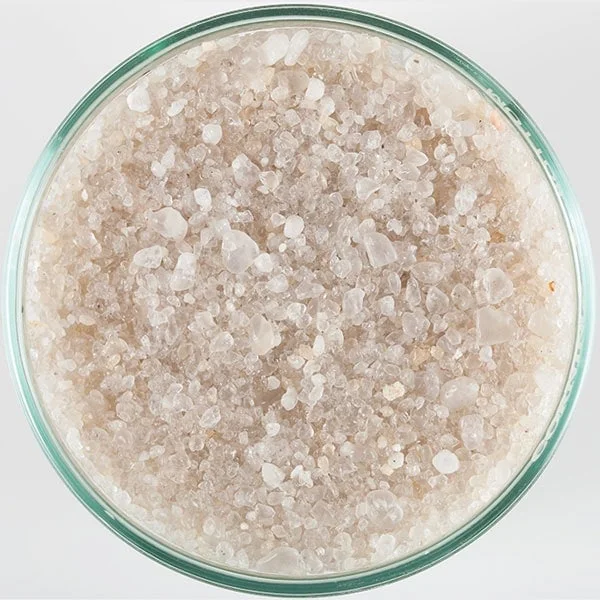 Fine river sand is the flexible option when species choice calls for inert material. A cichlid can push it into a spawning pit, and the small grains leave fewer large voids than chunky gravel. Add it in a shallow, even layer, then leave open areas where fish can work. Rinse in batches and pour water over a saucer. Pros: natural digging behavior and a neutral starting point. Cons: disturbed sand can cloud the tank, and a deep bed makes detritus removal harder.
Seachem Onyx Sand
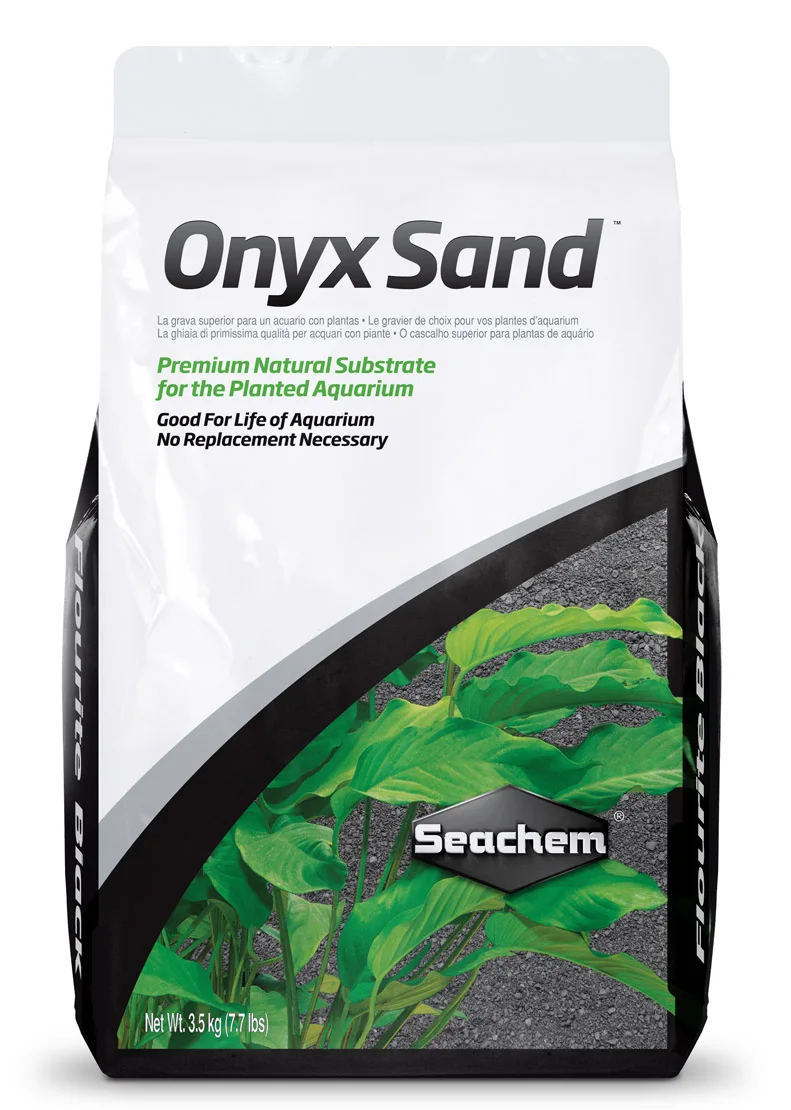 Onyx Sand belongs on a shortlist when a harder-water direction is useful and the aquarist is prepared to monitor it. It is not a universal African cichlid fix, and it is not automatically right for soft-water fish. Test the tank before and after adding it. Fine material lets fish sift naturally, but keep the layer shallow enough to vacuum without removing the whole bed. Pros: sand format with a possible role in mineral-oriented setups. Cons: any chemistry effect can complicate a carefully controlled recipe.
Seachem Flourite Black Sand
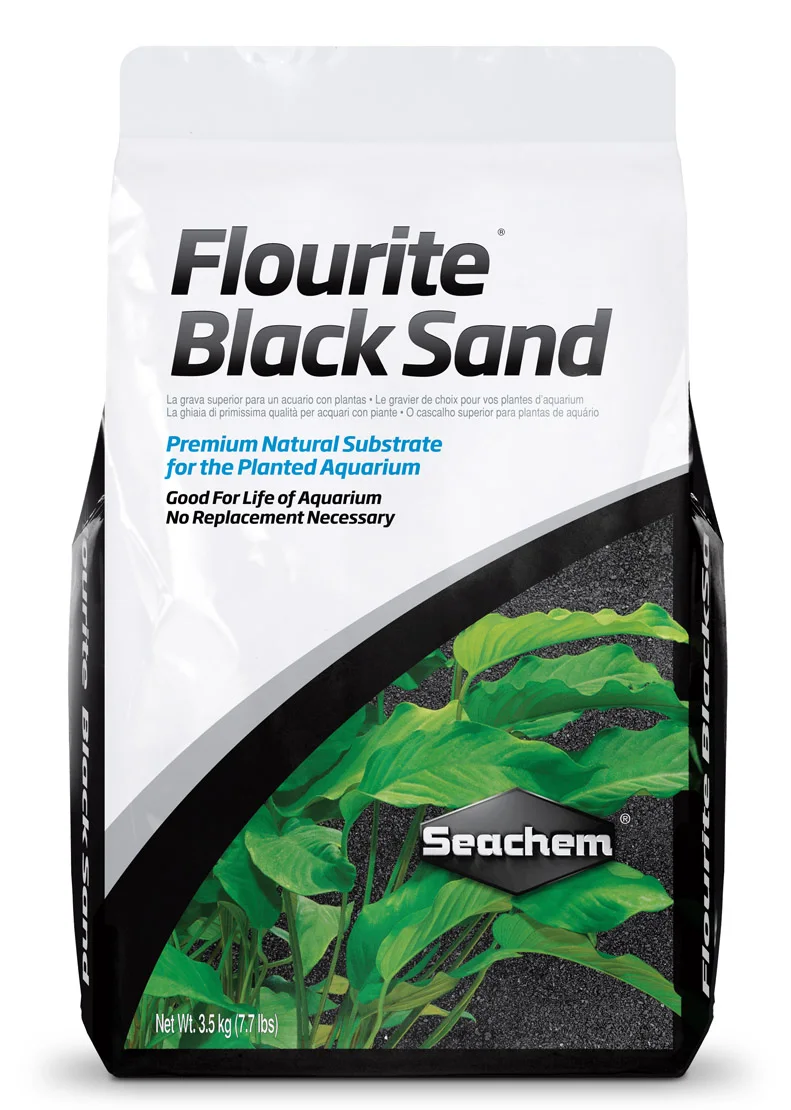 Seachem calls this a stable, fractured clay gravel for planted aquariums and says it does not alter pH. That makes it more relevant to a planted display than to a dedicated sand-sifting colony. Use it only after checking the particles by hand, especially for species that pick up mouthfuls. It can hold rooted plants better than loose sand, but plants should not dictate a rough floor for a fish that constantly digs. Pros: durable planted-bed format. Cons: fractured grains are less comfortable for mouthbrooding or active sifters.
AquaNatural Diamond Black Sand
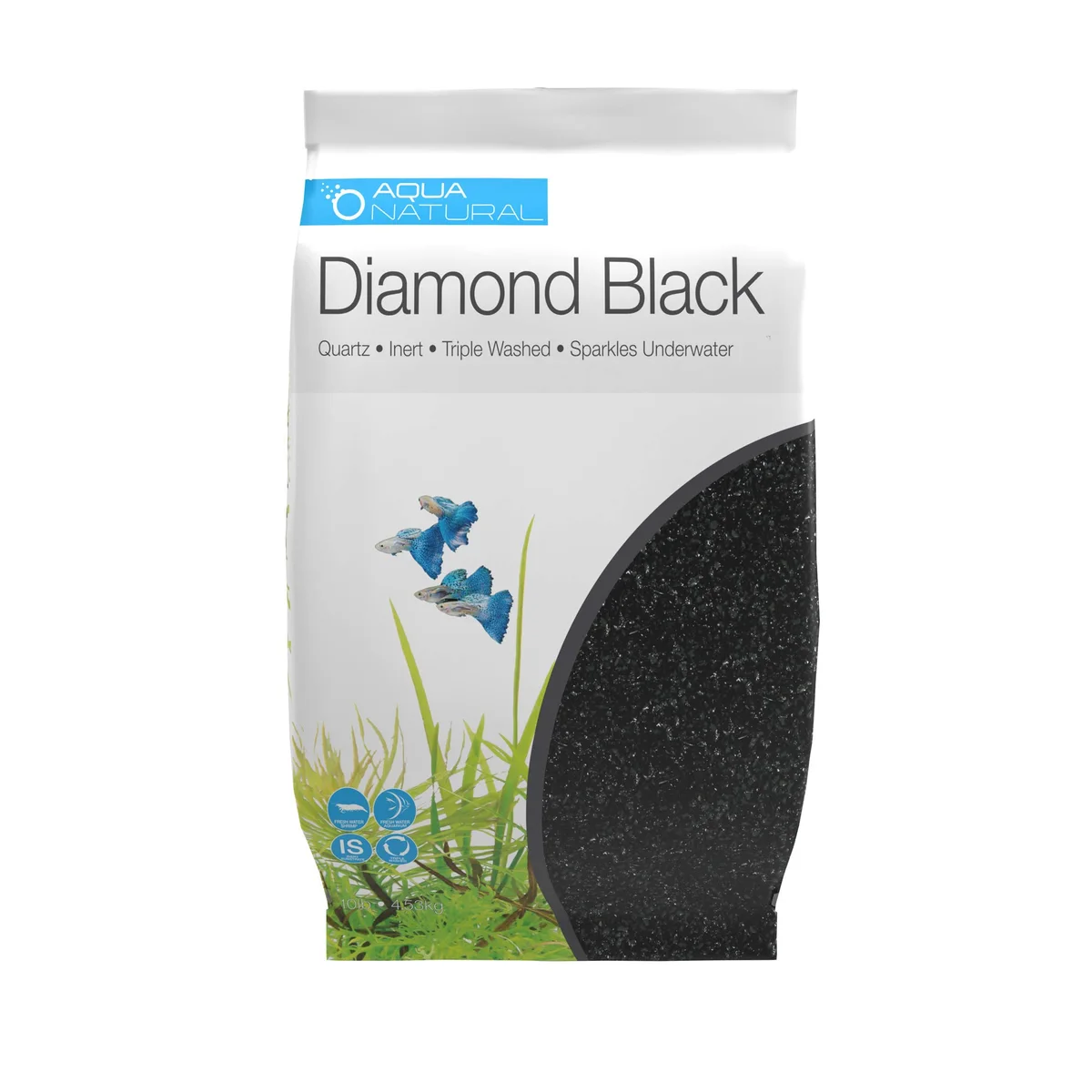 Black sand gives a sharp backdrop for bright fish and light-colored shells, but the color is a maintenance tradeoff. Dark waste can disappear until it is stirred by a territorial fish. Use a narrow siphon over the surface and inspect corners behind rock piles. Confirm that the exact listing is freshwater aquarium sand and test it if your recipe depends on stable hardness. Pros: strong visual contrast for fish and decor. Cons: the floor can look clean while holding debris.
Imagitarium Black Aquarium Sand
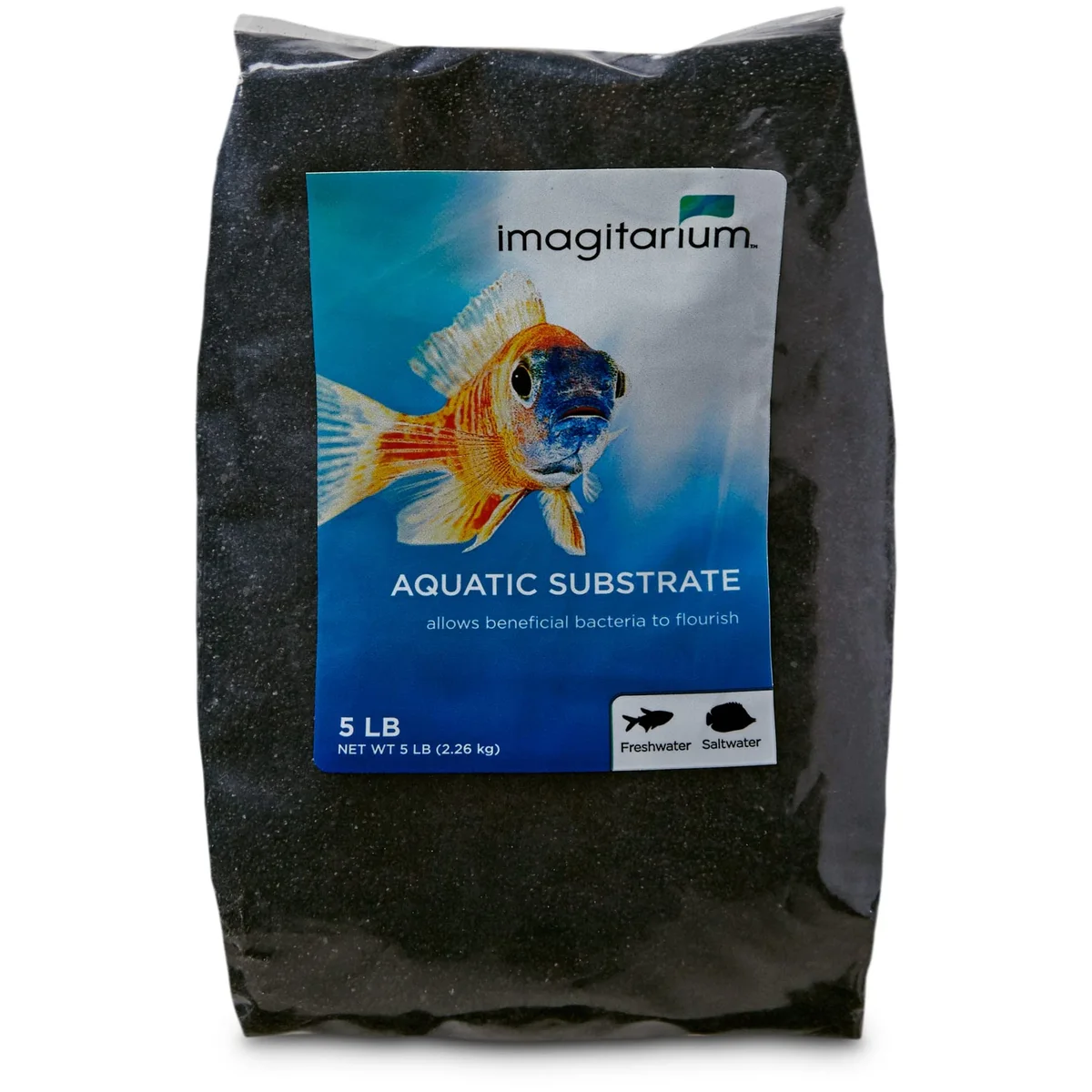 This is a reasonable plain-sand route for a community cichlid aquarium when you do not want a buffering claim. Treat the product family as several variants rather than one guaranteed grain profile. Wet a sample, look for sharp pieces and compare the label with your species plan. Spread it around stable rocks, not beneath an unstable stack. Pros: uncomplicated purchase and easy-to-understand layout. Cons: current color, grain and package details need verification before use.
Spectrastone Shallow Creek Gravel
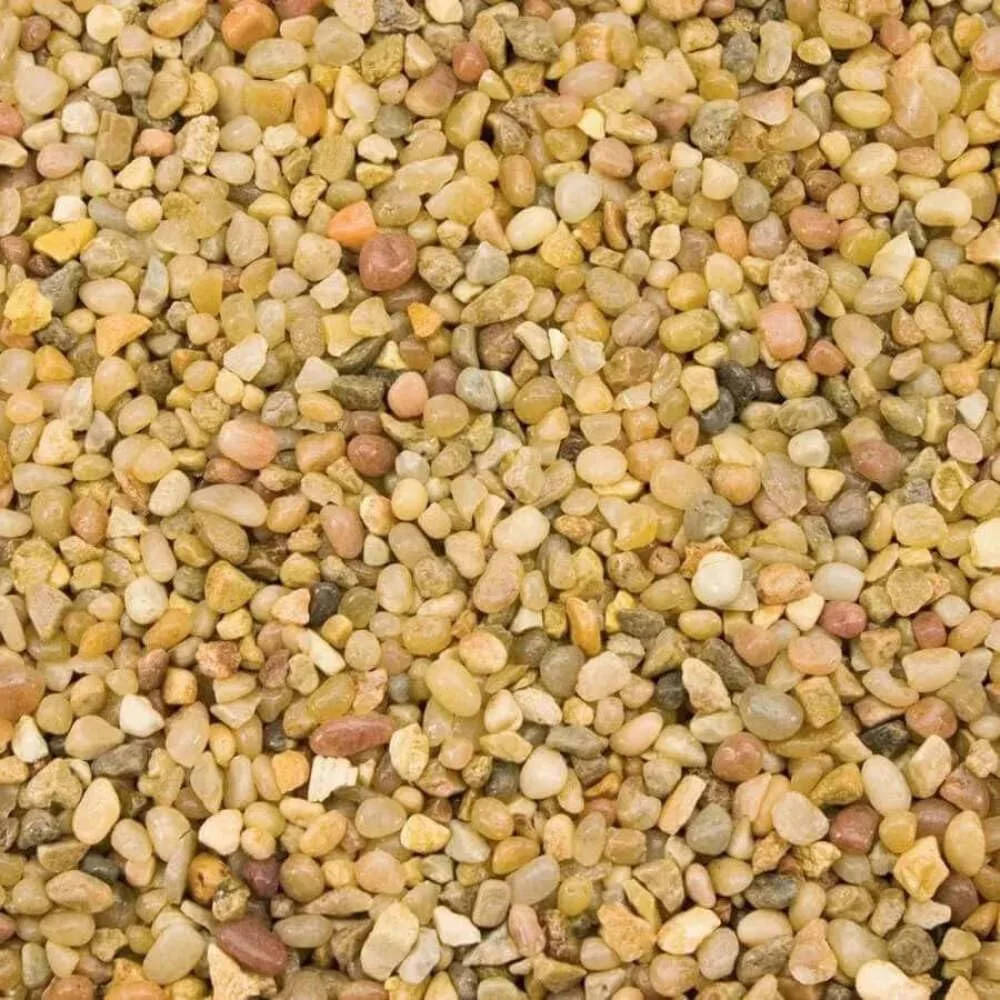 Rounded gravel can work for larger cichlids that mostly patrol open water and do not take repeated mouthfuls of the floor. It is a conditional pick, not the answer for sand-sifting species. Inspect every stone for sharp edges, keep the bed thin and vacuum between pieces. If fish begin carrying gravel or digging with their mouths, change to fine sand. Pros: stays visible around hardscape and resists some displacement. Cons: spaces between stones trap food and waste.
Buying criteria for cichlids
Identify the fish before choosing the bag. Malawi, Victoria and Tanganyika cichlids often need a mineral and carbonate plan that differs by lake. South American cichlids commonly lead to an inert-sand discussion, although the species and source water still decide the target. A substrate marketed as buffering is not automatically helpful, and inert sand is not automatically neutral in every formulation. Measure pH, GH and KH before and after setup.
Texture comes next. Sand lets sifters excavate and creates fewer large pockets than gravel. Rounded fine gravel can suit larger fish that do not sift, but rough or sharp chips have no place in a mouthbrooding tank. Anchor rocks directly on the aquarium floor before adding sand so a digging fish cannot undermine them. Leave a clear front strip for siphoning. Do not make a deep bed simply to use a whole bag.
Rinse inert material until the water is reasonably clear. Follow the label for products that contain clay or minerals. During water changes, skim the siphon above sand and plunge it between gravel pieces. Remove uneaten food near caves and spawning pits. Substrate supports bacteria and the layout, but it does not replace filtration, testing or water changes.
Frequently asked questions
Is sand or gravel better for cichlids?
Sand is usually the better fit for species that sift or dig. Rounded gravel can suit larger, non-sifting fish when you accept the extra cleaning around gaps.
Should cichlid substrate raise pH?
Only if the species and measured water plan call for it. Test the product in your own water rather than assuming a marketing label predicts the final result.
How deep should a cichlid sand bed be?
Use enough for digging and the look you want, but keep it shallow enough to inspect and siphon. Deep layers hide more waste.
Can rocks sit on top of sand?
Build stable rockwork on the aquarium floor, then add sand around it. Cichlids can excavate beneath a rock that rests only on loose grains.
Recommendation
Choose fine, rounded sand for active diggers, then decide whether it should be inert or mineral-bearing from the species and your water tests. CaribSea African Cichlid Mix suits a deliberate Rift Lake plan. Crystal River Sand is the safer flexible default for many other setups. Reserve gravel and fractured planted media for fish that will not sift them.
Sources and methodology
We checked manufacturer information from CaribSea freshwater substrates, Seachem Onyx Sand, Seachem Flourite Black Sand, AquaNatural, Imagitarium, and Spectrastone. We compared stated material type, texture, intended use, chemistry claims and cleaning implications. No hands-on testing, price claim or universal species guarantee is implied.