
Buying guide
Best protein skimmer for a 40-gallon breeder
A 40-gallon breeder gives you more stocking room, but the best skimmer is still the one that fits your sump or rim and stays easy to tune.
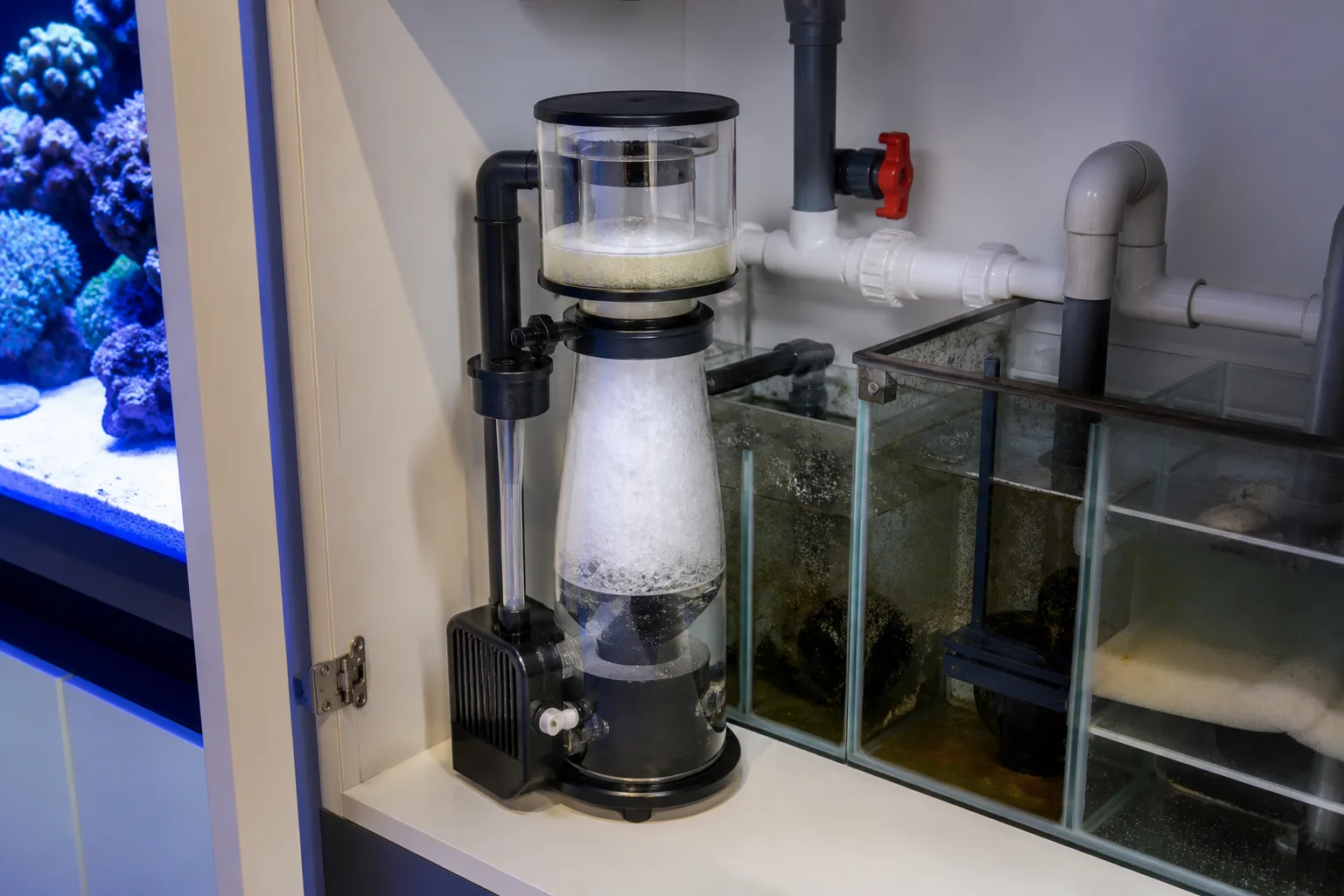
A 40-gallon breeder can support a busier reef than a nano tank, yet its wide footprint does not guarantee a roomy sump. I would choose the installation format first, then match the skimmer to the actual bioload. This guide is research-based and not a hands-on test. Confirm the current dimensions, operating depth, voltage and included parts at checkout.
Quick comparison
| Product | Best fit | Main drawback |
|---|---|---|
| AquaMaxx HOB-1.5 | HOB reef with no sump | Needs rear clearance and a firm rim |
| Reef Octopus Classic 110INT | In-sump installation | Too large for many compact sumps |
| Bubble Magus Curve 5 | Regular sump footprint | Needs the correct, stable depth |
| Coralife Super Skimmer 65 | HOB or sump flexibility | Can be excessive for a light bioload |
| Tunze Comline DOC Skimmer 9004 | Internal rear chamber | Uses chamber space and needs cup access |
| AquaMaxx FC-80 | Compact sump layouts | Check current dimensions and depth |
| Red Sea RSK 300 | Larger, planned sump | Often oversized for a lightly stocked breeder |
The list covers HOB, internal and in-sump choices because a 40-gallon breeder may be drilled, all-in-one or completely sump-free. Ratings are not guarantees. Salinity, feeding and water depth all change foam behavior.
Our picks
AquaMaxx HOB-1.5
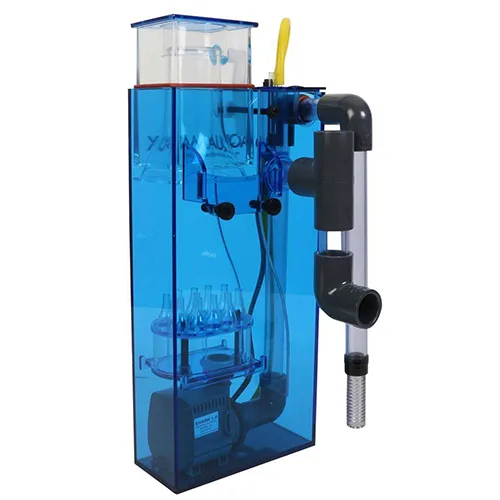
The HOB-1.5 is a clean starting point for a breeder without a sump. Measure the back panel, rim thickness and wall clearance, including room to lift out the collection cup. HOB preserves display space, but the box remains visible and evaporation changes the intake water line. Keep the return path clear and check salt creep. Pros: no sump construction and easy cup access. Cons: rear clearance is non-negotiable, and pump or air noise can be obvious.
Reef Octopus Classic 110INT
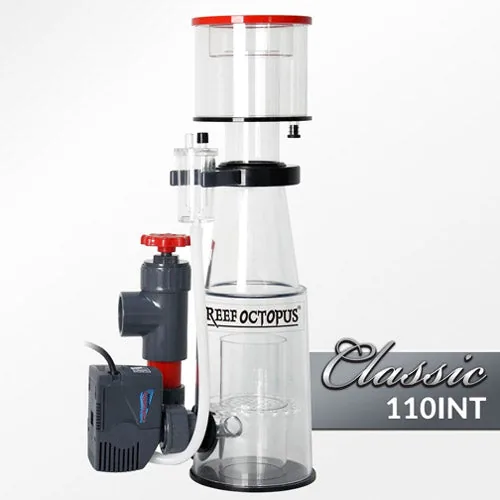
The Classic 110INT belongs in a planned sump with enough footprint, depth and vertical clearance. Do not buy it for a 40-gallon breeder merely because its rating sounds capable. Measure the chamber with the return pump running, and test the power-off level. Leave a path to remove the cup. Pros: conventional in-sump approach for a heavier system. Cons: a small sump may not accommodate it, and a light bioload can produce very wet foam.
Bubble Magus Curve 5
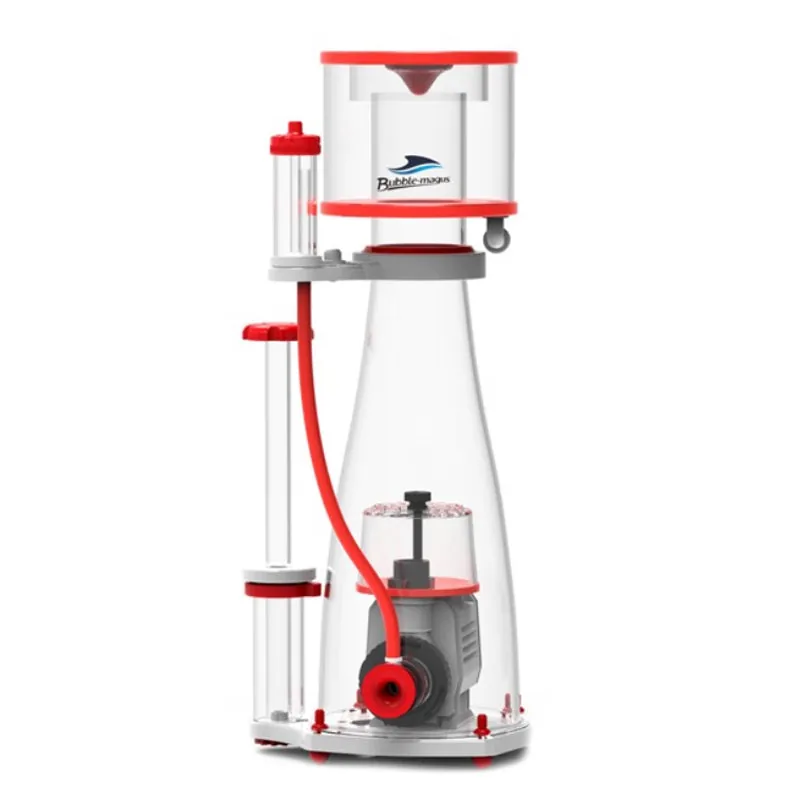
The Curve 5 is a sensible comparison for a sump that is not crowded by a heater, probe rack or filter socks. The body must sit at the recommended depth, not in a changing return section. A stand can help only if it remains stable and clear of the pump. Pros: familiar in-sump layout for a moderate reef. Cons: it loses its advantage when the sump level swings, and cup removal can be awkward under a low shelf.
Coralife Super Skimmer 65
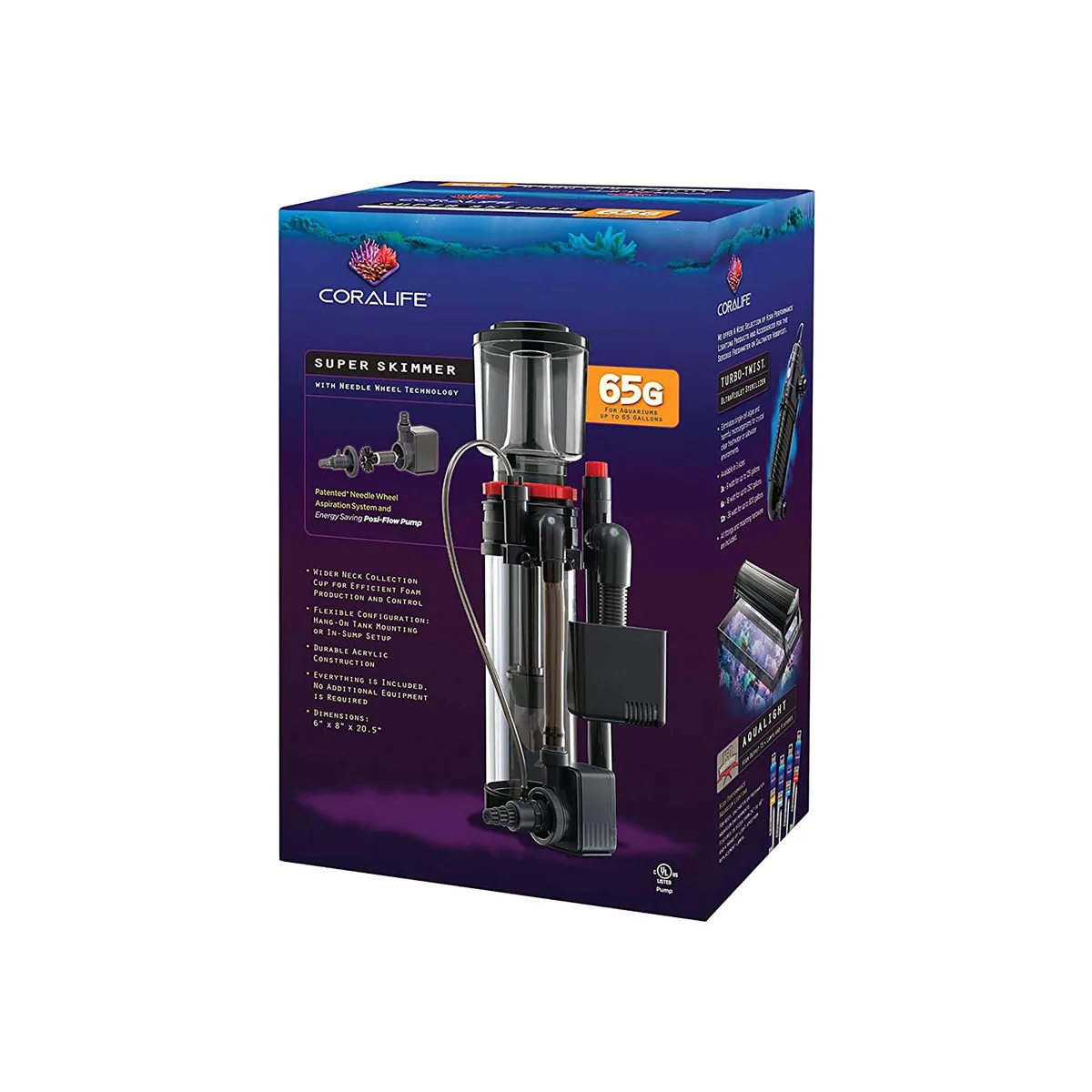
The Super Skimmer 65 is the flexible option for an owner who wants to compare HOB and sump placement. Verify the current version and included mounting pieces before buying. On a 40-gallon breeder with a small fish load, more capacity can make the foam column less predictable rather than better. Pros: multiple placement routes may suit a changing setup. Cons: the larger design needs more service room and may be a mismatch for a lightly stocked aquarium.
Tunze Comline DOC Skimmer 9004
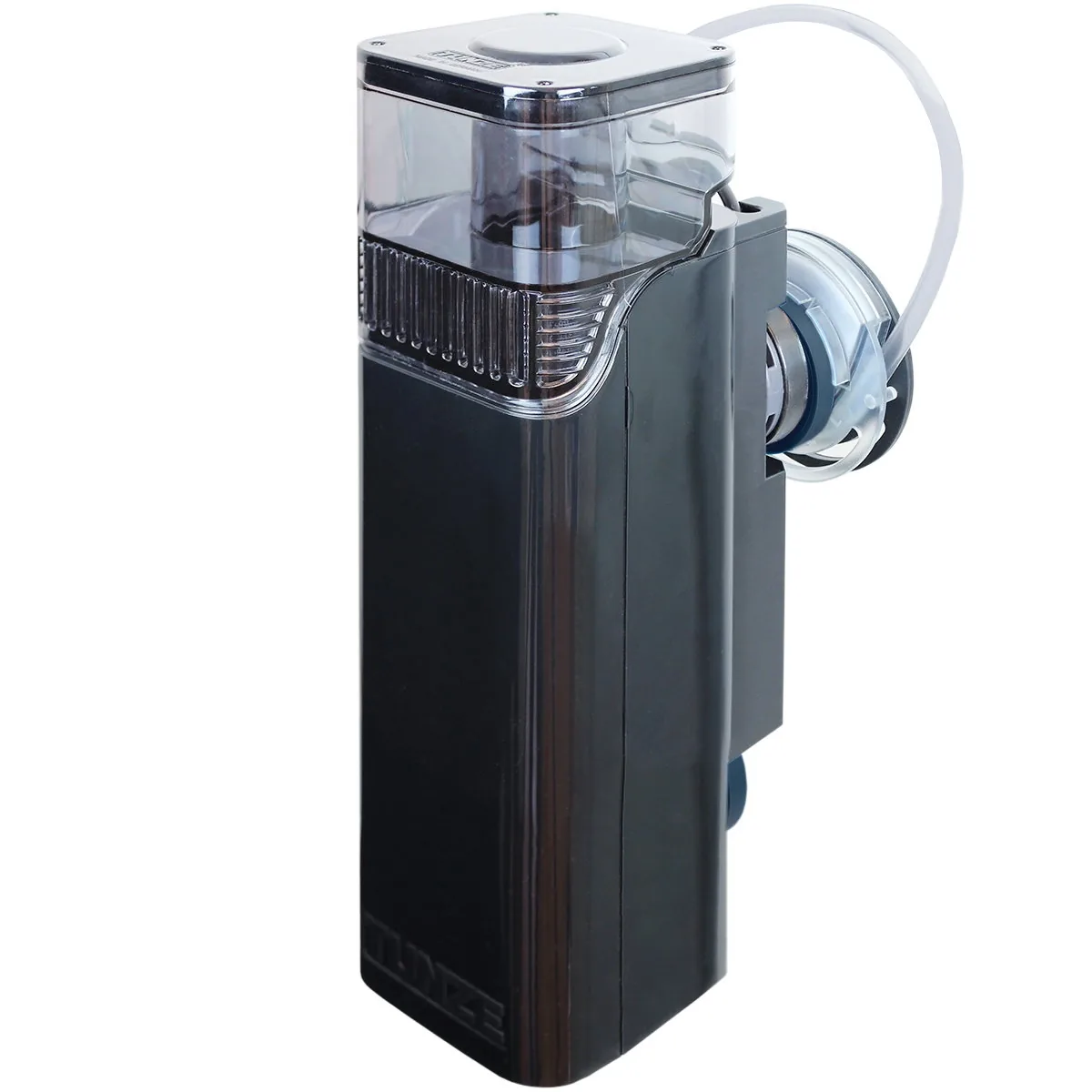
The 9004 suits a breeder with an internal filtration chamber that can hold a steady line. Internal placement keeps the back clear, but consumes space for media or a return pump. Measure the baffle opening and cup path, not only body width. Pros: enclosed format and tidy equipment footprint. Cons: a narrow chamber makes cleaning difficult, and evaporation changes operating depth.
AquaMaxx FC-80
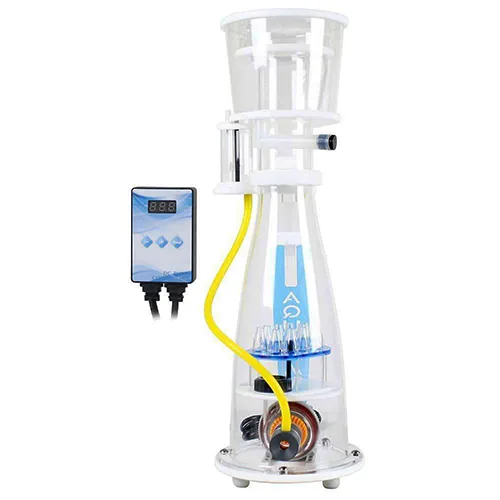
The FC-80 is worth checking where a 40-gallon breeder has a compact sump and you want a smaller body than the biggest in-sump models. Treat the manufacturer’s current dimensions and operating-depth guidance as the gate. Put the skimmer in the section with the least level variation, then leave room around the cup and airline. Pros: a compact sump direction for a moderate setup. Cons: the product may be difficult to source in the exact variant, so confirm the listing and replacement parts before paying.
Red Sea RSK 300
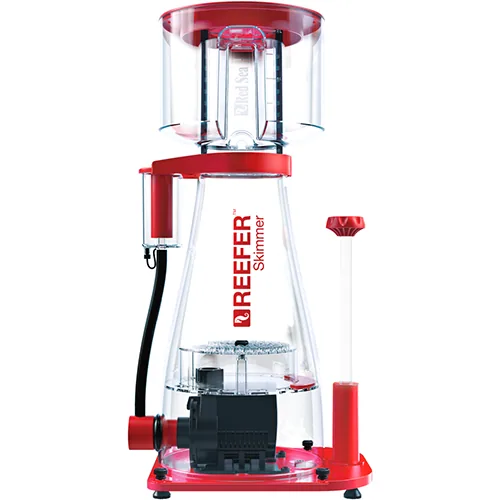
The RSK 300 is a consideration for a 40-gallon breeder that is heavily stocked or part of a larger sump plan. It is not my default for a lightly stocked display. Measure the footprint, water depth and cabinet height carefully, then confirm that the collection cup can be removed without draining the sump. Pros: a larger-sump approach with room for a growing system. Cons: physical size and excess capacity can make it a frustrating choice for a modest bioload.
How to choose for a 40-gallon breeder
Decide whether you need HOB, internal or in-sump placement. HOB is the least invasive route when the aquarium is not drilled, but it needs a clear back and a strong rim. Internal equipment works in an all-in-one rear chamber, provided the baffles and cup path cooperate. In-sump skimmers are tidy from the display’s viewpoint, though they inherit every change in sump depth and every obstruction under the cabinet.
Measure the real service envelope. Record chamber length, width and running depth. Add the height above the cup, the space around the pump and a route for cleaning. Test a power-off water level before tuning. If the return section drops as water evaporates, it is usually the wrong place for the skimmer. An auto top-off can help keep a line steady, but it does not fix a skimmer that is too deep for the chamber.
Tune slowly. Start at the manufacturer’s setting, let the foam settle, and change one control at a time. New plastic, salt creep, filter socks, water conditioners and oily hands can all alter foam. A clean neck helps the bubbles rise consistently. Rinse the cup before it becomes difficult to remove, clear the air intake, and inspect the impeller when the sound changes. Do not silence vibration by blocking an intake or trapping a hot pump.
Frequently asked questions
What size skimmer does a 40-gallon breeder need?
There is no useful answer from tank volume alone. Stocking, feeding and the sump footprint matter. Select a model whose stated range includes your system, then prioritize stable depth and cup access.
Is a HOB skimmer enough without a sump?
It can be a practical choice when the rim and rear clearance support it. Check the return path, water level and cup access before choosing HOB over an internal unit.
Should the skimmer sit in the return chamber?
Usually choose the section with the most stable depth and follow the manufacturer’s guidance. A return chamber that falls with evaporation can make foam swing and cause overflow.
Why is a larger skimmer not always better?
An oversized body can be hard to tune against a small bioload. It may collect very wet foam or run inconsistently. Match capacity to the actual system rather than future plans alone.
How can I reduce skimmer noise?
Check the airline, impeller, seating and vibration points. Keep the intake open, clean salt deposits and use the manufacturer’s service instructions. Some pump or air noise is normal.
Recommendation
For a breeder without a sump, measure the AquaMaxx HOB-1.5 against the rim and wall. For a stable sump, compare the Bubble Magus Curve 5 and AquaMaxx FC-80 first. Consider the Reef Octopus or Red Sea only when the larger footprint and bioload make sense. Fit and service access should decide the purchase.
Sources and methodology
We checked manufacturer information from AquaMaxx, Reef Octopus, Bubble Magus, Coralife, Tunze, and Red Sea. We compared HOB, internal and in-sump formats, physical fit, operating-depth stability, cup access and modifier-specific drawbacks. No hands-on testing was performed. Images are category visuals and may not depict the exact branded model.