
Buying guide
Best gravel vacuum for small tanks
For a small aquarium, the right gravel vacuum is the one you can keep steady. A narrow intake and controllable discharge help remove waste without emptying the tank too quickly.
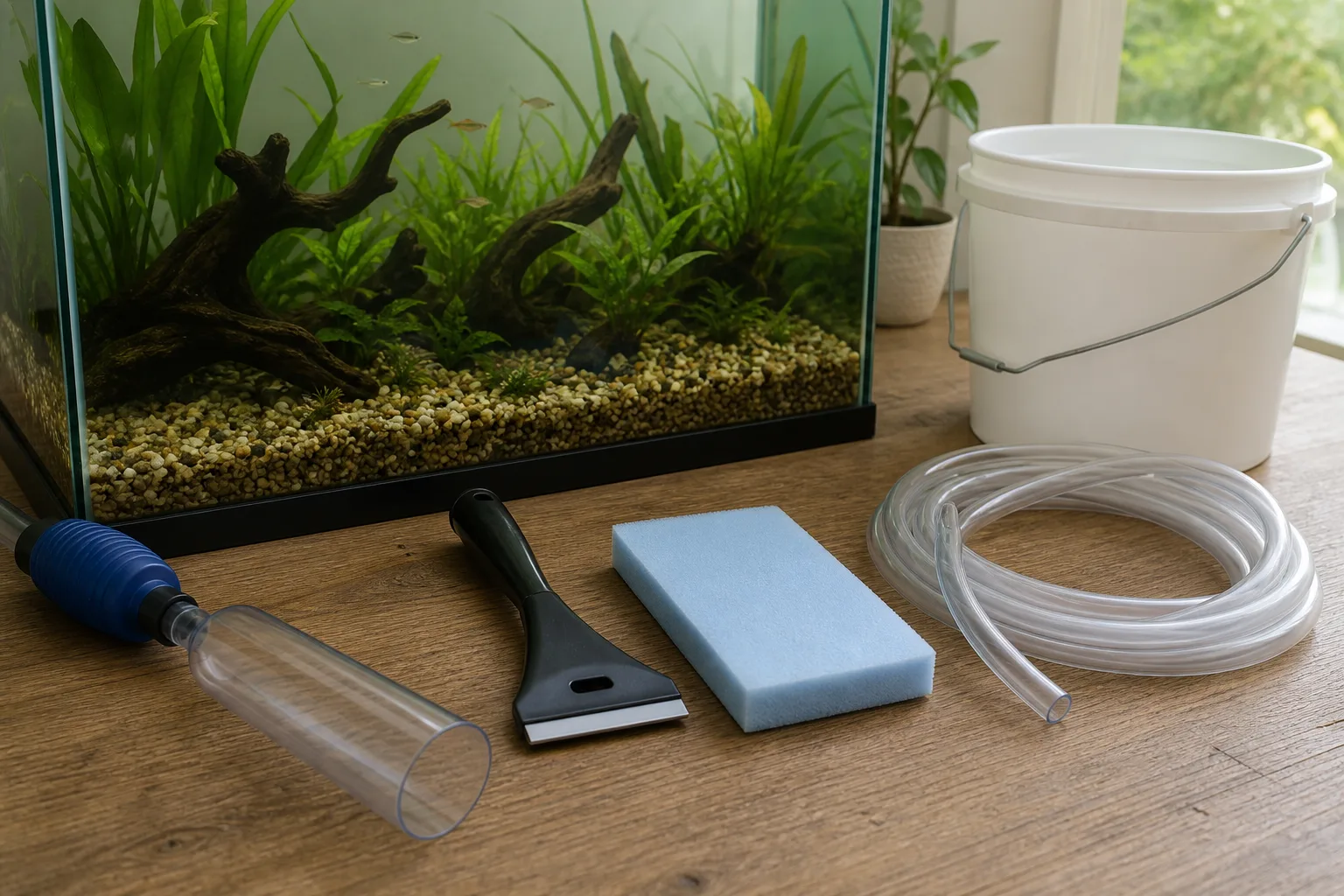
Small tanks leave little room for a sloppy siphon. A wide bell can pull out water faster than you can inspect the substrate, and a long rigid tube can knock into plants or hardscape. I would start with the Aqueon MiniVac for most five- to 20-gallon gravel aquariums. It is compact and easy to aim. Choose an electric cleaner for quick spot work, or a Python setup when you need a more familiar hose-and-bucket change.
Quick comparison
| Product | Best fit | Main drawback |
|---|---|---|
| Aqueon MiniVac | Narrow access in nano and small tanks | Fine debris can slow a slim tube |
| EHEIM Quick Vac Pro | Spot cleaning between changes | It does not replace a water change |
| Python Pro-Clean Small | Manual bucket changes | You must start and manage the siphon |
| Marina Easy Clean Gravel Cleaner | Simple siphoning in planted layouts | Check the chosen size and hose fit |
| NICREW Electric Gravel Cleaner | No manual siphon start | Needs power and filter cleaning |
| hygger Aquarium Gravel Cleaner | Buyers who want included fittings | Kits and seals vary by listing |
| Lee’s Ultra Gravel Vac | A basic hand-operated tool | Manual flow takes practice |
This is a research-based guide, not a hands-on test. The product links are tagged Amazon search links because package sizes and current listings change. Each product photo depicts the named model or stated variant. Check the current listing, hose connection, and included tube before ordering.
Our picks
Aqueon MiniVac
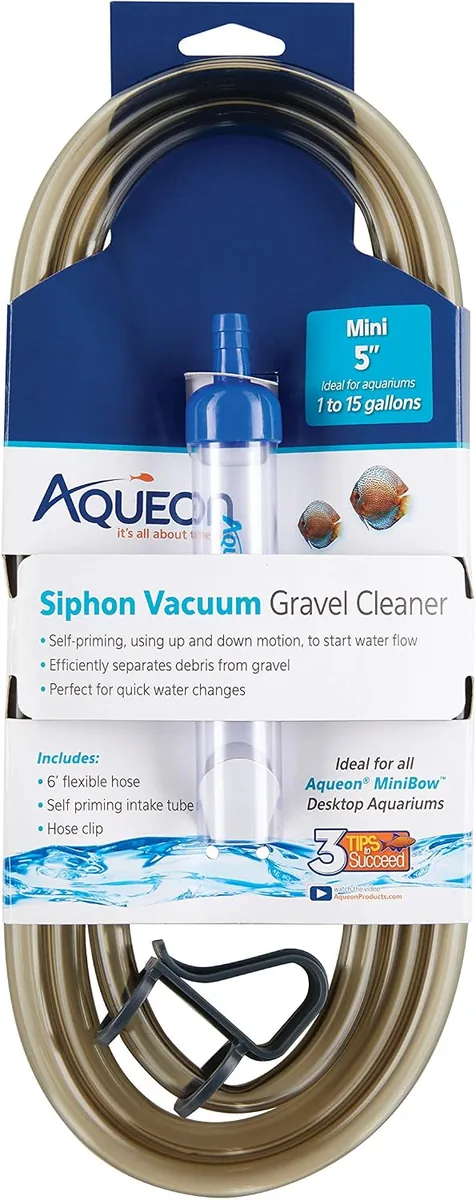
The MiniVac is my default small-tank choice because its compact format is easier to guide around a heater, anubias rhizome, or a small piece of wood. Keep the intake just above the gravel, then pinch the discharge hose when the water starts moving too fast. That matters in a five-gallon tank where a few seconds can change the water level. It is less pleasant when leaves or larger waste block the narrow path, so clear the intake rather than forcing more suction. Pros: easy to aim; useful for tight planting. Cons: the slim passage can clog; still needs a bucket and hose route.
EHEIM Quick Vac Pro
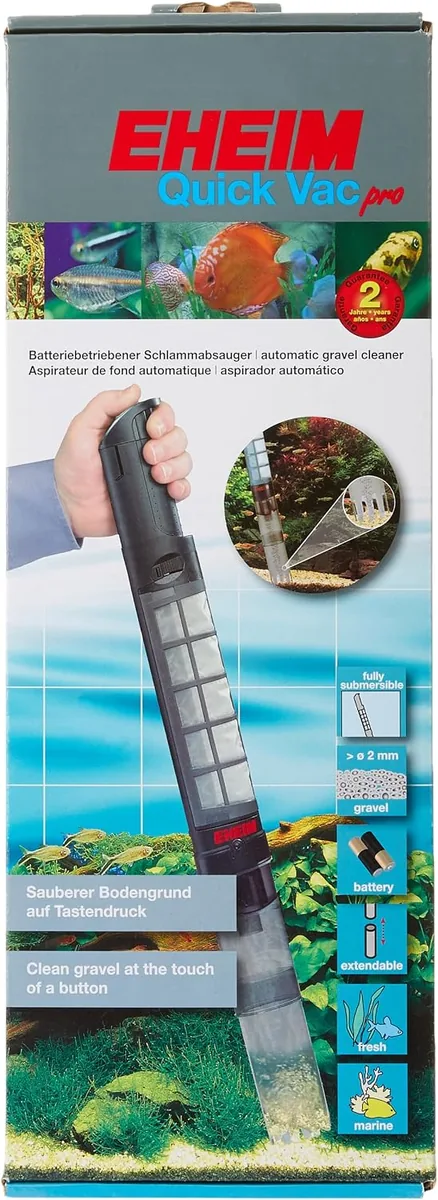
This handheld format makes sense when the problem is a dirty corner, not a full water-change session. Collecting debris locally means you can remove uneaten food from a shrimp tank without laying a bucket across the floor. The tradeoff is clear: collected solids are not the same as exporting old water, so keep a normal partial-change routine. Rinse the collection parts with plain water and let them dry open. Pros: targeted cleanup; no siphon priming. Cons: battery care and cleaning add chores; not a complete water changer.
Python Pro-Clean Small
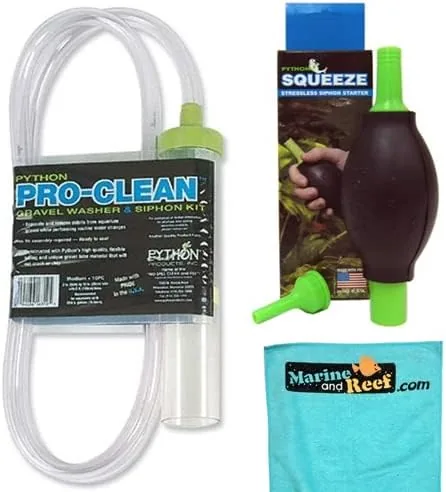
Pick the small Pro-Clean format when you prefer a conventional bucket siphon and do not need an electric motor. The useful skill here is flow control. Start with the bucket below the tank, lift the bell as soon as debris moves, and pinch the hose whenever the level drops faster than planned. It is a good fit for open gravel beds, but the manual setup is less convenient beside a crowded planted scape. Pros: simple parts; direct water removal. Cons: siphon management is manual; verify the exact small-tube package.
Marina Easy Clean Gravel Cleaner
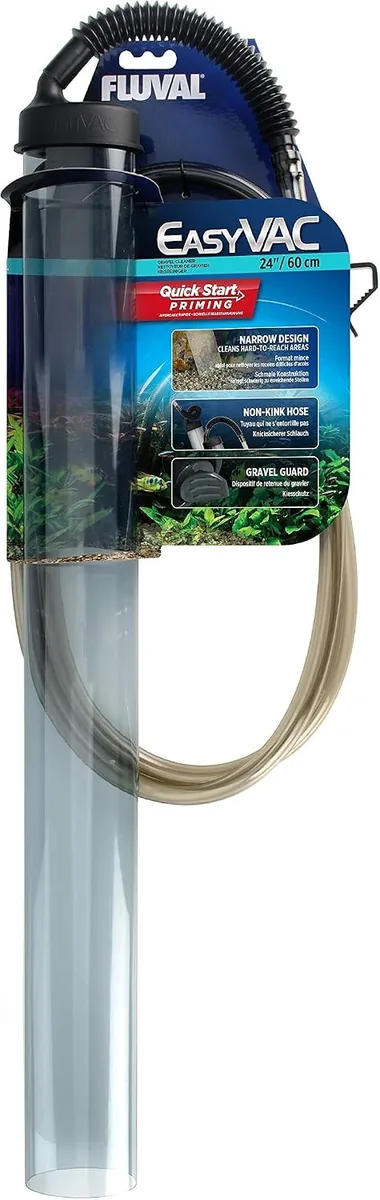
Marina’s Easy Clean range is worth considering when you want a familiar siphon design with a small-tank size available. Match the selected tube to the aquarium rather than assuming every listing uses the same dimensions. A smaller opening gives you more time to inspect the gravel around roots, although it also moves less debris per pass. Pros: straightforward water-change method; better control than an oversized bell. Cons: package sizes differ; read the listing before checkout.
NICREW Electric Gravel Cleaner
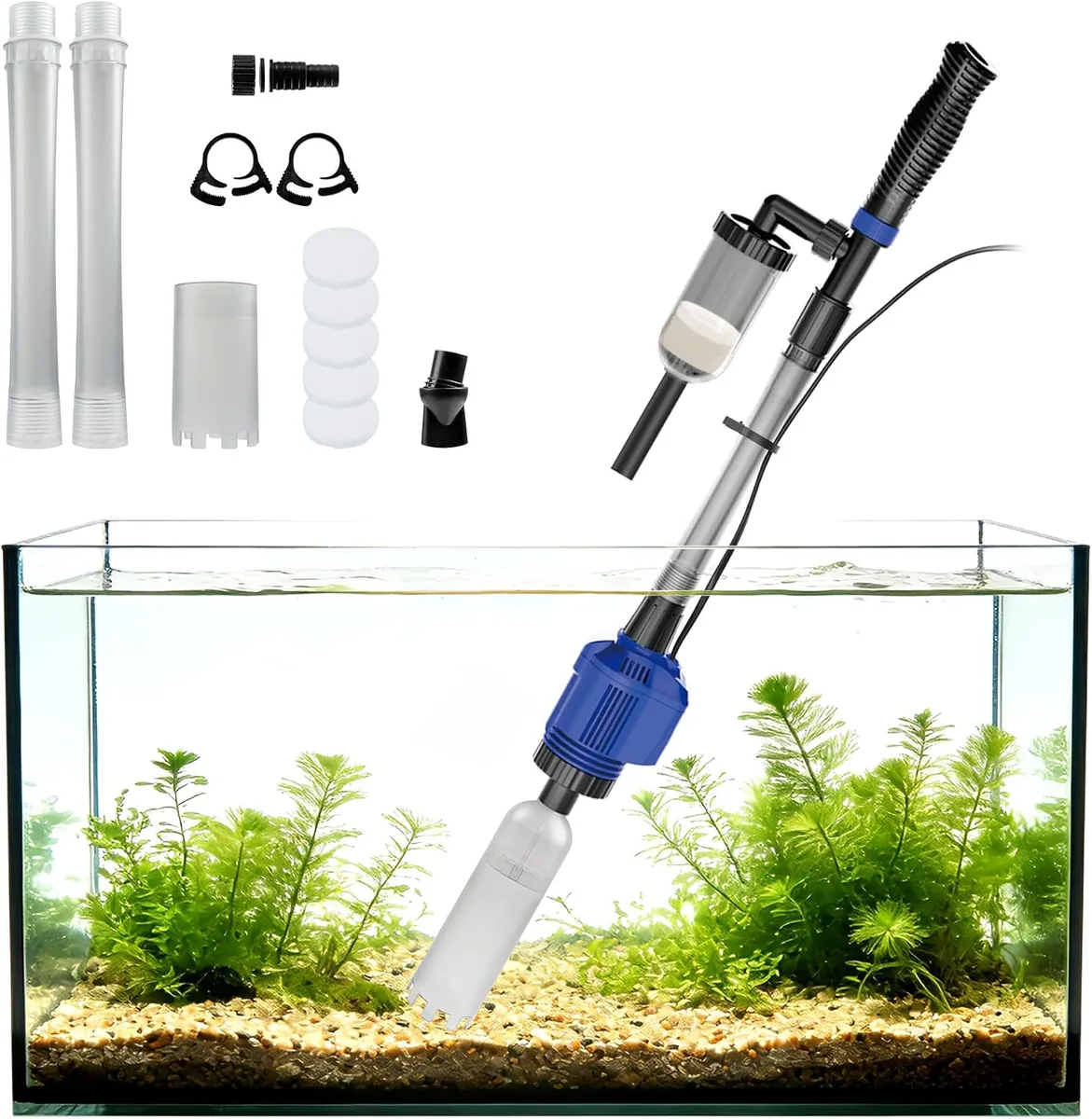
An electric cleaner suits an owner who wants to lift waste without starting a siphon every time. Use it for a dirty patch or a light pass over the open foreground, and keep the intake away from fry, shrimp, and loose stems. The collection path needs regular rinsing, and the power arrangement must stay dry and secure. It is less appealing if you already have an easy bucket routine. Pros: quick setup; useful for controlled spot work. Cons: power and filter upkeep; do not treat it as automatic water replacement.
hygger Aquarium Gravel Cleaner
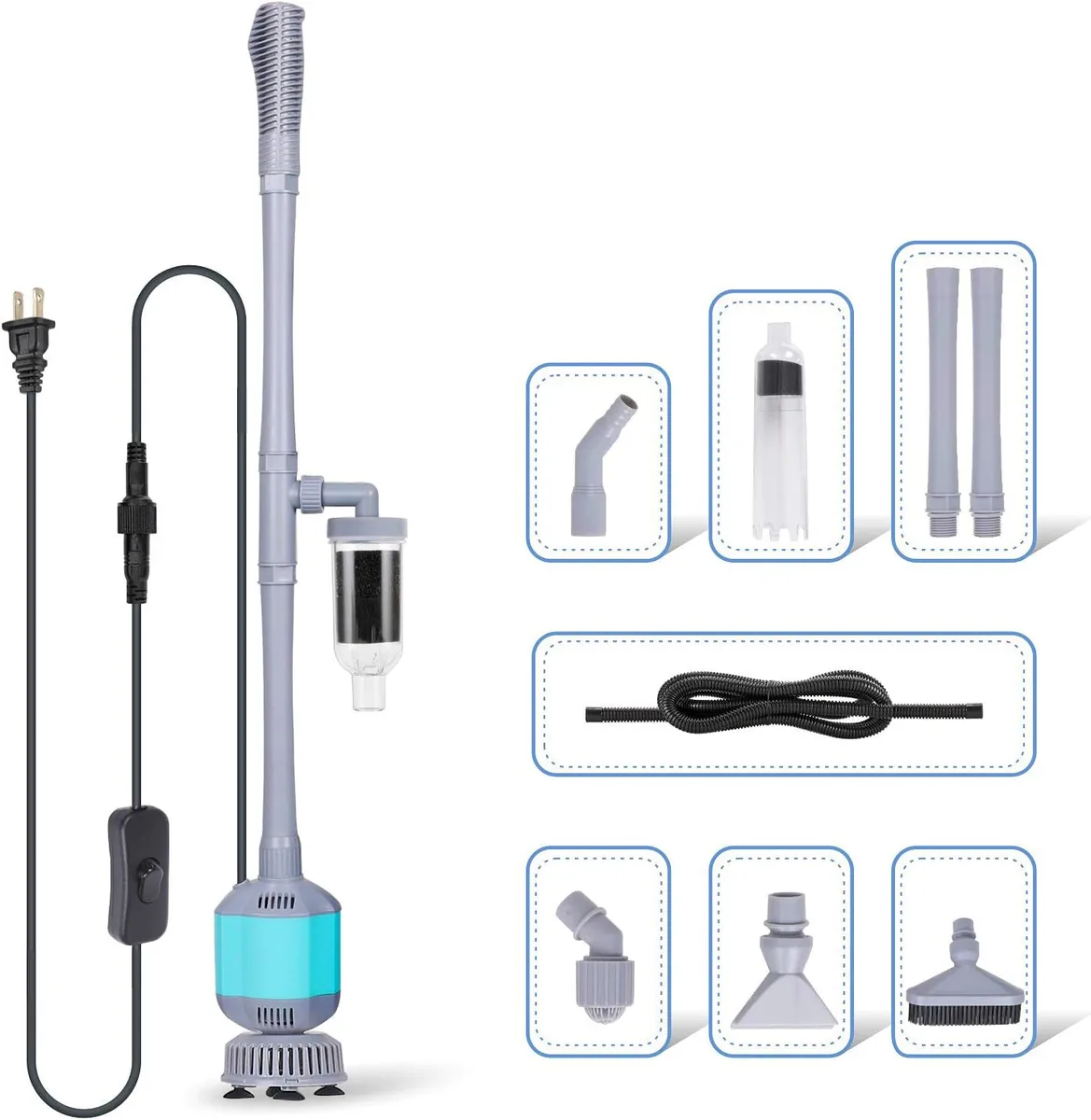
The hygger range is a reasonable option when the listing’s extra fittings match your setup. That flexibility can help in a small tank with a corner filter or a short front-to-back clearance. It can also make the purchase harder to judge, because different kits may include different tubes and connections. Check the exact package and inspect each seal before putting it over the aquarium. Pros: several setup options; useful for awkward access. Cons: accessory bundles vary; more parts mean more rinsing and storage.
Lee’s Ultra Gravel Vac
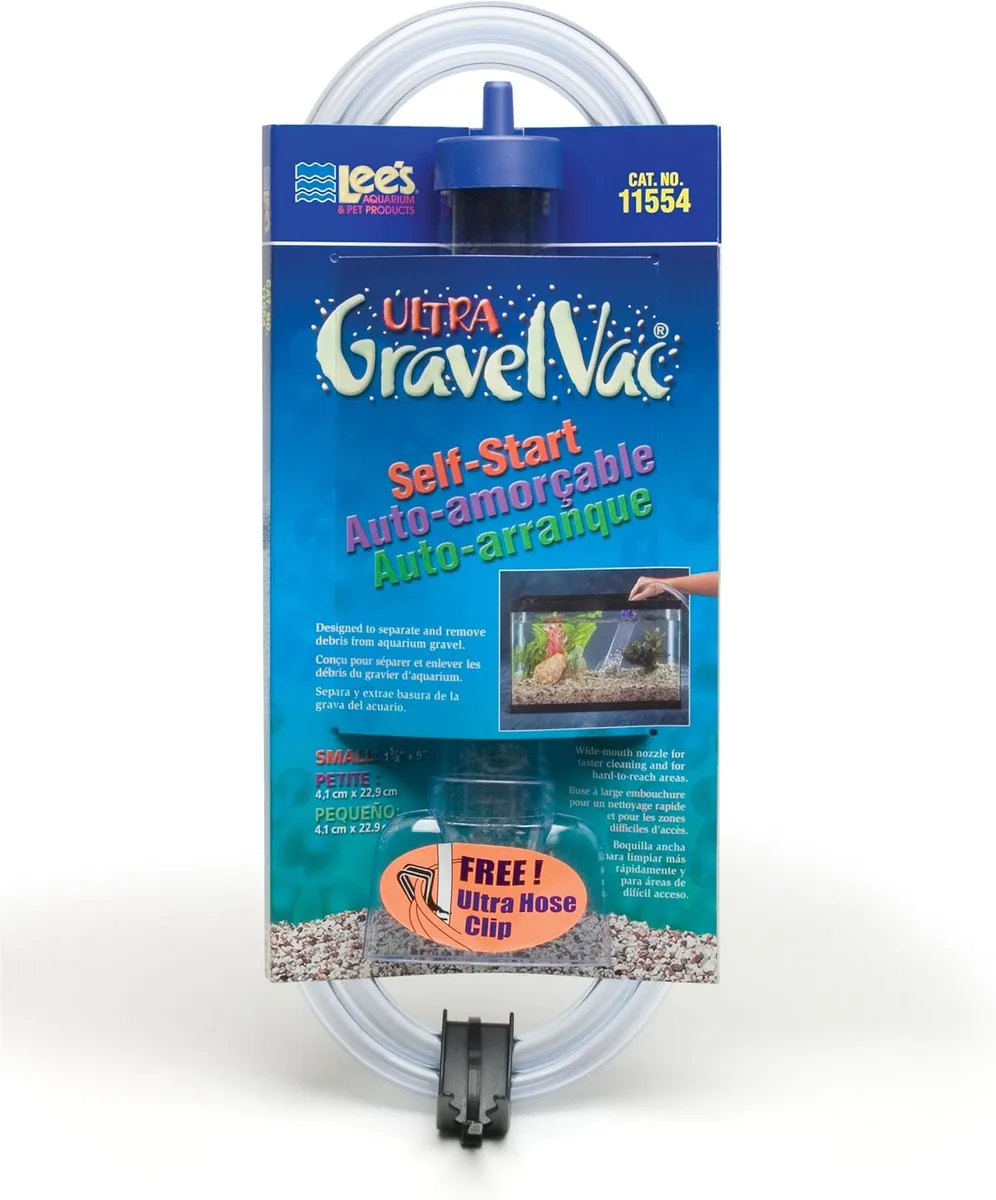
Lee’s Ultra Gravel Vac belongs on the shortlist when you want a plain manual tool and do not need a faucet connection or motor. Its appeal is a setup you can understand at a glance. Use short lifts rather than plunging deep into the bed, especially around rooted plants. Because flow is controlled by your hand and hose position, beginners should practice over an empty bucket before working near the rim. Pros: uncomplicated operation; easy to keep as a spare. Cons: slower on dense waste; confirm the current size and tube length.
Buying criteria for a small tank
Start with the intake. A narrow bell or tube gives you room to work between stems, stones, and the front glass. It also reduces the chance of pulling gravel and water at an alarming rate. Very narrow tubes have a ceiling: a large piece of leaf or a pebble can stop the flow. Choose a design you can clear without taking the entire tool apart.
Flow control is the second requirement. A hose clip, pinch point, squeeze bulb, or simple ability to lift the bell can keep the discharge manageable. Put the waste bucket on the floor, below the aquarium, and watch the water continuously. Never walk away while the siphon runs. Switch off a heater or filter if its water level could fall below the safe operating mark, then restore power only after refilling.
Planted and nano tanks need a light touch. Clean one section at a time rather than stirring the whole substrate at every change. Hold the intake above loose roots, and use a small cup or net if a fish or shrimp enters the tube area. Fine sand needs a different technique, so see the guide on the best gravel vacuum for sand substrate instead of forcing a gravel bell through it.
After use, empty dirty water, rinse the equipment with plain water, and hang the hose so it drains. Do not use household soap. Store the bucket for aquarium work only, and check plastic connections before the next session. A small leak is easier to fix over a towel than beside a power strip.
FAQs
What size gravel vacuum works in a five-gallon tank?
Choose a compact intake that leaves room to see the substrate. A smaller tube is usually easier to control than a large bell, but confirm that it will pass the debris you actually remove.
How do I stop a siphon from draining too fast?
Pinch or clip the discharge line, lift the intake slightly, and keep one hand near the shutoff point. Measure the removed water instead of estimating from the tank glass.
Can I use one in a planted nano aquarium?
Yes. Clean open patches first, keep the intake above roots, and rotate sections between water changes. An electric spot cleaner can help when a full bucket siphon is excessive.
Does vacuuming remove all beneficial bacteria?
No cleaning method removes all bacteria, but aggressive stirring can disturb more substrate than necessary. Gentle, partial passes leave more of the bed untouched.
Recommendation
Buy the Aqueon MiniVac for the most direct small-tank setup. Choose EHEIM for isolated debris, Python or Marina for a manual bucket change, and NICREW when avoiding siphon priming matters more than simplicity.
Sources and methodology
We checked manufacturer information from Aqueon, EHEIM, Python, Marina, NICREW, and hygger. We compared intake control, siphon setup, collection method, clearance, and cleaning chores for small gravel aquariums. No hands-on testing was performed. Verify the current model, accessories, compatibility, and checkout price before ordering.