
Buying guide
Best Automatic Fish Feeder for Flakes: 7 Practical Picks
The best flake feeder gives you repeatable small portions and keeps dry food away from humidity.
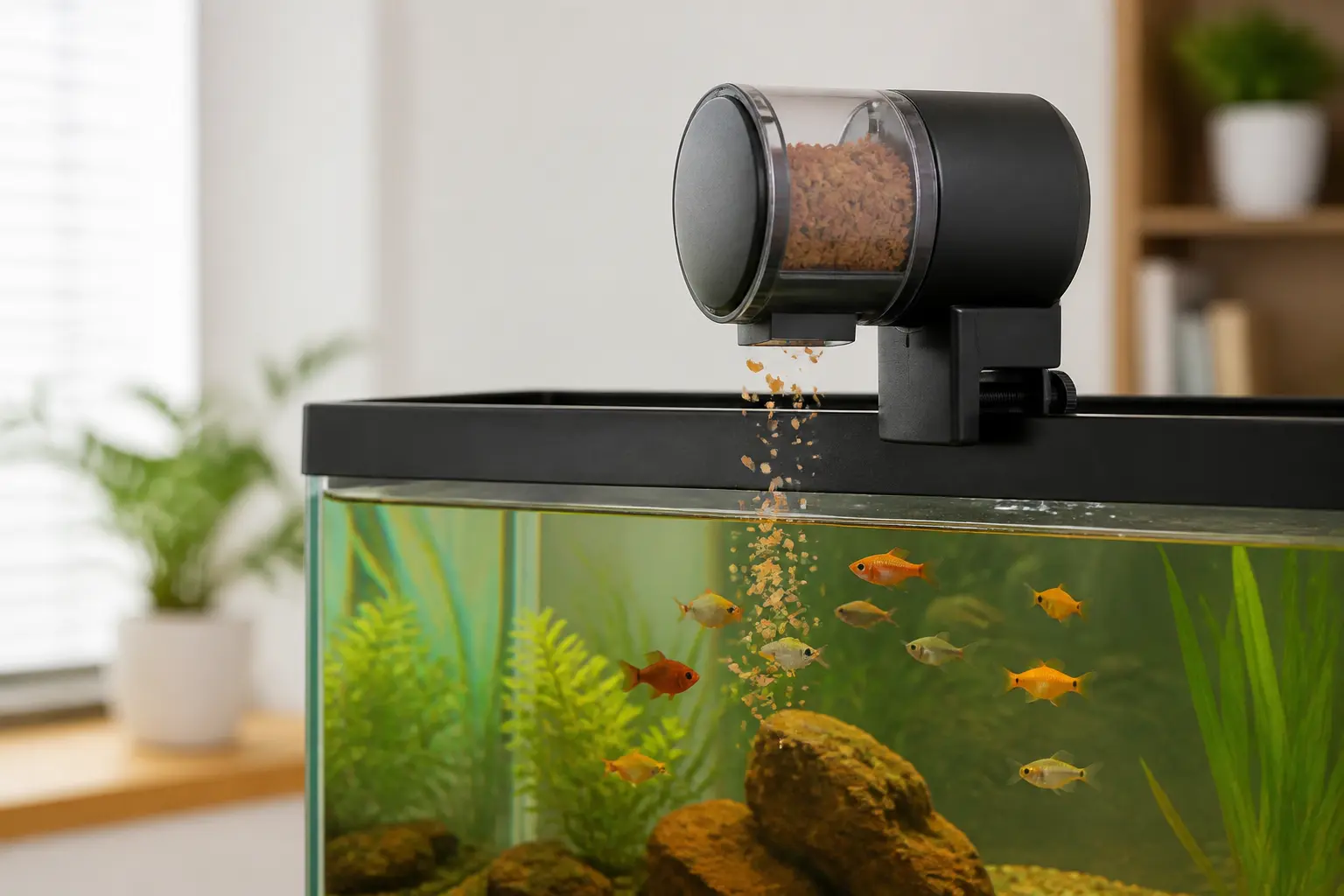
Automatic feeders are useful for routine meals and short trips, but flakes are less predictable than pellets. They can bridge, clump or absorb moisture. Set the smallest portion that feeds the fish without leaving food on the bottom, and test the setup while you are home. This is a researched comparison, not a hands-on test.
Quick comparison
| Product | Best for | Main advantage | Main drawback |
|---|---|---|---|
| Fluval PF2 Programmable Fish Feeder | Flakes and simple schedules | Explicit flake support | Two feeds daily |
| EHEIM autofeeder | Established design | Aquarium-specific feeder | Model varies |
| Fish Mate F14 Aquarium Fish Feeder | Multiple small feeds | 14 compartments | Loading takes time |
| Fish Mate F14P Feeder | Frequent portions | Multi-feed format | Bulky |
| Petbank Automatic Fish Feeder | Budget setups | Adjustable schedule | OEM variants |
| NICREW Automatic Fish Feeder | Compact tanks | Small footprint | Verify flake handling |
| Juwel EasyFeed | Covered aquariums | Lid integration | Less portion flexibility |
Best overall: Fluval PF2
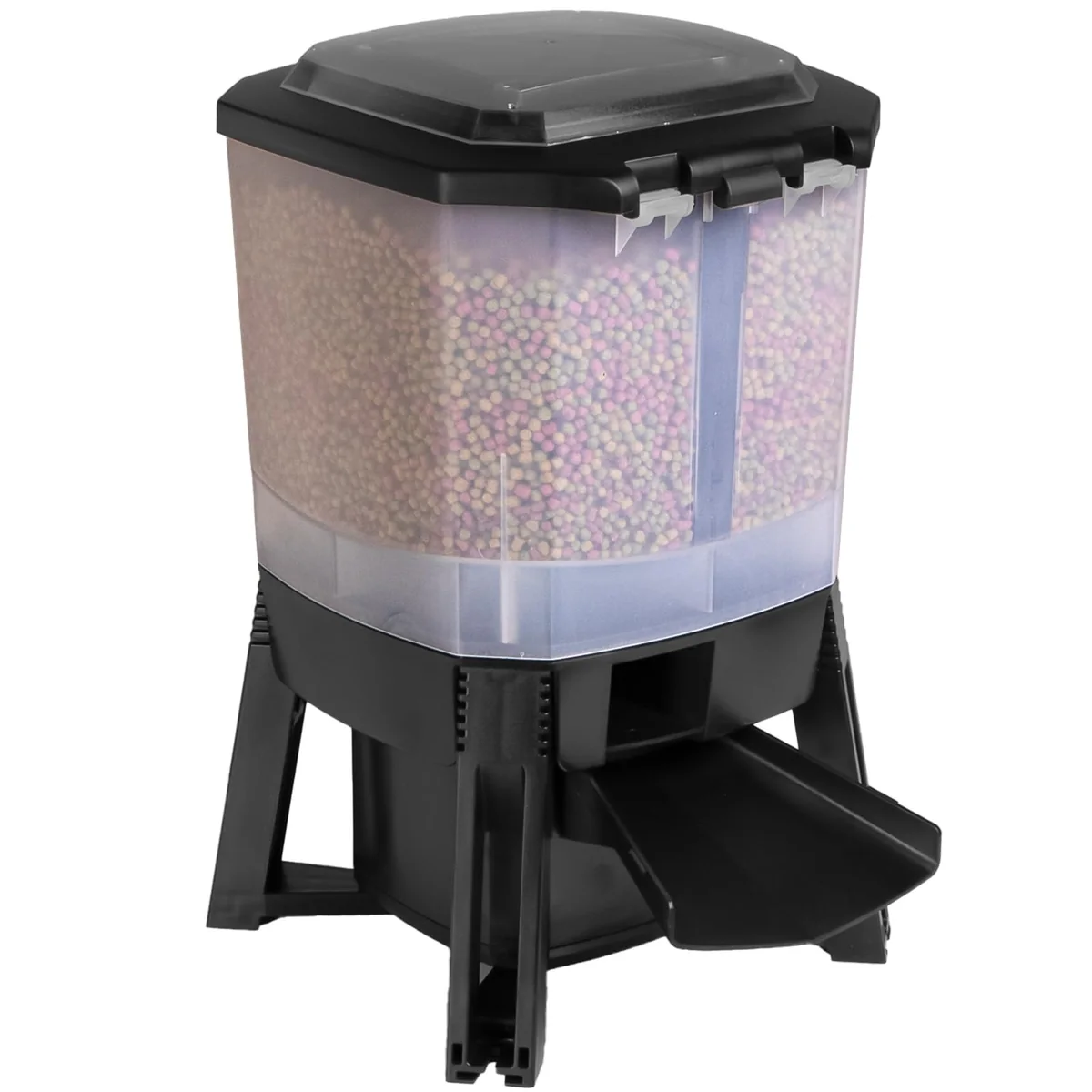
Fluval explicitly lists flakes, granules, pellets and freeze-dried food as compatible. Its slider controls the opening, it runs on two AA batteries and it can feed up to twice daily. Fluval recommends small to medium granules for the most consistent results, an honest limitation for a flake-focused guide. Pros: documented flake compatibility; battery powered; simple mounting. Cons: only two programmed feeds; flakes still need a dry test. Manufacturer details and manual.
EHEIM autofeeder
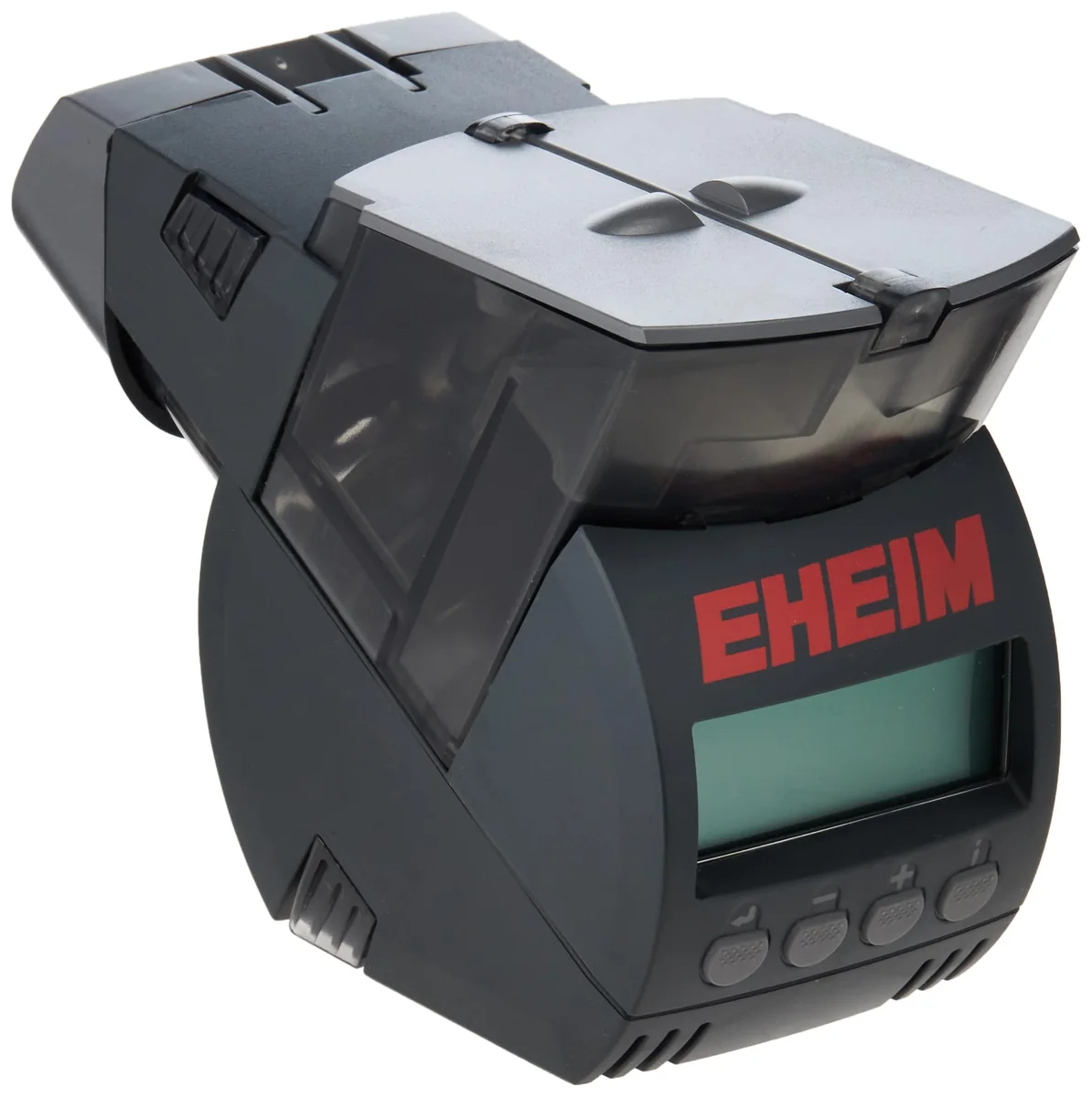
EHEIM’s aquarium feeder line is a good candidate when you want a purpose-built unit from an aquarium equipment maker. Select the exact model after checking its opening and schedule against flake size. Pros: aquarium-specific design; established support. Cons: model features differ. EHEIM feeding range.
Fish Mate F14
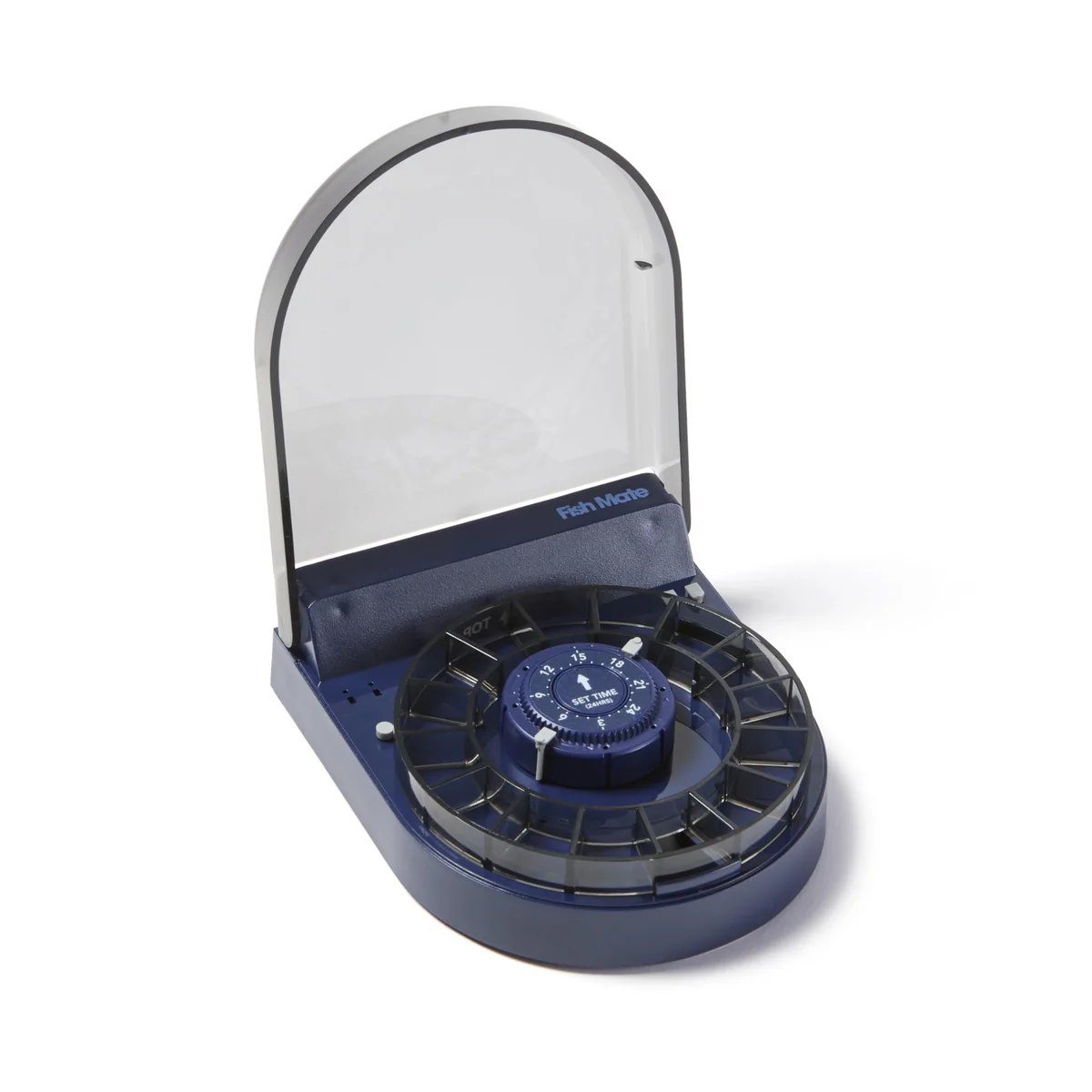
The F14’s separate compartments suit owners who prefer several small portions rather than one large drum. It takes more preparation, but that can make the daily amount easier to inspect. Pros: many feed slots; portion separation. Cons: compartments must stay dry and loading is slower. Fish Mate product page.
Fish Mate F14P
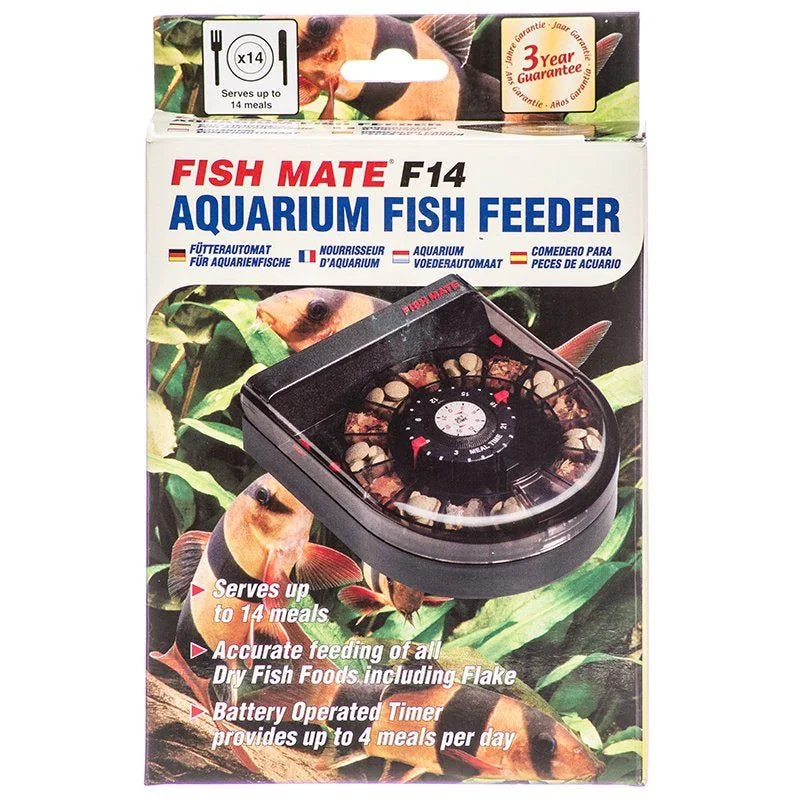
The F14P is the larger multi-feed candidate. It makes sense for a schedule with frequent small meals, not for a tank with little lid space. Pros: multiple timed portions. Cons: larger footprint; verify aquarium mounting and current US availability. Fish Mate.
Petbank Automatic Fish Feeder
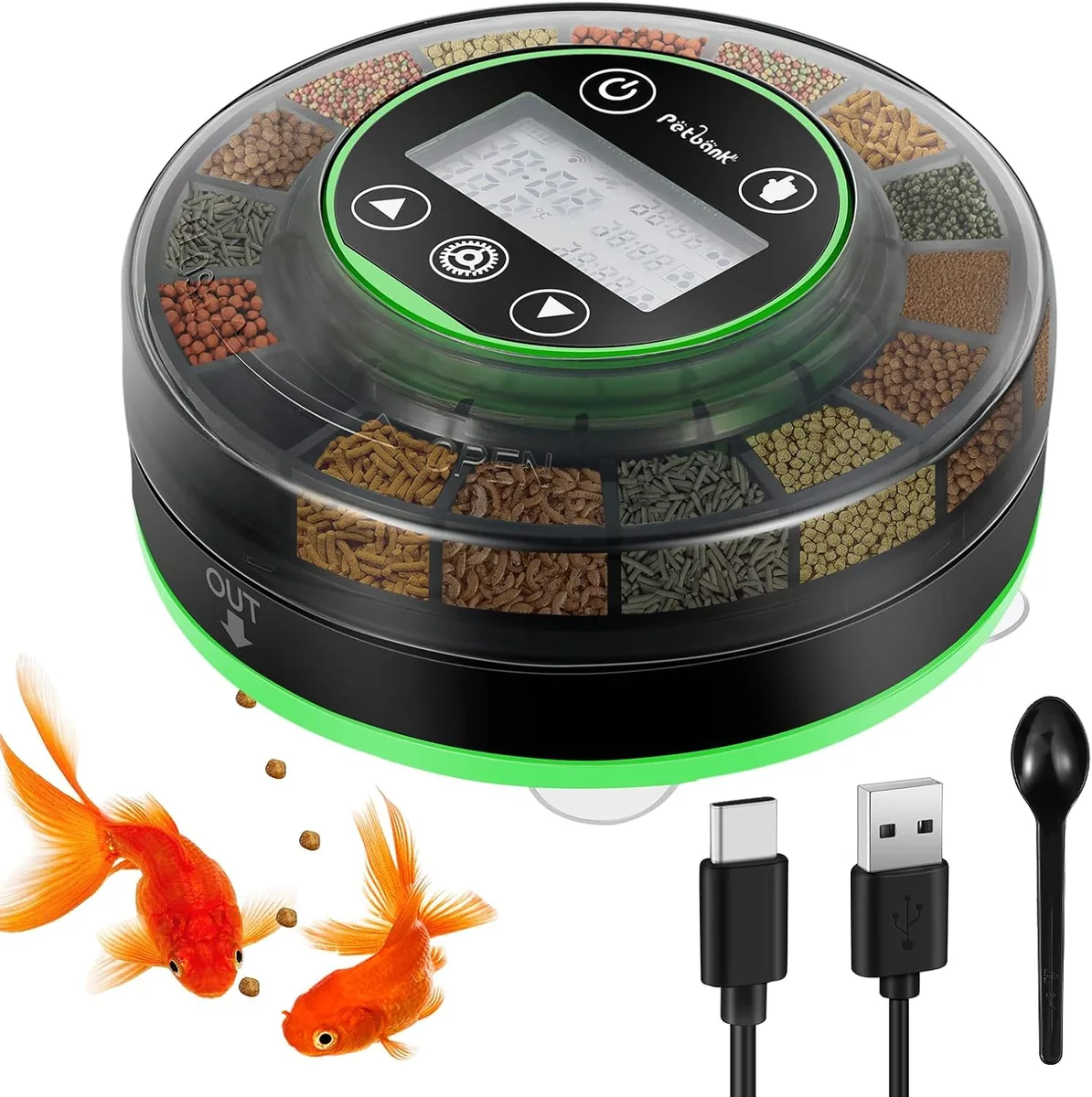
Petbank feeders are attractive when price and a compact body matter. Listings can represent different revisions, so confirm the timer, portion control, battery type and food opening. Pros: compact; adjustable routine. Cons: exact model and support vary. Petbank.
NICREW Automatic Fish Feeder
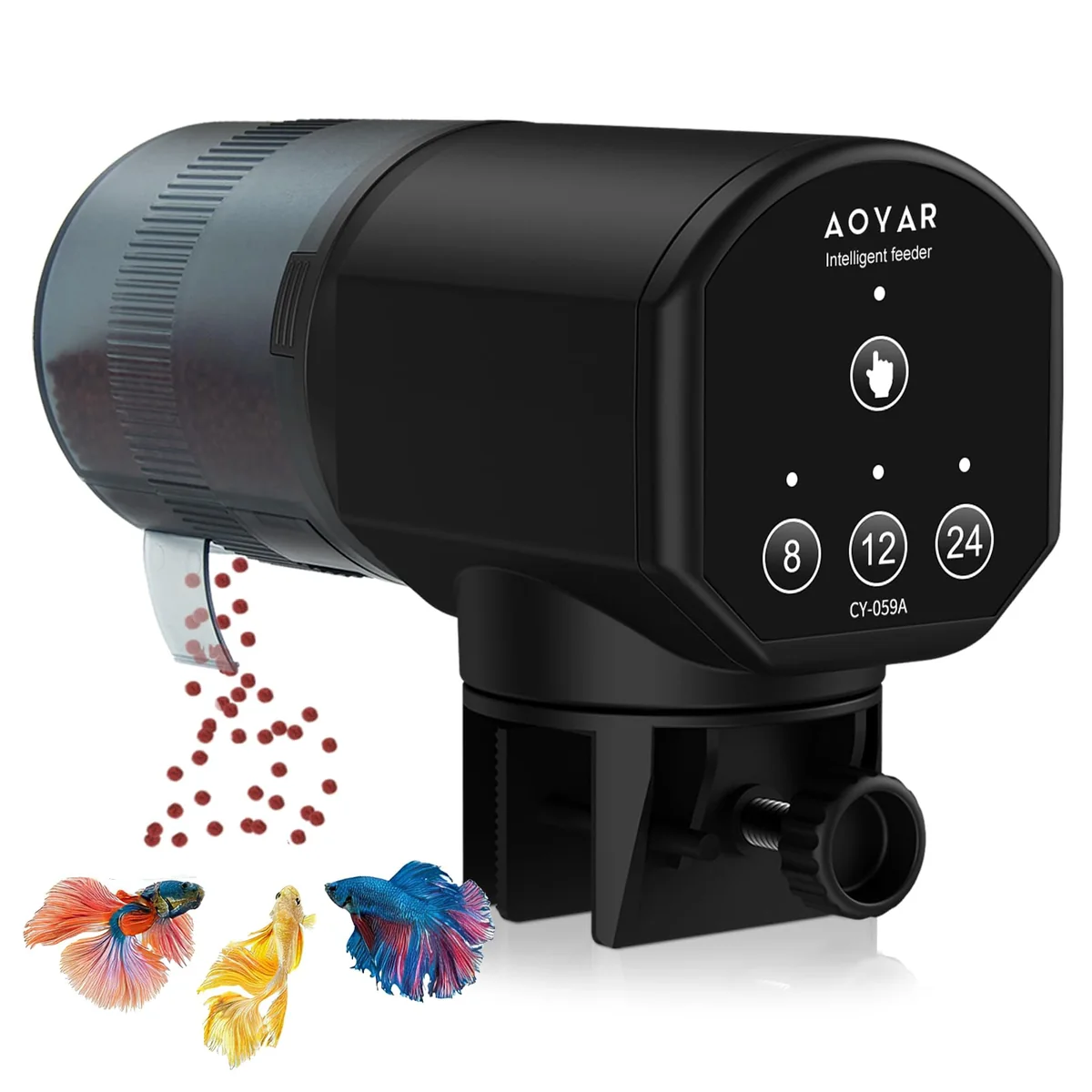
NICREW’s feeder range is worth checking for small tanks where a large drum is unnecessary. Confirm that the current listing specifically supports flakes and keep the feeder away from splash. Pros: compact category fit; routine scheduling. Cons: model specifications change. NICREW.
Juwel EasyFeed
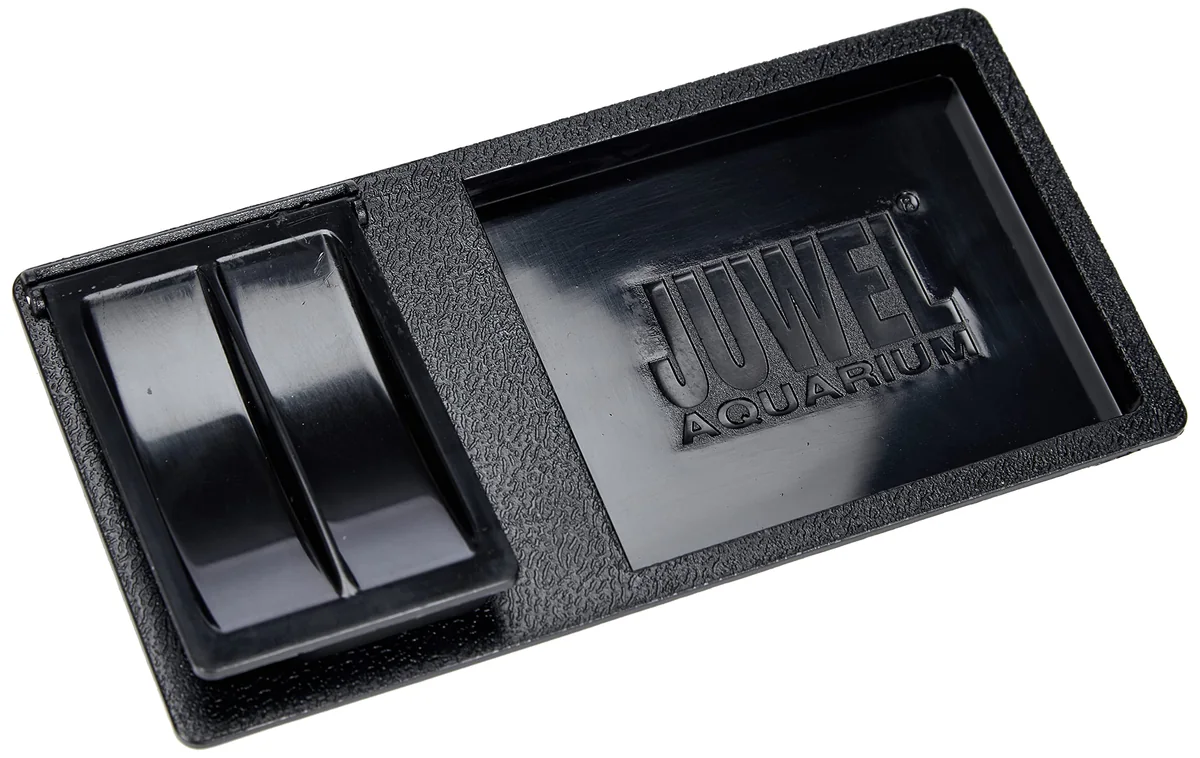
EasyFeed is designed around aquarium lids, which may be cleaner than balancing a universal feeder on a rim. It is best for owners whose cover has a compatible opening. Pros: tidy lid integration. Cons: less flexible portioning; check lid compatibility. Juwel EasyFeed.
How to feed flakes reliably
Keep the hopper dry and do not fill it for a long absence until you have observed several cycles. Run the feeder into a cup and weigh or visually compare the portion. Flakes vary in density, so a timer setting is not a guaranteed gram amount. Aim for food the fish consume promptly, remove leftovers and clean the dispenser. A feeder cannot replace water checks, observation or a human caretaker for a long trip.
Frequently asked questions
Are flakes suitable for automatic feeders?
Yes, when the feeder’s manual lists flakes. They are less consistent than small granules, so test portions and keep humidity out.
How often should an automatic feeder feed?
Use the schedule appropriate to the species and the keeper’s normal routine. More frequent small portions can be easier to control than one large dump.
Can I leave a feeder running for a vacation?
Test it first and have someone check the aquarium for longer trips. Battery status, clumping and water temperature still need attention.
Should I mix flakes and pellets?
Only if the feeder dispenses both evenly. Test the exact mix rather than assuming it will portion consistently.
Recommendation
Choose the Fluval PF2 when documented flake support and a simple schedule matter. Choose the Fish Mate F14 when multiple small portions are worth the extra loading work.
Related guides: best aquarium heater for a 10-gallon tank and best aquarium chiller for axolotl.
Sources and methodology
We used manufacturer pages and manuals for product capabilities, especially Fluval’s PF2 documentation. No hands-on testing or unsupported review-score claims were used.
A flake-specific setup routine
Before leaving the feeder unattended, fill it with the food you actually plan to use and run at least five cycles into a dry cup. Look for two failures: a portion that changes dramatically as the hopper empties, or flakes that bridge over the outlet and stop moving. Humidity is the usual enemy. Keep the unit away from filter splash, wipe condensation from the lid, and do not pack the hopper tightly. If the aquarium cover has a feeding flap, use it to reduce the opening around the dispenser. That also helps prevent fish from jumping through a large gap.
Portion size matters more than the number of programmed meals. A feeder that drops too much food can foul water long before the owner returns. Start below the amount you think is needed, observe the fish finish it, and change only one setting at a time. For community tanks, make sure surface-feeding fish can reach the food while shy fish still receive enough. A caretaker should know the normal portion and where to look for uneaten flakes. Replace batteries before travel, but remember that some models lose their schedule when batteries are removed. Record the settings or photograph the controller. These small checks make a cheap feeder much less likely to become a water-quality problem.