
Buying guide
Best aquarium filter for goldfish
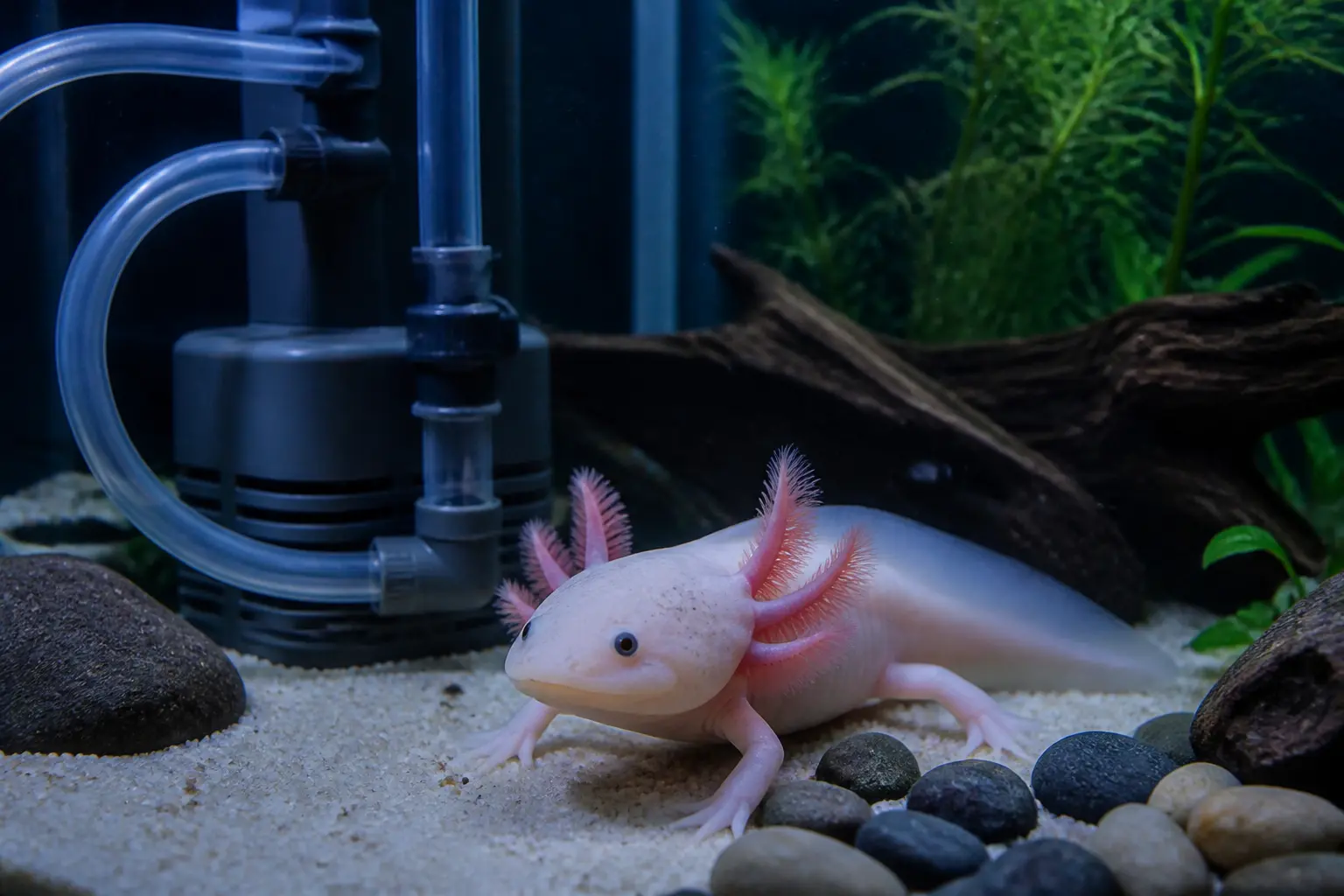
Goldfish produce heavy waste, so the best filter is the one with enough media capacity for the tank and a cleaning routine you will follow.
Quick answer
For a properly sized medium or large goldfish aquarium, start with the Fluval 407 Performance Canister Filter. It offers more media room than a small HOB. For very large tanks, consider the FX4 or FX6. We have not hands-on tested these products, and a filter cannot make an undersized goldfish tank suitable.
Comparison
| Product | Best for | Main drawback |
|---|---|---|
| Fluval 407 Performance Canister Filter | Medium/large tanks | Bulky and costly |
| Fluval FX4 Canister Filter | High waste load | Oversized for small tanks |
| Fluval FX6 Canister Filter | Very large tanks | Expensive maintenance |
| Seachem Tidal 75 Power Filter | Large HOB | Less capacity than canister |
| Seachem Tidal 110 Power Filter | High-flow HOB | Large external footprint |
| Fluval AquaClear 70 Power Filter | Supplemental HOB | May need backup filtration |
| Aquarium Co-Op Large Sponge Filter | Biological backup | Needs air pump |
Product notes
Fluval 407
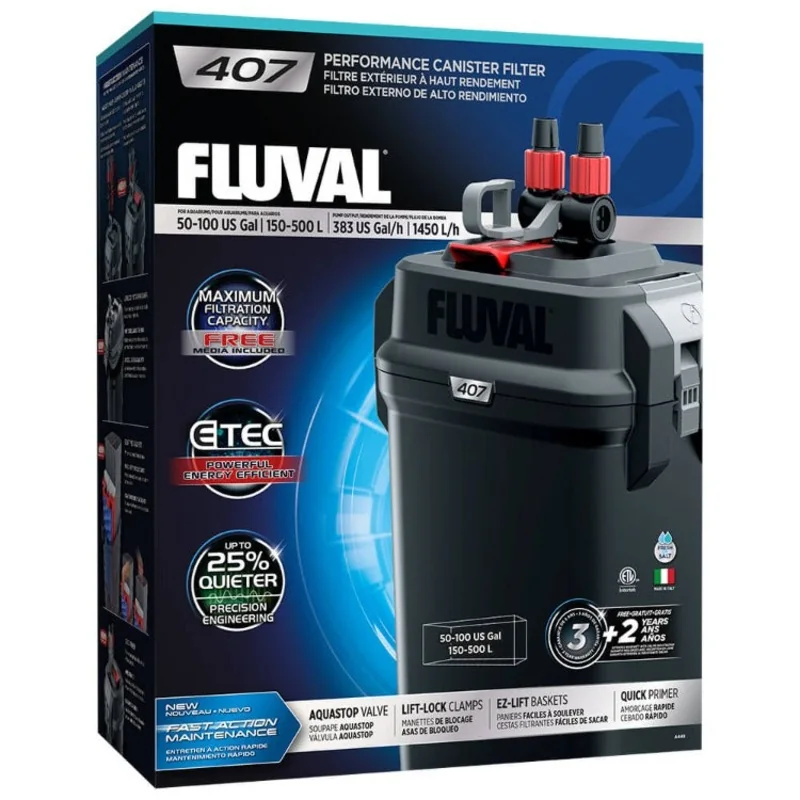 The 407 is the balanced canister pick for a sizeable goldfish setup. Its baskets allow coarse mechanical media first, followed by biological media. The canister sits below the aquarium, so installation and cleaning take longer than a HOB. Pros: large media capacity, cabinet placement. Cons: priming, hoses, weight.
Fluval FX4
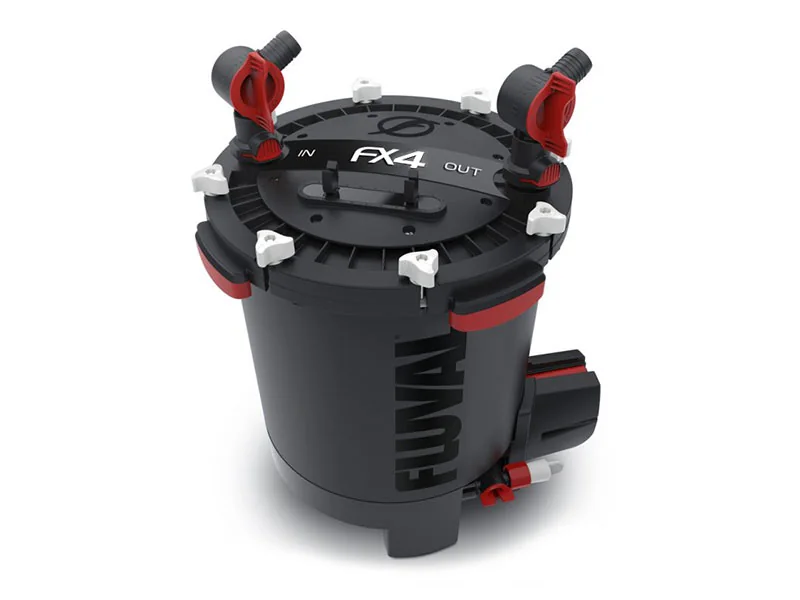 The FX4 is aimed at larger tanks and heavier waste loads. It gives more room for staged media and can be paired with a pre-filter sponge. Pros: high capacity, strong circulation. Cons: overkill for small fancy-goldfish tanks, higher cost.
Fluval FX6
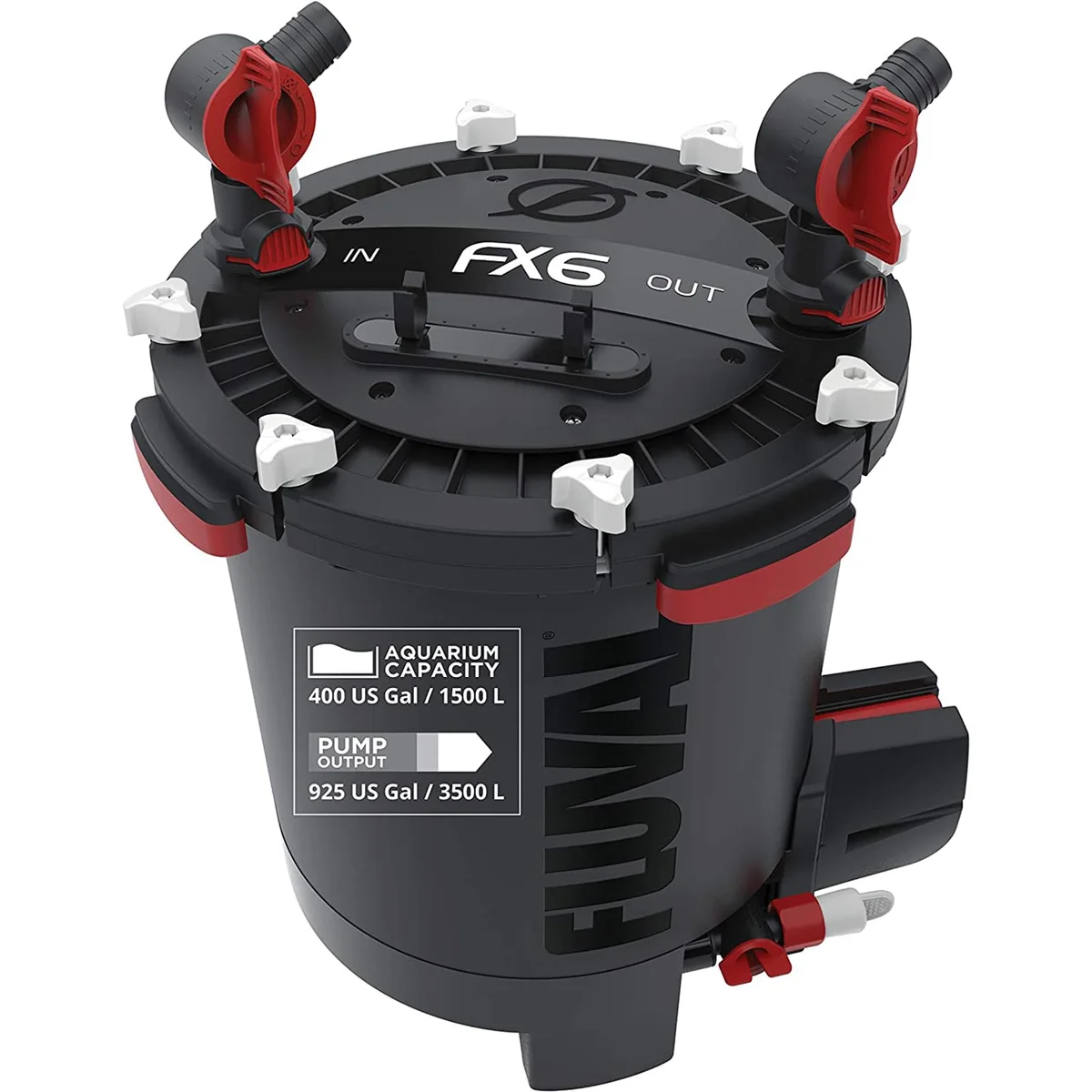 Choose the FX6 only when tank size and stocking justify it. Its capacity is useful for very large systems, but moving and servicing a full canister is a chore. Pros: heavy-duty capacity, customizable media. Cons: size, cost, maintenance.
Seachem Tidal 75
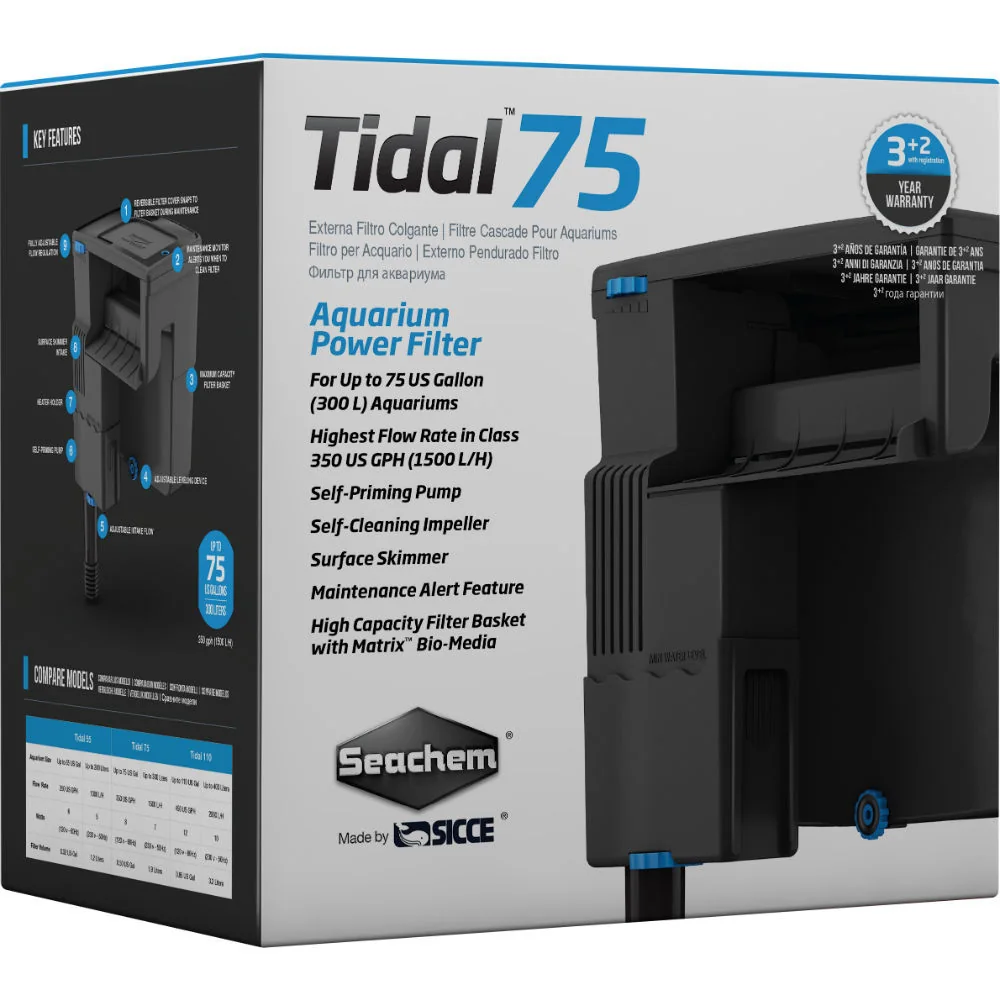 This large HOB gives easier access than a canister and includes flow adjustment and self-priming. It suits a large tank when cabinet plumbing is not wanted. Pros: accessible basket, restart convenience. Cons: less media than a canister, strong output.
Seachem Tidal 110
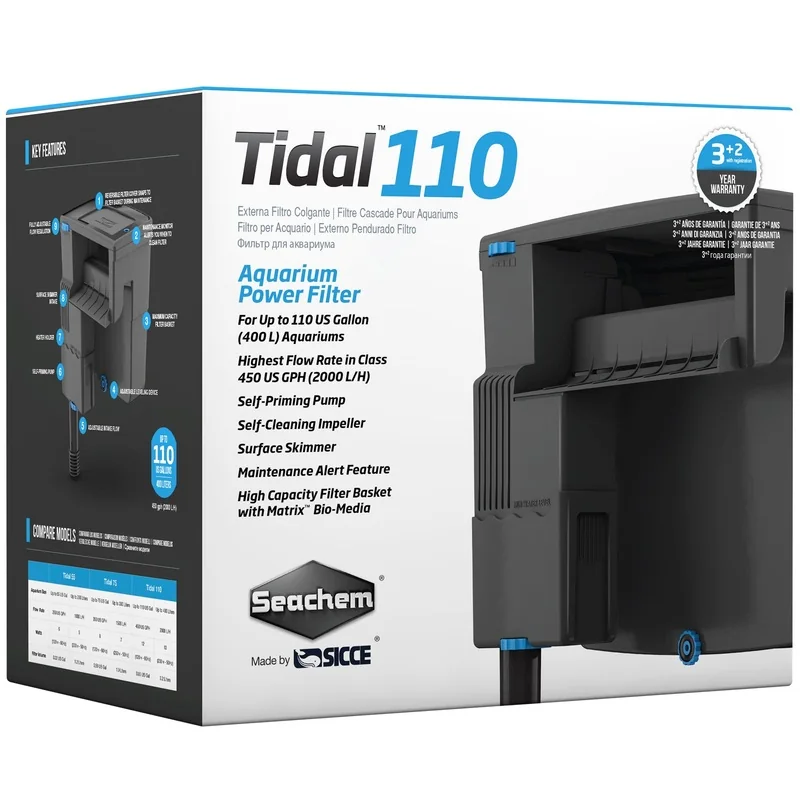 The 110 is the high-capacity HOB option. It can work as primary or redundant filtration in a large tank, but its footprint and flow are substantial. Pros: large basket, adjustable flow. Cons: external size, surface skimmer upkeep.
AquaClear 70
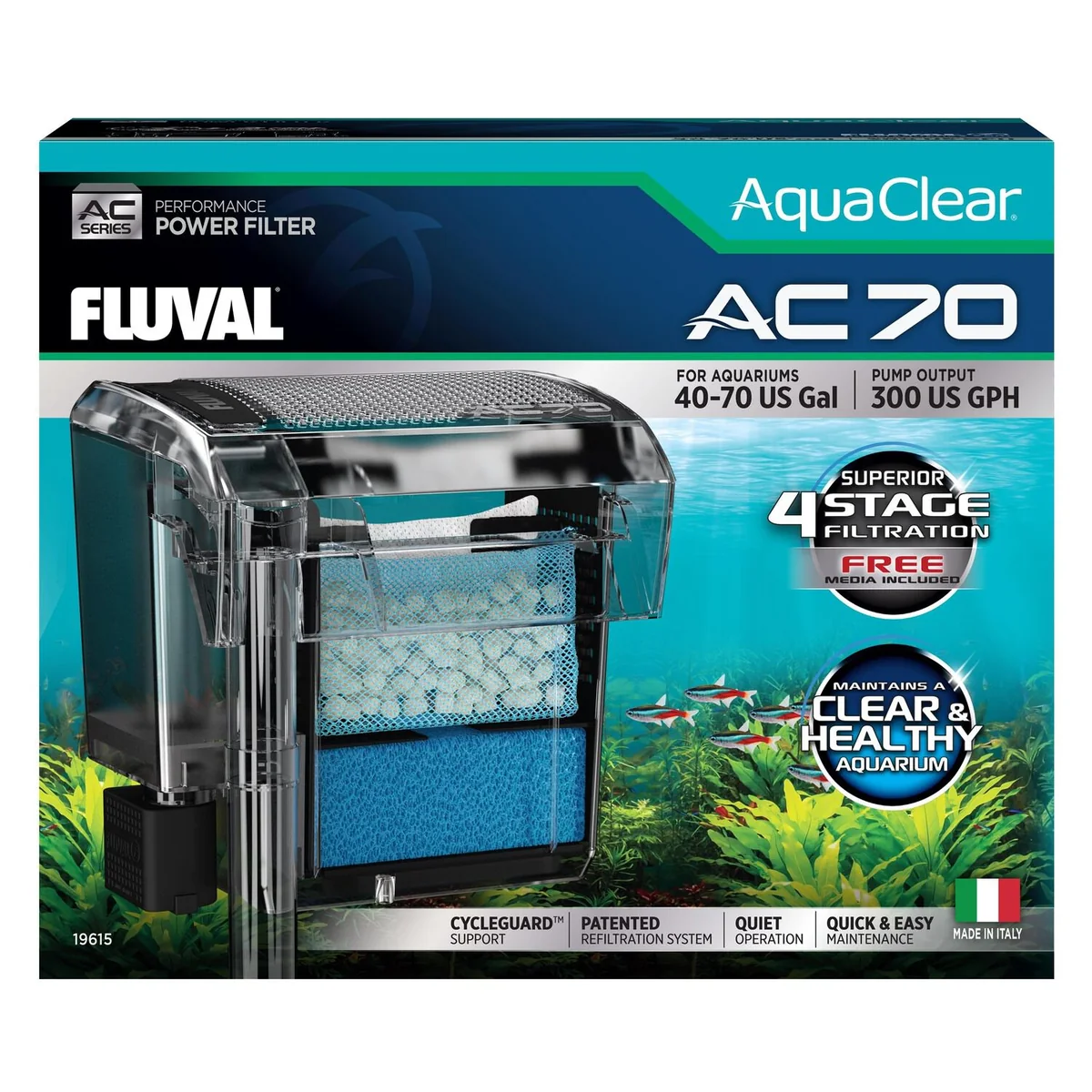 The AquaClear 70 is useful as a medium-tank HOB or as a second filter alongside a canister. Its basket is more flexible than a disposable cartridge filter. Pros: reusable media, accessible maintenance. Cons: manual prime, may be inadequate alone for messy stocking.
Aquarium Co-Op Large Sponge Filter
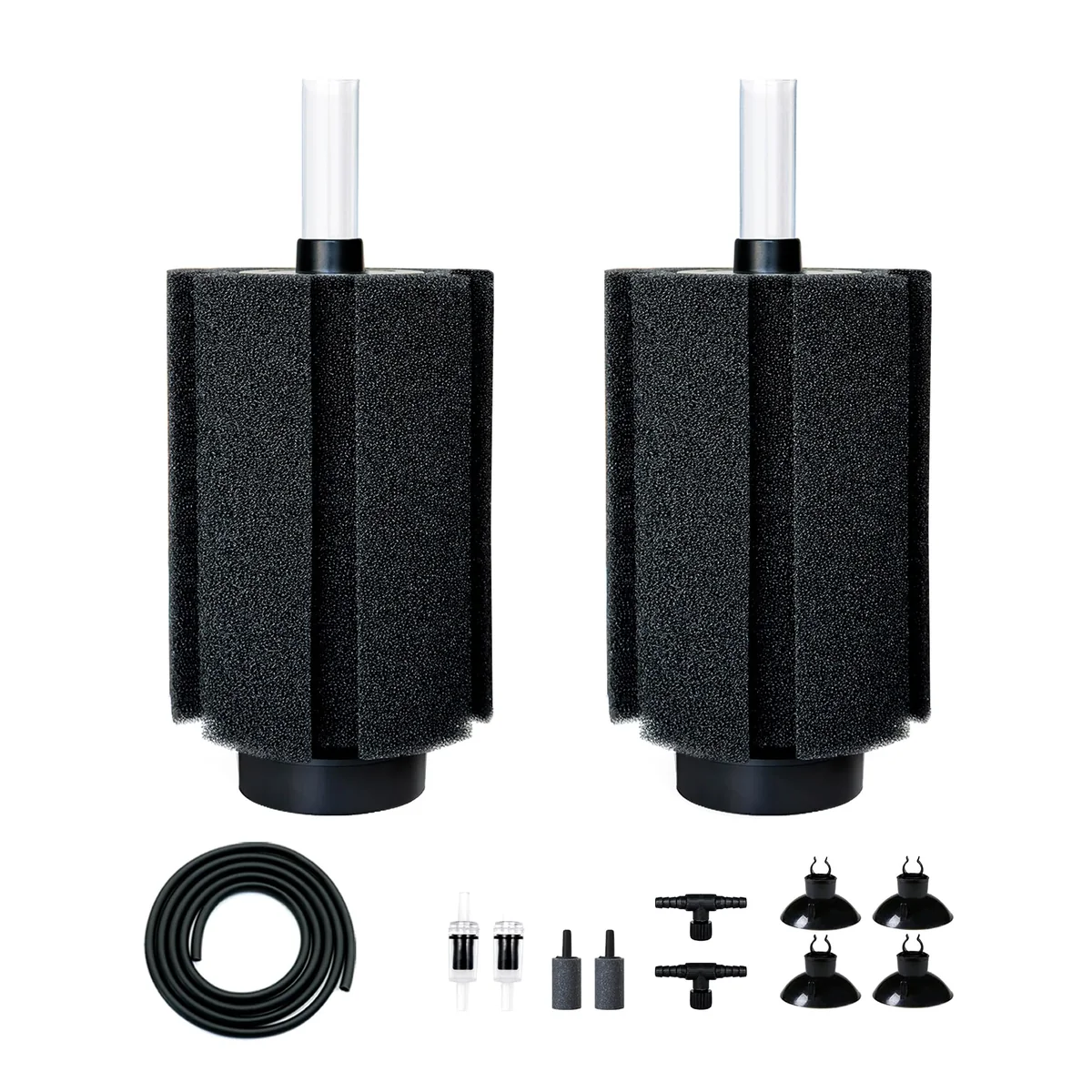 An air-driven sponge adds biological capacity and oxygenation without a powerful jet. It is a sensible backup or companion to a canister, not a complete fine-particle solution for every goldfish tank. Pros: gentle, cheap to rinse. Cons: separate air pump, visible hardware.
Goldfish-specific criteria
Start with the aquarium’s actual volume and fish type. Fancy goldfish need different space than common or comet goldfish, which grow large. Choose generous mechanical pre-filtration because goldfish produce a lot of debris. Plan for regular water testing and partial changes. Redundancy is useful: a canister plus sponge or HOB means one cleaning event does not remove all biological capacity. Keep the return moving enough to oxygenate water, but avoid a current that pins fancy goldfish against the glass.
FAQs
Is a canister filter best for goldfish?
It is often the most practical primary filter for a properly sized medium or large tank because it holds more media. A large HOB or paired filters can also work.
Can one filter handle goldfish waste?
Sometimes, but stocking, tank volume, feeding, and maintenance decide the result. A second filter can add redundancy and mechanical capacity.
Do goldfish need strong flow?
They need clean, oxygenated water, not a punishing current. Diffuse the return for fancy varieties and watch swimming behavior.
Recommendation
Choose Fluval 407 for a medium or large setup, FX4 or FX6 for very large systems, and add a large sponge filter when biological backup or gentle aeration is useful.
Sources and methodology
Manufacturer references: Fluval 407, Fluval FX series, Seachem Tidal. Independent references: FishTankCalculator and AquariumLab.
Related guides
For messy fish, inspect the intake and pre-filter weekly. A clogged intake reduces circulation long before the motor stops, and fine pads can block faster than expected. Keep a second filter or air stone ready during canister servicing. This is especially useful during holidays, when a simple backup can prevent a complete loss of circulation.
Planning around goldfish waste
Goldfish tanks need a service plan as much as a large filter. Put coarse mechanical media first so plants and food do not clog fine pads immediately. A pre-filter sponge makes impeller cleaning less frequent and protects fish from the intake. Keep biological media wet while servicing the canister. Do not replace all media at once, because that removes much of the established bacterial surface.
Use a return that keeps the surface moving, then diffuse it if fancy goldfish are pushed around. Check actual tank volume, adult fish size, and stocking before choosing FX4 or FX6. A large filter on an undersized aquarium is not a responsible workaround. Test ammonia and nitrite, remove uneaten food, and make partial water changes based on readings. If one filter is difficult to service, two simpler filters can be easier to maintain and give useful redundancy.